Steven Pearlstein posted a call to arms in the Washington Post, calling on universities to aggressively cut costs through four strategies: 1) cutting administrative costs, 2) operating year round, 3) teaching more and researching less, and 4) reducing the costs of general education courses through technology.
As a PhD student who dropped out this year, all I can say: yes, one-thousand fold.
I realize that my experience is at two top institutions (Stanford and Harvard) that are in their own unique stratosphere of the academic world. As Daniel Drezner notes in a partial criticism of Pearlstein, there is an incredible diversity of university institutions in the United States, so any advice has to be directed more specifically to be meaningful. So let's focus just on top research universities.
My undergraduate thesis was on the history of universities in the 1950s and 1960s, and specifically the growth of computer science departments and their fight to gain legitimacy against other departments. So I have been looking at these issues for several years now.
The first thing to understand about the modern research university is just how much sheer waste there really is. Across the board. In every department and program. Throughout the administration. Particularly in research. Pearlstein mentions this, but it bears repeating: there is so much junk research being conducted, it's almost unreal. There are so many junk staff members, it's doubly unreal. There is so much administrative overhead, it's triply unreal.
Universities have gotten stuck in quantification hell, where productivity numbers are driven by number (not quality!) of publications and number of staff hired (not efficiency!). If an office is important on campus, say, for political reasons, then that office has to be given more headcount – regardless of the actual need – simply for appearance's
Outrage is everywhere, lurking behind every news development around the world. Now it also includes my red Starbucks cup, and no, not because Starbucks serves a pumpkin spice latte (an absolutely outrageous drink). I didn't even notice the red cup yesterday until I learned there was something to be outraged about (and then was completely outraged once I discovered that I wasn't outraged about this outrageous event and had completely wasted my time).
Of all the emotions that have been heightened by the internet, outrage has to be the one that is most ... outrageous. It is the glue that holds so many stories together – political or not. It drives the press cycle, since first you have to have an event, then the outrage to the event, and then the outrage about the outrage, finally ending with me meta-complaining about the concept of outrage itself.
I am really sick of it. Outraged, really.
Maybe I am not like other people, but I just don't have enough bandwidth to be outraged all day. I find outrage to be tiring, and so I just let things slide. When the Green Line failed this weekend on the T, I didn't become outraged, but rather conducted the appropriate response by complaining bitterly on Twitter:
The problem with outrage is that it is among the least useful emotions. It goads people to anger and frustration, and allows us to avoid the underlying problems with a situation. What was once reserved for the largest scandals has now become so commonplace as to lose all meaning and substance.
Perhaps as a corollary with my post yesterday on the status of journalists in 2015, one of the startups I work with is finding it hard to hire a content marketer / blogger. It's actually a really fascinating labor market segment, because these positions are materializing rapidly as companies discover the power of content, but there seems to be a dearth of people with the sort of creativity and strategic capabilities necessary to create it.
The challenge this startup is finding is that nearly all new college graduates are bad at writing something that people actually want to read. Universities have made writing skills a much more prominent component of their curriculums over the years, but those writing skills are often focused on pure academic research papers rather than the kind of versatile and strategic writing that people need in the modern economy.
(Ironically, those strategic writing skills are precisely the skills needed of grad students and professors applying for grants these days and popularizing their research...)
Basic techniques of storytelling are wholly absent, as is any careful editing to ensure that the writing matches the expectations of an audience. That's not getting into the wider area of editing and topic selection to ensure that writing fits together into a larger narrative about a person, product, or category.
These skills are so valuable and are used by everyone in practically every profession. And yet, they remain largely absent from the toolkits of people with many degrees under their belts. I haven't seen any startup bootcamps specifically emphasize this aspect of marketing, but it would be a good opportunity for someone.
I wish this gap was just true of new graduates, but it doesn't seem to get better with experience either. In fact, in many cases greater experience
I am always amazed at how ignorant people are of the media and the people who work in the news industry these days. Despite the importance of a great press for democracy, public safety, and our wellbeing, next to one seems to care about how journalists get paid (or how much!), what their time commitments are, and in short, whether they have the conditions necessary to do their job for the public.
This is particularly important these days with the on-going Theranos saga. Whatever the final resolution of that story is, the WSJ's report on the company forced a secretive health-care startup to engage more with the public and prove that its Edison testing technology works (or perhaps does not). That's a win for transparency and patient welfare.
So how should you think about journalists (especially tech journalists) in 2015? Here are some thoughts as a former freelance writer at TechCrunch:
Journalists have an insane level of noise from every single channel. They receive as few as 100 and as many as 500 emails a day, from total random strangers to their best friends. It's just nuts. When they don't hear back in several hours, some PR professionals resend emails with snarky lines. Don't do this. Journalists want to cover the best stories, but they are inundated. Plan accordingly. Engage multiple people across publications, and potentially at the same publication (although never ever send an email to the entire staff!). Many journalists have no idea what other writers are drafting, so always mention if you have sent a news story to more than one person, or if someone else engaged with you. Always be kind.
Tech journalists today write between 1 and 5 stories per day. Think about that for a moment. On
Having lived in San Francisco and now Boston, I have lived on two opposite sides of the planning spectrum. In SF, nothing gets built because the planning process takes ridiculously long to get even a small apartment complex built. However, the final product is oftentimes a wonderful and very livable neighborhood, which works to drive up rents and prices as people flock to these well-manicured areas.
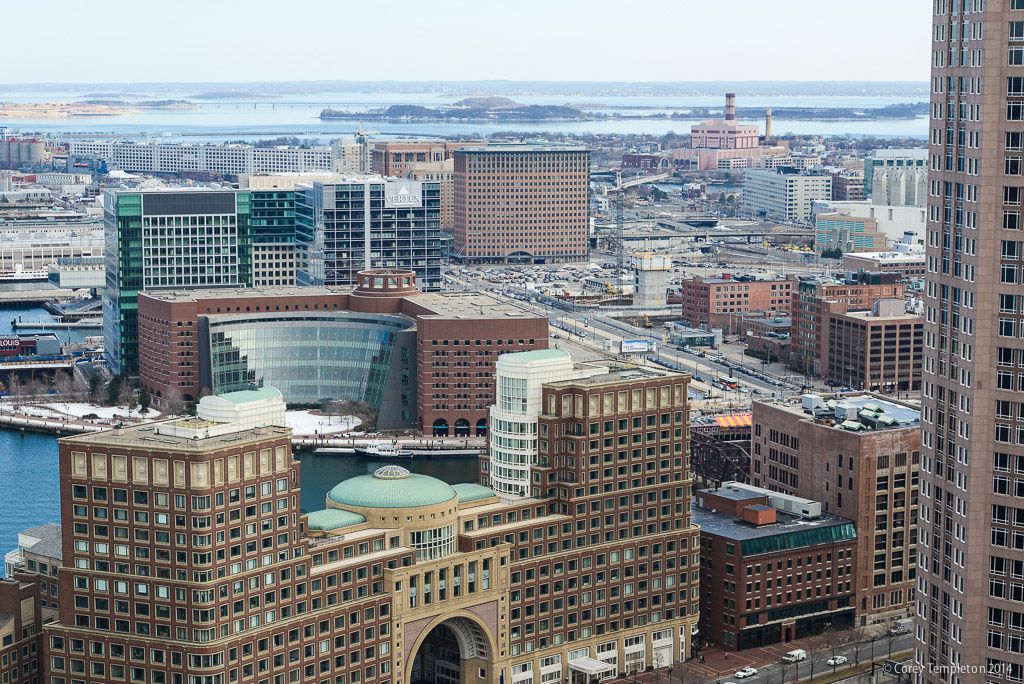
Boston is at the opposite extreme, being one of the most inhospitable places I have ever lived in. The Seaport is devoid of much street life, almost entirely shut down on weekends, lacks decent options for food, lacks a grocery store (!), haircutting, barber shops, or really any human services that would make the place livable. Given the way the Boston property market works, that hasn't stopped prices from soaring over four figures a square foot of course.
As my friends know, I used to complain incessantly at how messed up the SF situation is, but now I realize that there can be far worse problems than a slow and bureaucratic process: no process at all, or at least one that is so ineffective or less-than-visionary that obvious problems to a first-year design student somehow manage to get built.
It's sort of sad that we are left in this rock and hard place situation. There is a way to build a path where we can have a well-tended and thought out community, while not dragging out planning for years
I hate binary classifications as much as the next person, but here's one I thought about this morning while talking with a local human resources startup about how HR products should be built today:
Are you empowering the assholes in an organization, or are you empowering the workers in an organization?
What amazes me is how many startups in the HR space sell into the "asshole market" (usually under the guise of "performance management").
We have all heard about and seen awful management. These are the managers that have no trust in their direct reports, need everything verified, and change goal posts whenever events change. They are, in short, just crummy people to work with. Employees often respond to this environment by becoming political -- they attempt to hide information in order to create space between themselves and management to actually do their jobs.
There are two directions an organization can take when it reaches this stage. One is to become less political by increasing trust between employees and empowering them to do their jobs effectively. The other is to try to create panopticon services that allow managers to peer into every single action an employee takes, empowering management to constantly harass workers rather than assisting them.
As I say often, data is fundamentally political. It is easy to think that just providing more data to more people will make an organization work more effectively. This is often false, because it really depends on culture. How will the data be used? If my manager is tracking my every movement by the minute, I am not going to act normally, nor will I do my job very effectively. This is doubly true if they are walking over to my desk every five minutes yelling "why didn'
So, it has been a month since I last wrote a post here. The lack of posts is not a function of time, but rather of friction. Along the way, I learned a valuable lesson in product design that I think might be helpful to others.
For the past few years, I have used a static site generator called Pelican as the main way to update this blog. The concept behind these generators is simple: get rid of all the bloat that comes with a typical Content Management System like WordPress and replace it with simple scripts that generate raw HTML files. The idea is that it is much more efficient to serve simple HTML pages, which is ultimately what blogs are about.
Or so I thought.
The adage of static site generation is that you might update a blog once a day or even once per week, but the blog is downloaded from dozens to millions of times per week. So, it would seem to make sense to optimize the experience for the reader, since ultimately that is the action that happens most frequently.
That optimization though is completely incorrect, because the only reason those readers want to visit a blog is for new posts. Therefore, the only optimization that should take place should focus on making the writing experience as easy as possible for the writer.
Even with some additional scripts that I wrote to make Pelican more palatable, the reality is that it was a real pain to actually write. I had to fix the filename perfectly so that Pelican would read it, I had to run the pelican command line through a script I wrote, then I had to sync all the files to my server so that it could actually be viewed. Whenever I was
Life is often described as a road, a journey through experiences and temporary destinations that we hope will one day sum to something more coherent.
Overused as it is, there is something soothing about this metaphor. Roads don't just sprout up in the wilderness, but instead require deliberate technical planning and intelligence. We are constantly confronted with randomness in our lives, and there is comfort in the feeling that this "road" is part of a grand design by some higher transit engineer who is carefully tending to our journey -- laying out the macadam before us so we never lose our life's destiny.
This transit metaphor has always bothered me, though. No engineer would willfully build the route that many of our lives have taken. There are so few straight courses -- so few highways –– that one begins to think that the road was purposely built just to be frustrating to travel. The destination of our life’s journey may be only miles away, but it can take thousands just to detect the direction of its meandering course. How about we cut back a bit on new road construction and start putting in some traffic signs?
The other underlying frustration with roads as journeys is simply that it makes the assumption that we are always moving forward. We don't. We sometimes drive in reverse. We sometimes take complete breaks from the wheel as we try to size up what the hell that engineer was thinking when he built this infernal pathway. Sometimes, we never return to that wheel, and we never complete the journey laid before us.
That was the case for three of my friends over the past few months. Their journeys were cut far too short -- probably far shorter than they or anyone else ever
Hi, I'm Danny. I'm Partner, Research at VC firm Lux Capital, where I publish the Securities newsletter and Riskgaming. I'm also a Fellow at the Manhattan Institute in New York.
Formerly, I was managing editor at TechCrunch and a venture capitalist at Charles River Ventures and General Catalyst.