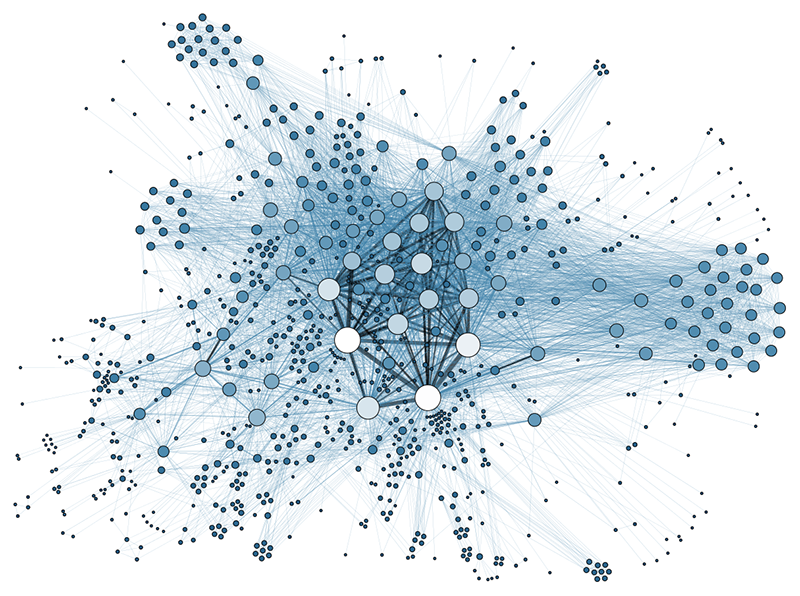
Perhaps the largest criticism was that my approach to Anki failed to fully use associations to make it easier for my brain to retain words. Word associations help our memories place words in different contexts, building up a "web" of our vocabulary. Connecting our words with sights, scenes, and sounds allows us to more natively recall vocabulary than simple rote memorization.
I completely agree with this. The problem is that Anki is a terrible product to try to build associative learning. Linear flash cards aren't linked into any sort of web or graph, and so at some point, they end up pretty much being random flash cards. You can sort of fake it by adding associations to a side of a flash card, but that's kludgy at best.
I am thinking how to address the problem more directly. How do you do spaced-repetition studying over knowledge graphs? From what I can tell, I can't really find a lot of information on the topic, but I am going to keep looking. If you see something or know something about the topic, definitely give me a shout out below.
Language learning sucks. It sort of sucks for kids, but it certainly sucks for adults. This is my journey trying to learn Korean, and slowly coming to the realization that our current learning tools are simply not adequate for the job.
I don't have answers, although I certainly have ideas.
Background
For the past five years or so, I have been studying the Korean language. I began in 2010 as I was preparing to be a Fulbright Researcher in South Korea. (technically, I started studying months before hearing back from the U.S. government that I was actually going — call it youthful confidence).
Since then, I have spent hundreds of hours studying Anki flash cards, reading books and articles, taking classes, getting tutored, watching movies, and more to try to improve my skill.
Like many, I love learning languages regardless of their specific utility — languages are windows into cultures that I can (usually) only enjoy from afar. Over the years, I have studied French, Arabic, and Chinese, but eventually ended up spending significant time with Korean due to my life overseas. Given all of my previous years of language training, I came into learning Korean with a lot of self-awareness about my learning style.
A Brief Aside on Adult Language Learners
Learning a language in your 20s is not like learning a language as a young kid. Child psychologists will tell you that the plasticity of the human brain declines by around 12 years old, making it significantly harder to learn a language later in life.
It's hard for me to assess the truth of that (and frankly, they can take their pessimism and go f*** themselves). However, I can assess other difficulties. Adults are simply busier, and often have jobs. Memorizing a language is nearly impossible
There is a growing international understanding that cities have become too expensive for the people who live and work in them. It is an affliction across the United States, but also around the world as well. Just take some recent coverage of the issue:
Vancouver has been one target lately, with home prices rising to an average of C$1.3 million. Unsurprisingly, many workers are leaving, decamping for other nearby cities in a bid to try to lower their housing bills.
London has experienced an almost apocalyptic increase in housing prices, driven by Russian and other oligarchs moving huge dollars into the city’s real estate market. Rowan Moore shows in his book Slow Burn City just what the cost of that situation has been for London, and how it wasn’t always like this.
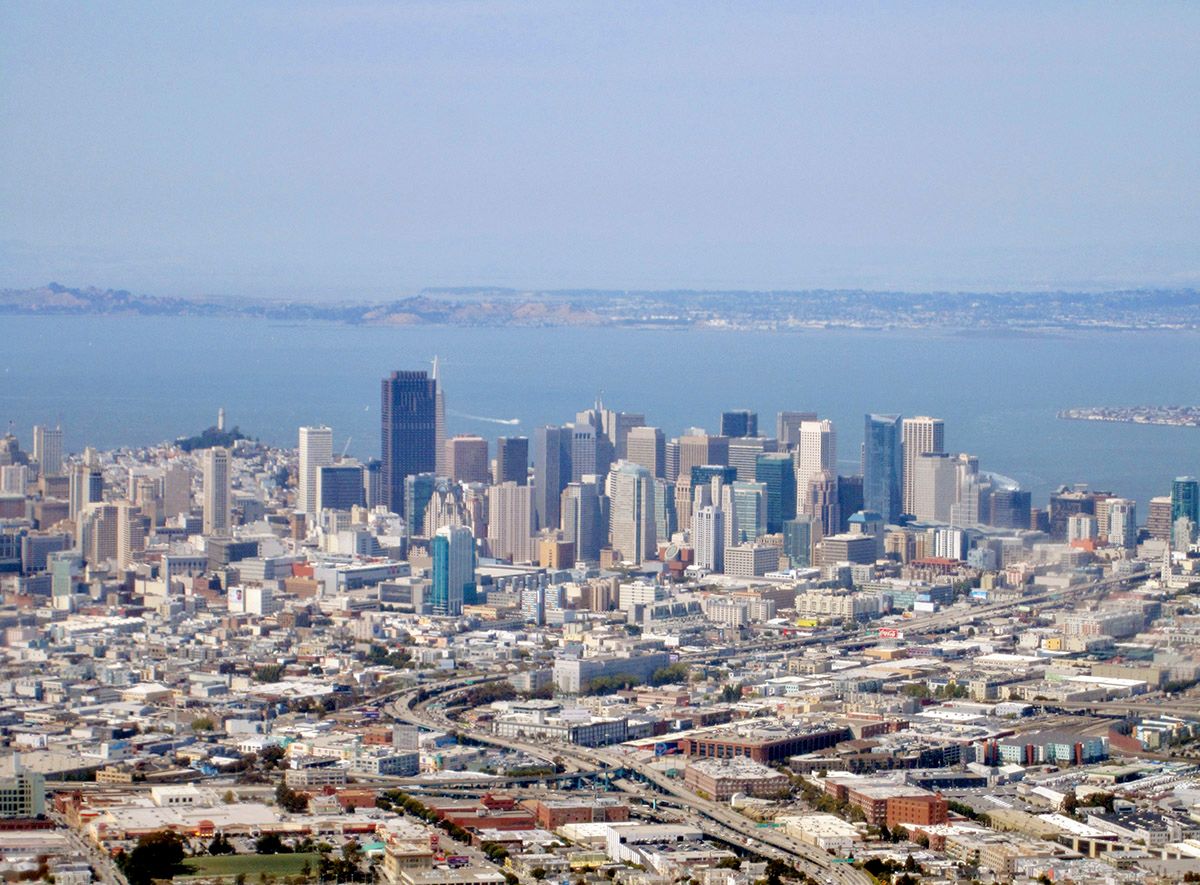
And of course, we have the United States, where San Francisco, New York, and Boston (among a long list of others) are pricing people out of the local property markets.
The high price of homes is an affliction across the planet, and as I have argued before, is probably the single most important public policy problem affecting my generation. Housing is fundamentally about access to economies. People want to live in these cities not just because of their amenities, but rather to access well-paying and dynamic jobs. Lack of housing — and lack of affordable housing — means that we are preventing people who would otherwise migrate for better jobs to flounder. What a waste.
The issues today around urban housing go beyond that though. Over the last few decades, homes have come to be seen less as shelter and more as a financial asset for the store of value to be traded. London is expensive because people want to live there of course, but
Well, I guess it's news now: the New York Times is calling it for the end of the Republican party (and not on the editorial pages!). Party leaders are increasingly worried that the Republican party will split into two factions, a nativist/religious side and a free-trade/pro-government branch (as if it hadn't already been split for two decades).
They are probably right to some degree. It seems that the alliance formed between cultural conservatives and working-class white voters along with business elites in the mid-to-late 20th century is simply no longer viable. There are just too many points of disagreement to come to a consensus of exactly what the party platform should really include.
While the NYT took a narrow view of the problem, Republicans don't have a monopoly on potential disintegration. The continuing success of Bernie Sanders is complicating things for Democrats as well. While the language on the left these days tends to be less strident (and gets less publicity to boot than The Donald), there remains a gulf of difference between Sanders and Clinton, and really, Sanders and mainstream Democratic policymakers.
What's happening? The disintegration of our politics has been blamed on the widening income gap -- which it is -- but I think that is only a symptom of the problem. The real divide is really between what might be termed globalists and nativists (or Americanists if you think nativists sounds too pejorative).
Globalists advocate for free trade, benefit from broad, multicultural education, and love to travel and experience the world. They probably hold a "creative class" job and live in cities, although not exclusively. Their worldview comes directly from the core of economics: the pie can always get larger and we can always have a
Critics of the internet often talk about the issue of distraction. There is always another article that we can read or another video to be watched, and that constant bombardment kills our ability to focus deeply on the issues that matter to us. That's sort of the crux of Nicholas Carr's book The Shallows, as well as several other writers.
Distraction might be a useful framework for thinking about this, but I think the issue is a bit different. It's really easy to aimlessly wander from content to content, sucking in the universe of knowledge. The challenge comes when we try to organize that information in a fruitful way.
As an example, the problem is not that I read about North Korean policy developments. It's interesting and on-going, even if knowing the ins-and-outs of the Supreme People's Assembly doesn't affect my job of being a venture capitalist (or does it?).
The problem is that I touch on the topic completely randomly in the course of the year. I honestly don't remember the last thing that happened, so I have no context when I stumble upon a new article.
When I defended higher education on TechCrunch last year, I discussed the importance of primacy, the idea that we have to center our thoughts on one concept for a time in order to more deeply understand a topic or issue. I think the concept applies to all media
As always, I read a lot last year. Pocket seems to indicate that the number of articles I saved for later reading was around 1,400, or roughly 3.83 articles per day. Add in additional newspaper consumption plus books, and it was another year in which my information diet goals were completely ignored.
It's hard to sort of explain all of that consumption – or to remember it. Reading is one of those depressing activities that sparks the imagination while we are doing it, but is so fleeting that just moments later we often forget exactly what we just saw.
That said, there were some excellent books and articles that I think stood out from the rest. I want to highlight them and encourage you to read them. Not everything was necessarily published in the calendar year of 2015, but I do believe that all of these works have relevance to what is going on in the world these days.
This book is a classic work in the sociology of knowledge & quantification fields. Like many good books, it is hard to summarize exactly what this book inspired in me. Porter tries to answer a simple question: why is quantification so popular in modern society?
To answer it, he meditates on history and cultural development, pointing out the power of measurement in the economy (something on the order of 15% of GDP is simply the measurement of things - everything from accounting to manufacturing tolerances) as well as its importance to politics (standardized weights and measures was a rallying cry of the French Revolution).
This book is more important than ever, as are the studies that it sparked. The rise of Big Data and the continuing fetishization of
Yes, I am on a bit of a housing rant these days, what with rents increasing rapidly.
But as a venture investor, it pains me to see the prices of housing in relation to nearly every single good and service we offer in the economy. Nearly everything today is faster, better, and cheaper than before. Computers that once took up entire rooms to calculate a differential are now sitting in our pockets, and cost less than $1,000 to boot. Content has gotten to the point where the marginal cost is vanishing toward zero. Even taxis are getting better and cheaper!
Then you look at housing, and suddenly all of this progress -- all of our dreams of the future -- seem to have stopped.
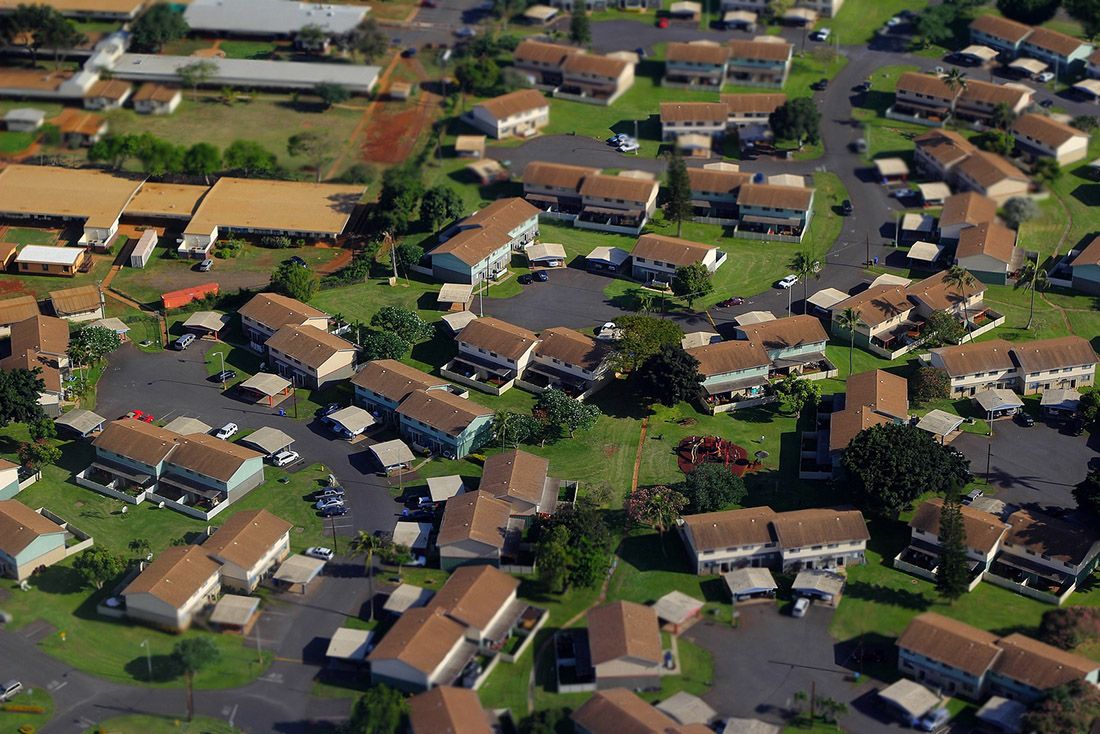
Housing hasn't gotten more affordable over the years; rather, it is more expensive than ever. The quality of that housing isn't even necessarily better, particularly in cities, where the housing stock often hasn't changed in a century. We are literally paying more for the same or worse shelter. There seems to be little improvement in the thinking of how to construct housing since the Levittown post-war boom period.
I recently had to find an apartment in Boston, and my only two criteria were in-unit laundry and some sort of air conditioning. You could argue these are "luxuries," but I would argue that it's 2015 -- both technologies are approaching 100 years old. And yet, the housing supply in Boston is so old, that the intersection of these requests represents just a handful of buildings in the city. That search was in comparison to a friend of mine in Korea, whose $300/month apartment has in-unit laundry. It's all about competition and what consumers are willing to pay.
The Wall Street Journal had an article today talking about the plight of people with six-figures unable to rent in cities like New York, San Francisco, and Cambridge, Massachusetts. Simply put, rents have increased far faster than incomes (in many cases, by more than 2:1), and that means that access to these cities is increasingly limited to an extremely small fraction of the population.
We have heard about lowering the rents, and programs like the one featured in the WSJ article that involve middle-class lottery allocations of rent-stabilized apartments.
Yet, we never really hear about the need for a much more radical approach: to simply do whatever it takes to drive costs of housing down to $1,000 for a one bedroom in rent, and $100,000 for ownership.
To make that happen of course would require that rents decrease in Cambridge by 64%, and in other places by an even higher percentage.
It sounds impossible, but I believe there is a mathematical case to be made that not only is it possible, it is eminently doable (of course, not without plenty of people opposed to any change in our current system).
How do we get there? Here are some ideas:
The largest single cost to housing today is construction. Why is construction so expensive? Many reasons: high labor costs, the fact that U.S. housing is often custom-designed (particularly inside cities), building codes have gotten more complicated, cities often require developers to put up incentives like road and sidewalk improvements as part of the permitting process, etc. etc.
To get costs lower, we need to work harder on standardizing large building construction, simplifying designs and materials, and increasing research spending on improving construction efficiency (drones, automation, etc.)
Hi, I'm Danny. I'm Partner, Research at VC firm Lux Capital, where I publish the Securities newsletter and Riskgaming. I'm also a Fellow at the Manhattan Institute in New York.
Formerly, I was managing editor at TechCrunch and a venture capitalist at Charles River Ventures and General Catalyst.