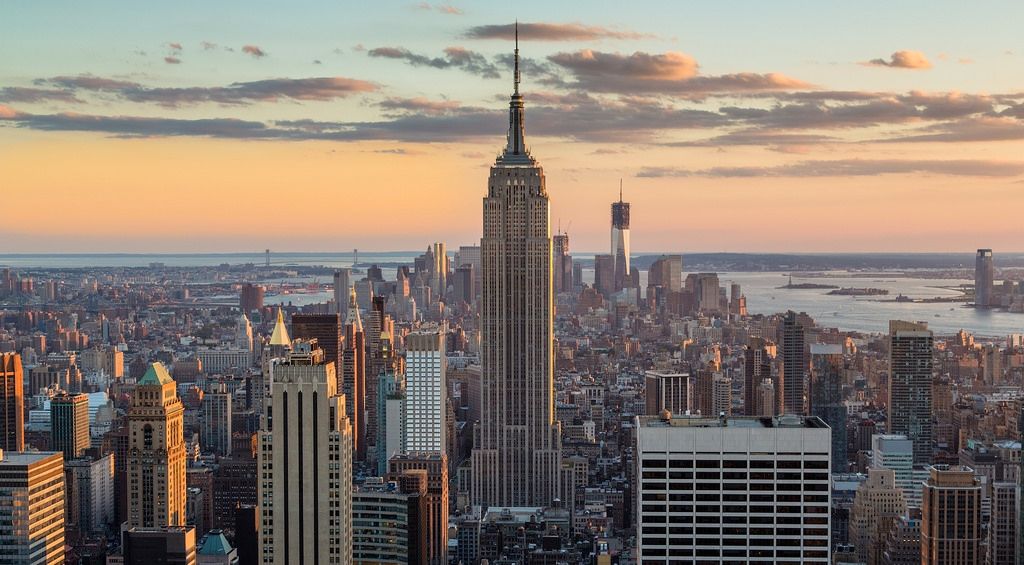
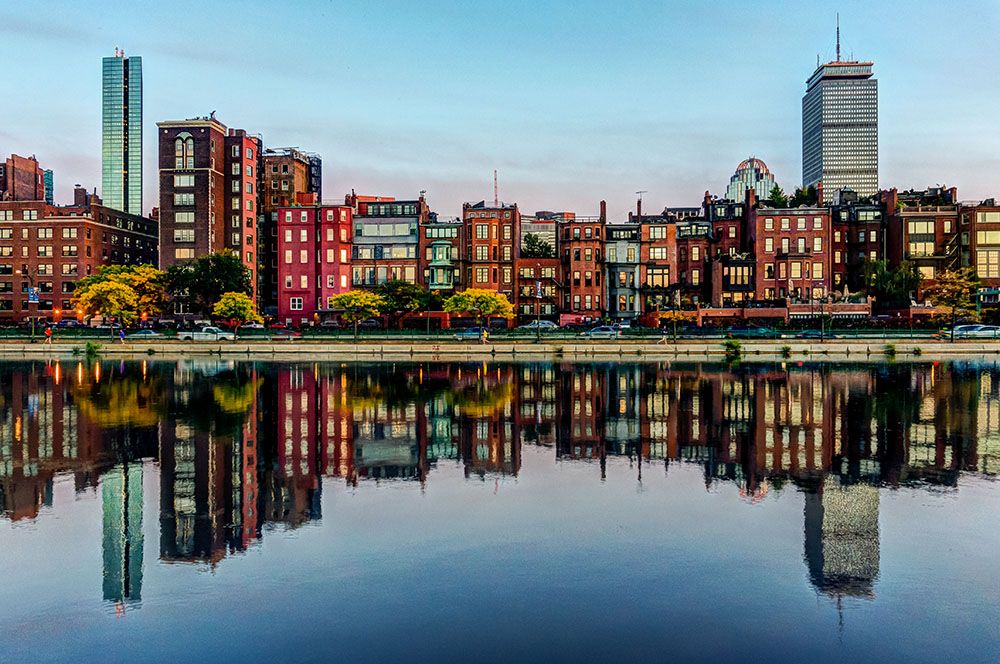
When I chose to move to NYC from Boston three months ago, it was with serious trepidation. I had spent six years living, working, and learning in Silicon Valley, and despite the growing evidence of New York's success as a tech hub, SV still remains the king of innovation by any statistic. To be frank, I'm ambitious like many of the people in tech I work with, and I want to run the kingdom, not some outlying New Amsterdam duchy.
Since summer is of course the best time in both NYC and venture capital to analyze an ecosystem in action, I figured I would give some early indications of what I have observed.
These observations are of course drafts — three months is quite limited to fully form an opinion on an industry as diverse and large as tech in NYC, and my opinions are held, but lightly. Views are subject to change!
Good: Cooperation – The tech ecosystem here is surprisingly cooperative compared to Boston and particularly Silicon Valley. Investors share deals much more freely, and it just feels as if everyone is trying to connect others in the ecosystem to make New York a stronger contender. Plus, there are a remarkable number of casual events to meet other people. While there may be an enormous number of stereotypes of New Yorkers, at least when it comes to tech, they are almost all false. In short, the asshole density in NYC is just lower than in SV. It's refreshing.
Ugly: Lack of Leading VCs - That cooperation comes from the unique moment that NYC finds itself in. I've been quite surprised by the number of VC funds in the ecosystem who don't lead rounds, particularly at the seed stage. While partially a function of fund size, it
Glut is a political word. It means that there is too much of a resource, and implies that the price of the good will eventually be priced below the suppliers cost. A glut in the oil market means prices are "artificially" low — even though such prices are clearly good for nearly every consumer in the country.
Maybe that language makes sense in the oil markets where oil companies, particularly those who frack in the Dakotas, are legitimately underwater and financially unsustainable.
But what does a glut of housing mean? Rents aren't coming down — there is actually more than enough demand to fill these units at existing rental prices. From the article: "Developers and consultants are not predicting that rents will plunge, but they do expect them to stagnate and perhaps ease in the short term." (emphasis mine)
So it's not really a glut, is it?
Also from the article:
“The market is saturated,” said Sofia Estevez, executive vice president at the developer TF Cornerstone, which will begin offering apartments in a 25-story, 714-unit rental building at 33 Bond Street next spring. “I think it’ll take a couple years to stabilize.”
Isn't rent stagnation the definition of "stabilize." In fact, doesn't stability make it far easier to model the capitalization rate for an apartment building and therefore makes it easier to plan for development?
Also, I will complain that "free rent" in the form of
Reuters wrote a piece this week on the rising "risk" of a housing glut in South Korea. Korea is one of the few places worldwide where housing prices have only seen moderate growth over the last decade.
This is a good thing.
Yet, reading Reuters, you would be surprised to learn just how terrible it is that housing prices haven't jumped like they do in Manhattan.
And unlike markets such as Hong Kong, Singapore and Sydney, South Korea has low immigration and few foreign buyers to stimulate sales and prices. (emphasis mine).
But why do prices need to be stimulated? To avoid a bubble. How can there be a bubble if prices are going lower? Because people are taking out large mortgages for these apartments, and so there is a mortgage bubble.
(God, there is always a bubble).
Housing inflation is easily one of the worst trends for young people in the world. We should be celebrating the fact that housing prices are going down — in fact, the government should be actively trying to lower the price of housing in desirable areas, rather than propping it up. Shelter should be getting cheaper over time, not more expensive.
I live in a city (and specifically, an island of that city) in which an apartment that sells for less than $1 million is considered news. That's sickening. If we want entrepreneurs to keep building and artists to keep dreaming, it starts with the cost of entry. Lower housing prices, stat.
Last month, I wrote about the desperate waves of venture capital, the concept that VCs are investing far too early into new trends in a race for returns. With the mobile, cloud, and social transformations slowing way down, VCs constantly have to search for other nascent movements — artificial intelligent, machine learning, virtual reality — in the hopes of touching greatness.
So yesterday's article about Docker caught my eye. Called "A Docker Fork: Talk of a Split Is Now on the Table", the story gives a brief overview of the acrimonious debate in the Docker community over its support for enterprise, its speed of backwards incompatible changes, and the ecosystem's roadmap for the future.
Talks of forks are hardly new in open source projects, and Docker is unexceptional in that way. What is exceptional is the vast amount of money that Docker has raised — $180.8m to be exact according to Crunchbase, including a rapid series of three rounds in 2014 and 2015.
Containers are clearly a foundational technology in the cloud, and have the potential to rewrite much of the way we organize enterprise IT. But that is precisely why this movement has been so dangerous for VCs: while an obvious transformation, IT transitions are slow, far slower than the rapid innovation and growth we expect in a startup.
So we wait for the container trend to mature, all the while hundreds of millions of dollars in venture capital (and billions in the whole space!) hangs in the balance.
It would have been better for Docker to get to deal with these problems under less pressure, allowing the product to grow with its user base. Unfortunately, the competitive pressure of VCs means that dollars flowed to containers really rapidly, significantly ahead of where the market actually sits.
I have read a couple of great articles this summer that I think are worth spending time with:
“A Honeypot For Assholes”: Inside Twitter’s 10-Year Failure To Stop Harassment. Trolling on Twitter and other social networks continues to endanger these communities. Why? Charlie Warzel does a great job of peeling back the challenges facing Twitter as it tries to tame its unruly users. The challenge ultimately is where to draw the line between free speech and censorship. Clearly, we have a long way to go.
Intellectuals are Freaks. Michael Lind, founder of New America Foundation, wrote a cogent and persuasive essay that intellectuals are, well, freaks. Namely, they come from highly homogenous backgrounds, live highly homogenous lives, and congregate in just a few places around the world. If you want to understand the gulf between academia and "the real world," here it is.
The super-recognisers of Scotland Yard Xan Rice's article is about a special detective unit of Scotland Yard that uses humans with super sensitive memories for faces to capture criminals. It's a great read on its own, but also an incredible story of how man still has power over machine (although the two combined are quite formidable!).
Make Algorithms Accountable Julia Angwin writes in the New York Times the basic outline of why we need to have more legal accountability for algorithms. I happen to agree wholeheartedly here, although there doesn't appear to be much of a movement yet.
The Books
Two books that have absorbed quite a bit of time this
VCs are widely perceived to be groupthink aficionados. (What do we invest in? Whatever they are investing in next door!) There is some truth to this notion — clearly, many investments are thesis driven, and intelligent investors are going to recognize the same trends in the marketplace and reach similar conclusions.
One aspect of that groupthink that is lesser noticed is the groupthink among founders. Hundreds of startups don't just materialize out of thin air — founders have to conceive and build their products. They see the same trends in the marketplace as investors, so as an ecosystem, everyone ends up on the same wavelength pretty quickly.
Nowhere is this more obvious than in the the Great Bots Startup Explosion of the past twelve months. There doesn't seem to be a day that goes by than I don't receive some fundraise deck for another take on the future of our bot economy. Unfortunately, the "bot economy" is a bit like the economy of East Timor — it literally exists, albeit so small that it probably is irrelevant (and probably for some time!)
Desperate Waves
Why then have investors and founders spent so much time on the space?
VCs have gotten more sophisticated in our understanding of where returns come from in the technology space. We now understand that with massive outliers, most of the returns in our industry come in "waves": changes to technology that disrupt old companies and ensure that new startups can pick up wallet share or eyeballs from incumbents.
In the 1990s, the wave was the Internet, which upended traditional consumer and enterprise businesses almost completely. In the 2000s, we had the combination of social, mobile, and cloud (which also includes SaaS) — absolute tidal waves that completely refactored whole industries. Ten years ago,
As I mentioned in my blog post yesterday about Boston, I just moved to New York City to launch (or perhaps more accurately, relaunch) CRV's presence in the city.
New York City has been written about extensively by investors who have lived here for decades. I just got here — so unlike my piece on Boston — I hardly have the depth of understanding of the local startup scene to write any meaningful analysis.
Instead, I want to talk a little about what I hope to contribute to this growing ecosystem, as well as the reasons why CRV is making a foray into the city (besides access to jianbing).
Head of the Charles
First, I want to talk very briefly about CRV, which acronymized our name officially from Charles River Ventures last year. The firm was founded in 1970 in Boston, with a focus on spinning out startups from MIT's prodigious technical labs. The idea of university spinouts was not yet widely used by universities, nor was venture capital as an asset class widely known (it would take some more years for pensions even to be allowed to invest!)
From the very beginning of the firm's history, we have invested in companies that are pushing the frontiers of technology. It's hard to believe today, but the key technologies for sequencing genes were only discovered in the mid-to-late 1970s, following the discovery of DNA. Thus, some of our early wins from that era included Amgen, originally Applied Molecular Genetics, which today is a $115 billion market cap pharmaceutical giant.
That focus on technology continued throughout the 1990s, in which Charles River moved to the new frontiers around networking, security, and storage companies that underpinned the growth of the internet. Beginning in the early 2000s, we opened an
For those of you who don't follow me on Facebook, or have somehow managed to convince the LinkedIn gods (i.e. Satya Nadella) to not send you update emails, I have moved to New York City.
I'm super pumped about the move, but as always when I move to new cities, there is a feeling of wistfulness of the places I have been, and the places I might still be. It's also a moment to consider all of the changes that have happened with startups, technology, politics, and society these past few years. While these decisions are individual, the wider strains of society's trends always seem to mark their influence.
In short, it is time to take account of these personal experiences. I have lived in Cambridge/Boston for the past two years , so I want to talk a little bit about Boston today, and will talk about my plans in New York in a future post.
Scale, Scale, Scale
As many know, I have not always been the most enthusiastic booster of Boston. After two years of living there, I will say that those feelings have perhaps intensified, but at the same time, have become more nuanced. All cities have their positives and negatives, especially when it comes to their startup ecosystems.
Part of the challenge of living in Boston for me was the immediate comparison to the two cities I had lived in previously: San Francisco and Seoul. Boston is incredibly small compared to Seoul, and even compared to San Francisco. Boston's direct population is only around 650,000, with 4.6 million in the metropolitan region. San Francisco proper is 840k (7.15 million metro), while Seoul's population is 10 million with 24 million in the Capital Region.
Hi, I'm Danny. I'm Partner, Research at VC firm Lux Capital, where I publish the Securities newsletter and Riskgaming. I'm also a Fellow at the Manhattan Institute in New York.
Formerly, I was managing editor at TechCrunch and a venture capitalist at Charles River Ventures and General Catalyst.