Cross-posting this from Facebook:
➜ Continue reading...Searching for that Yellow Brick Road (Princeton Spring 2017 Lecture)
Searching for that Yellow Brick Road
Danny Crichton
Agenda
The Challenges of 2017
Slow Growth, Massive Inflows, Monopolies, and Quantification
The Good, Bad, and Ugly of VC Life
But First,
Who Am I?

Who Am I?
Short version:
Investor at CRV
(Charles River Ventures)
Early-stage, consumer-focused
Based in NYC
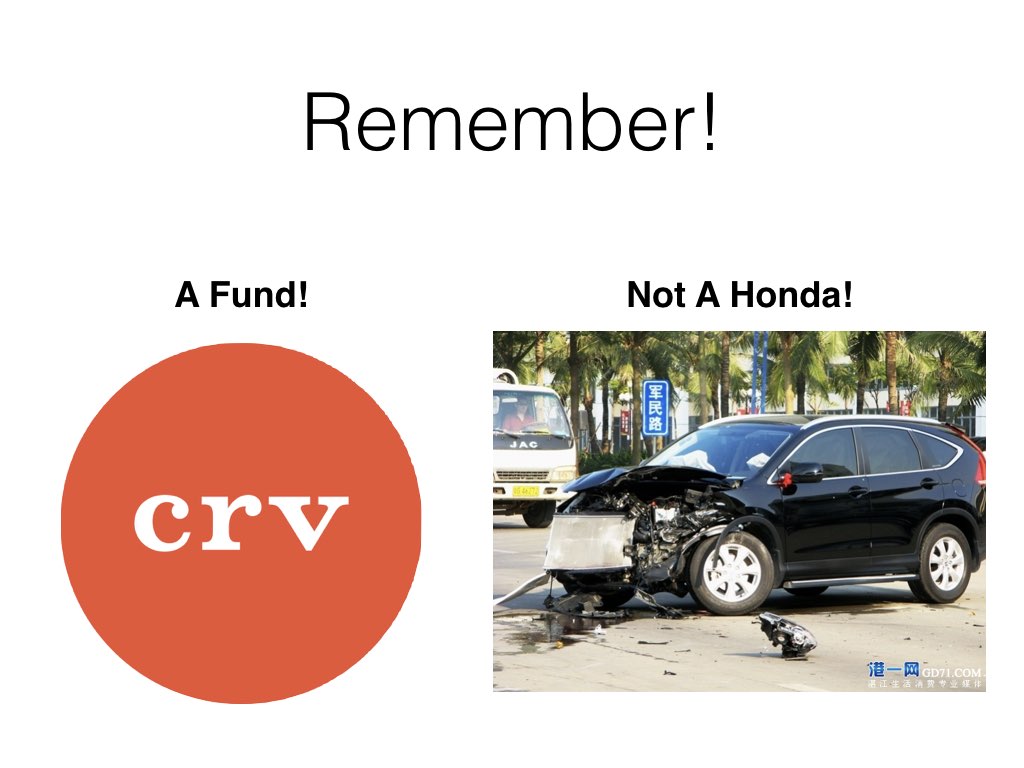
Remember!
The Challenges of
Venture in 2017

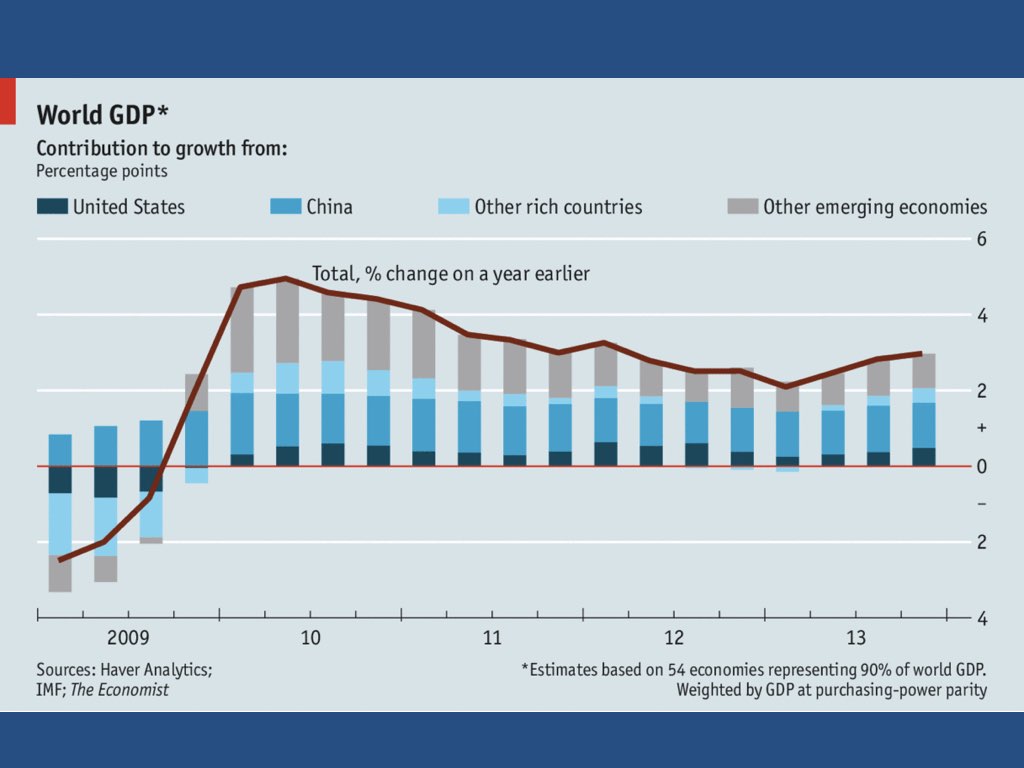
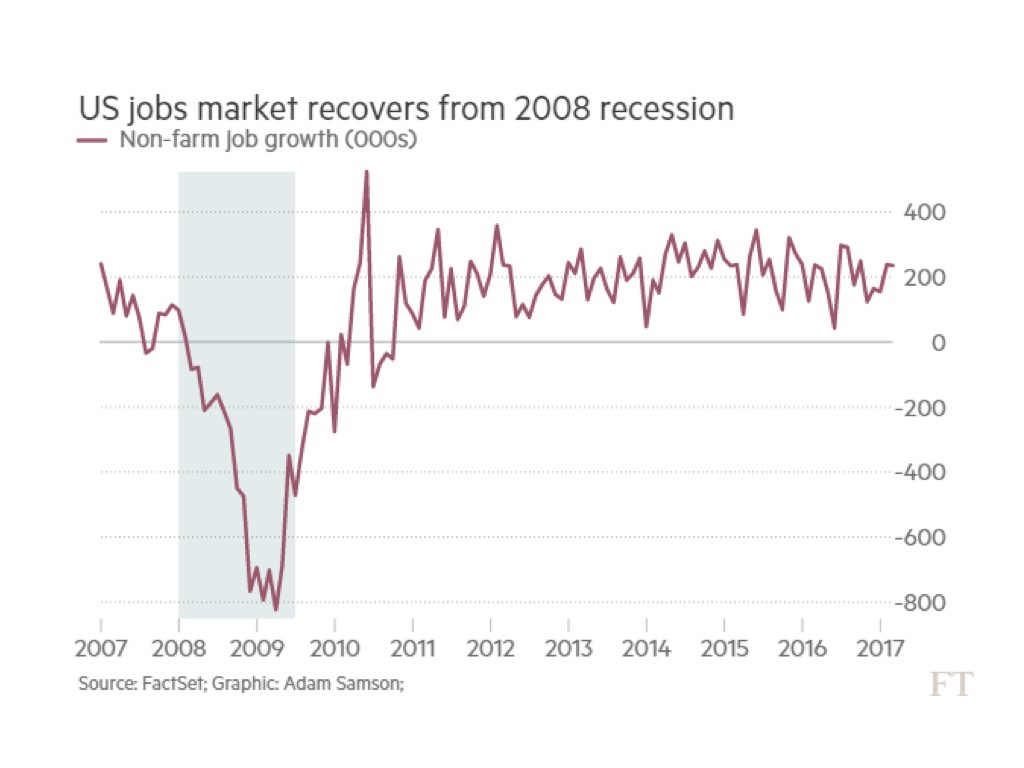
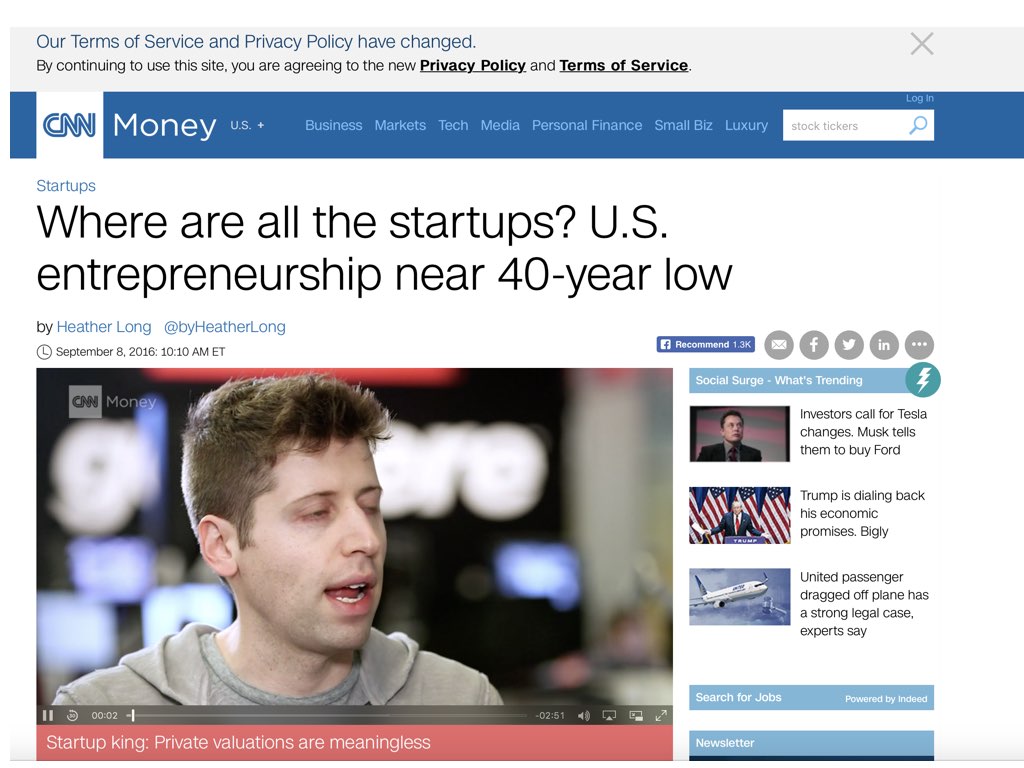
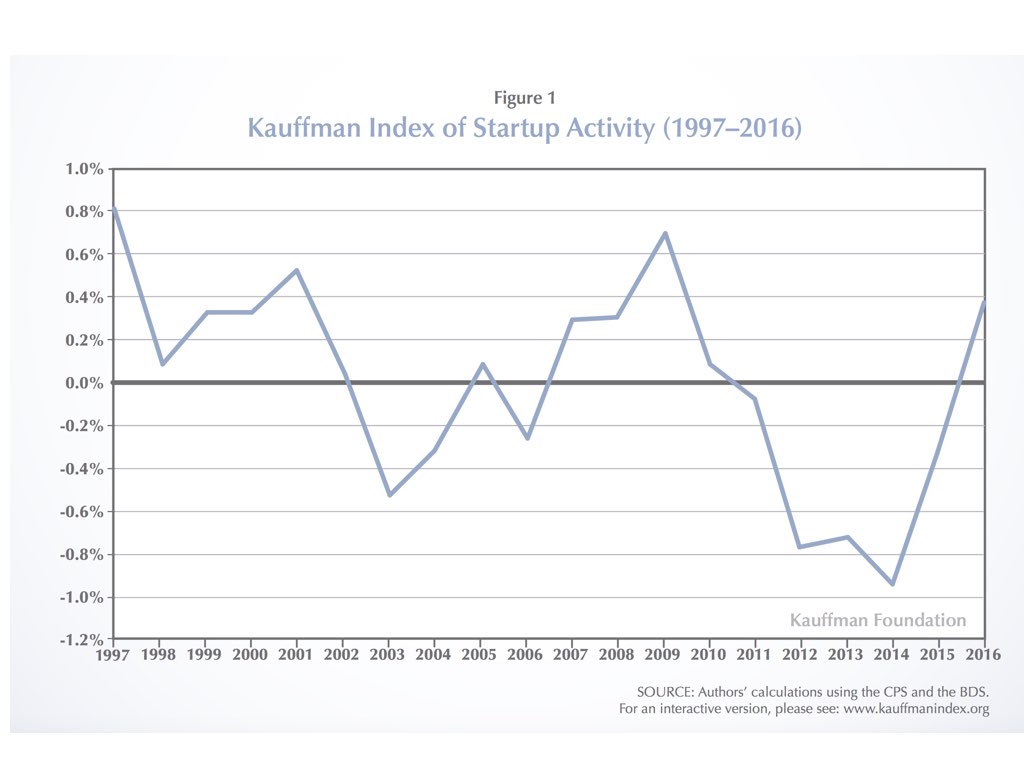
What’s happening?


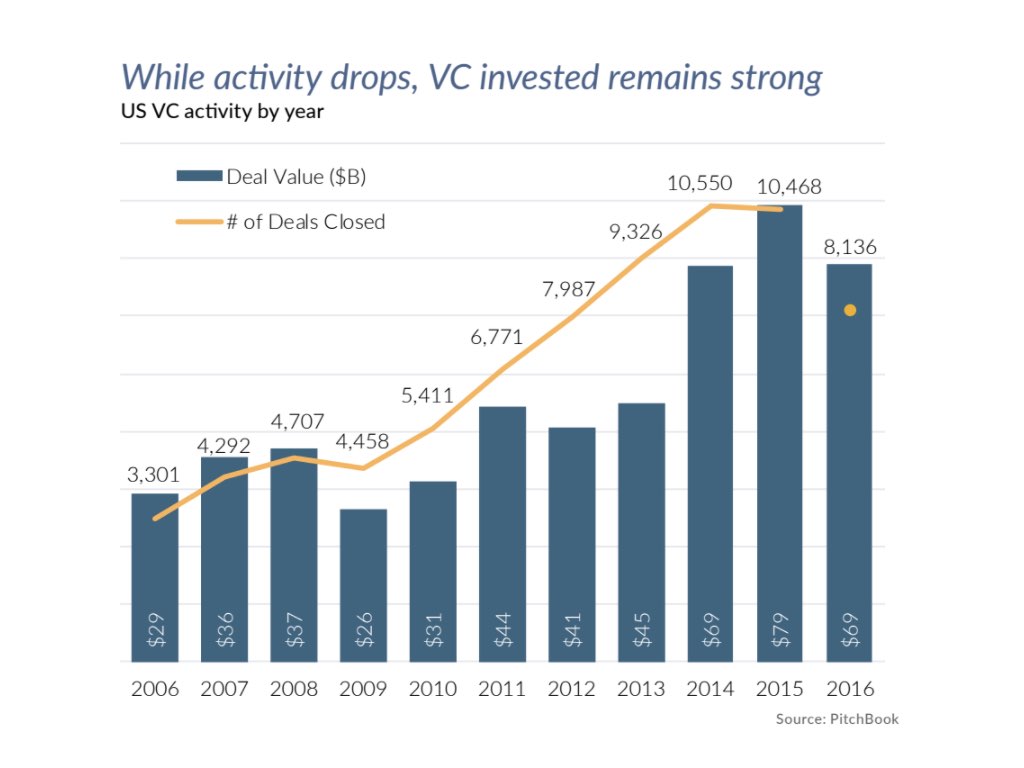
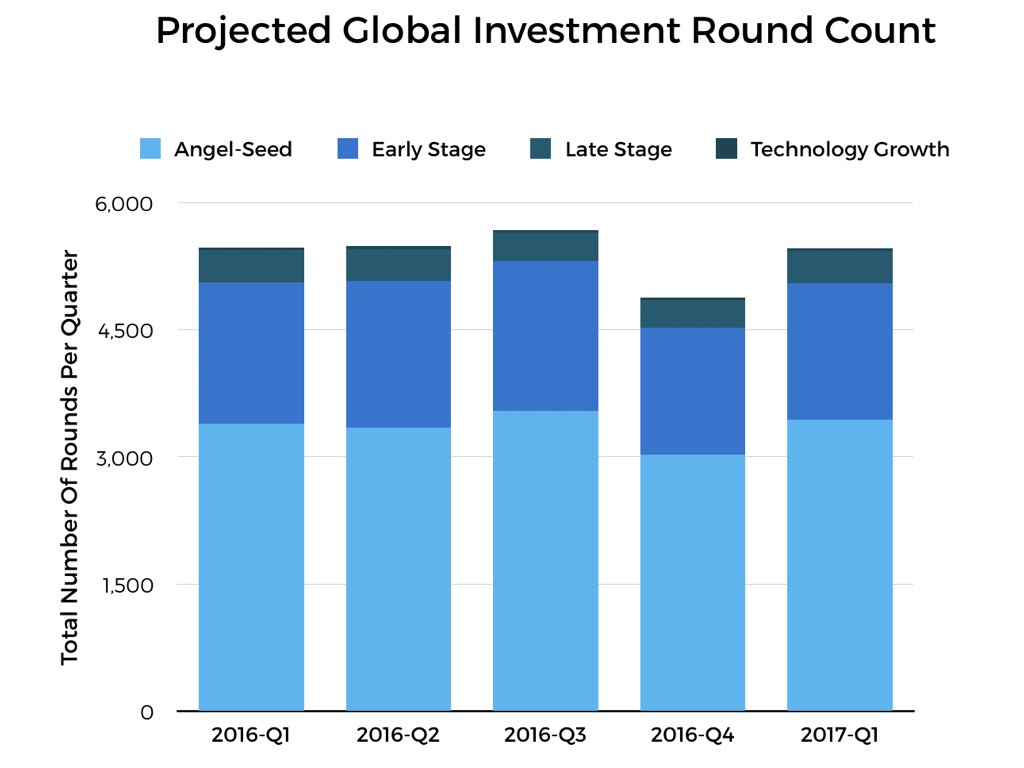
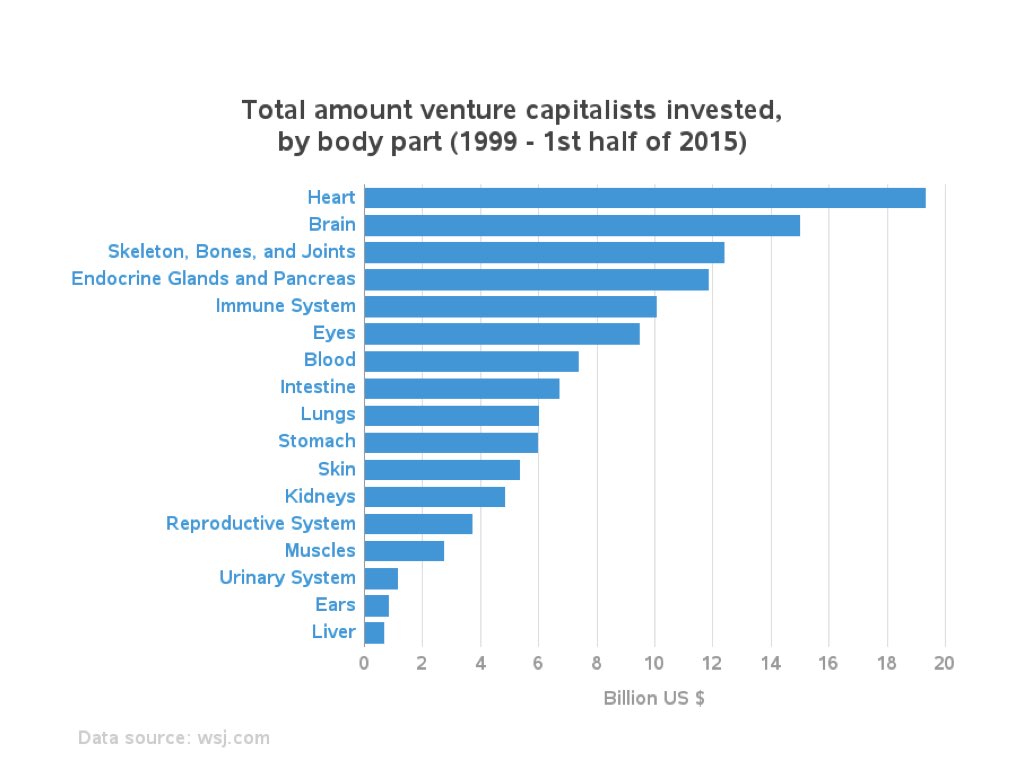
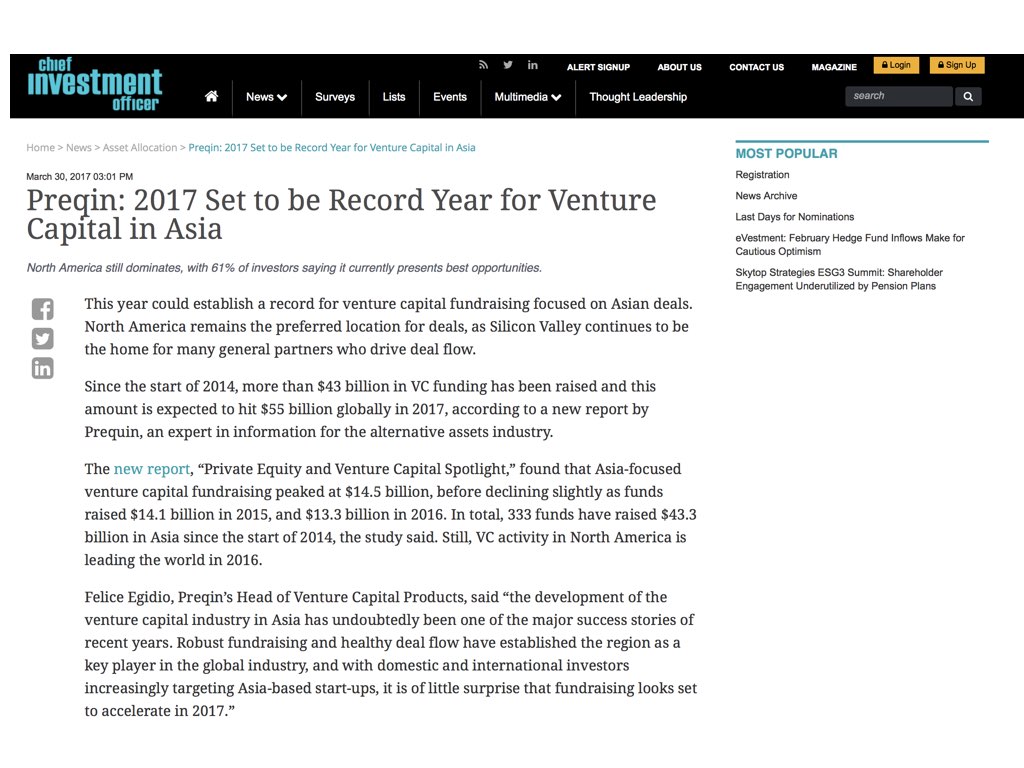
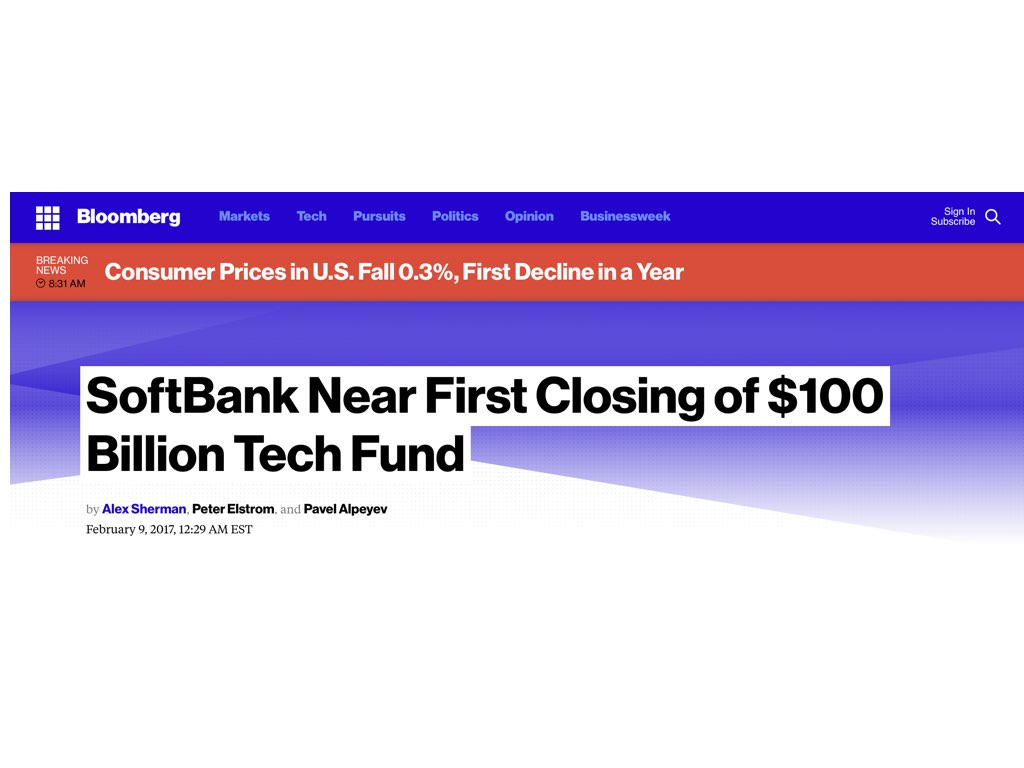
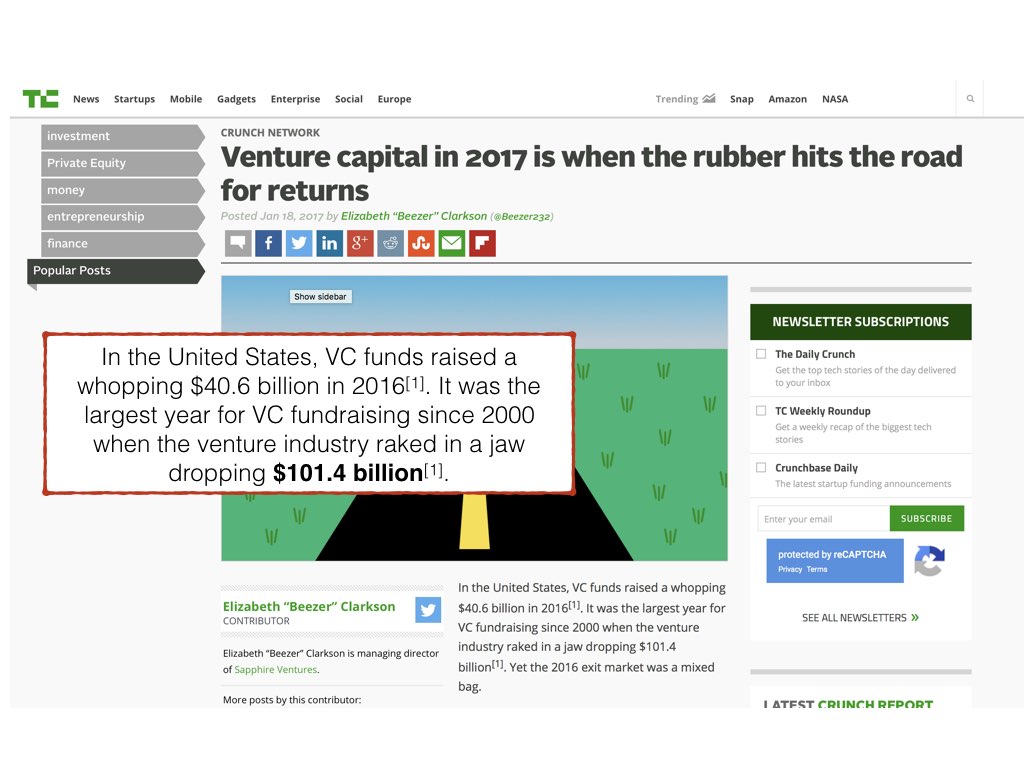
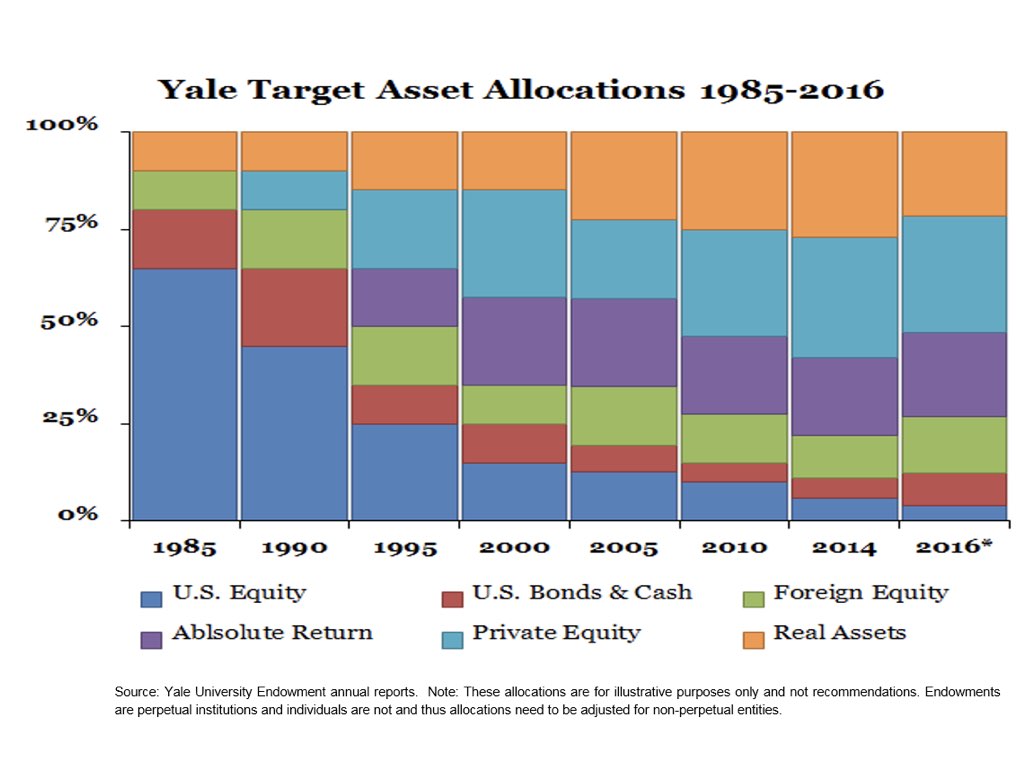





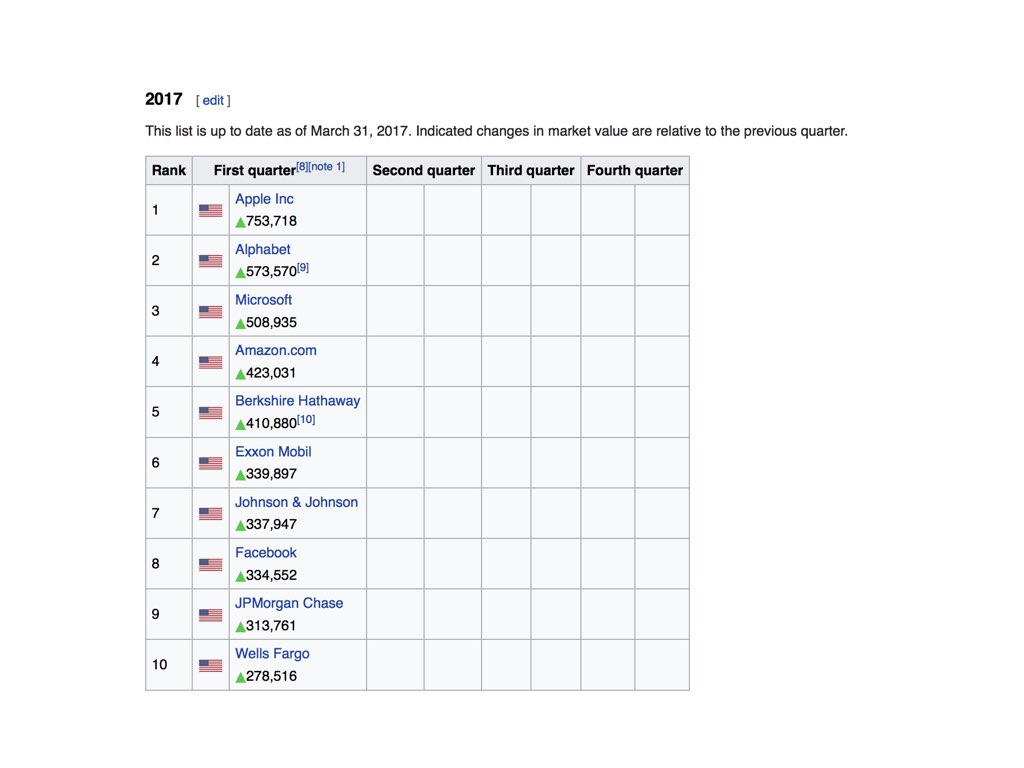
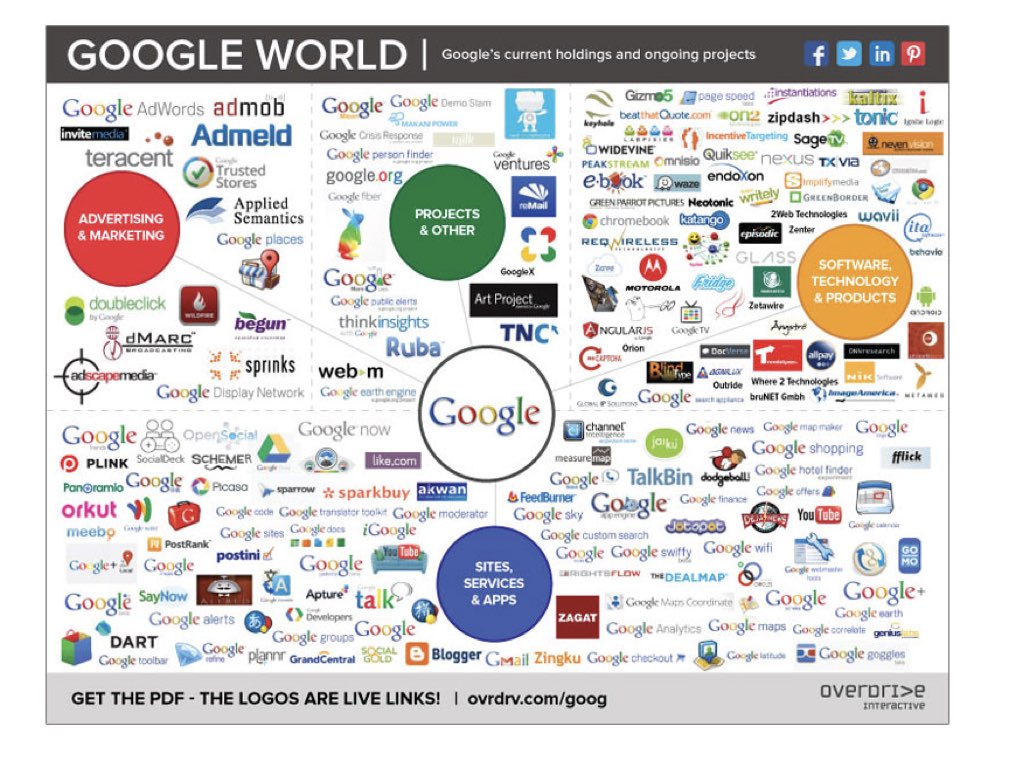
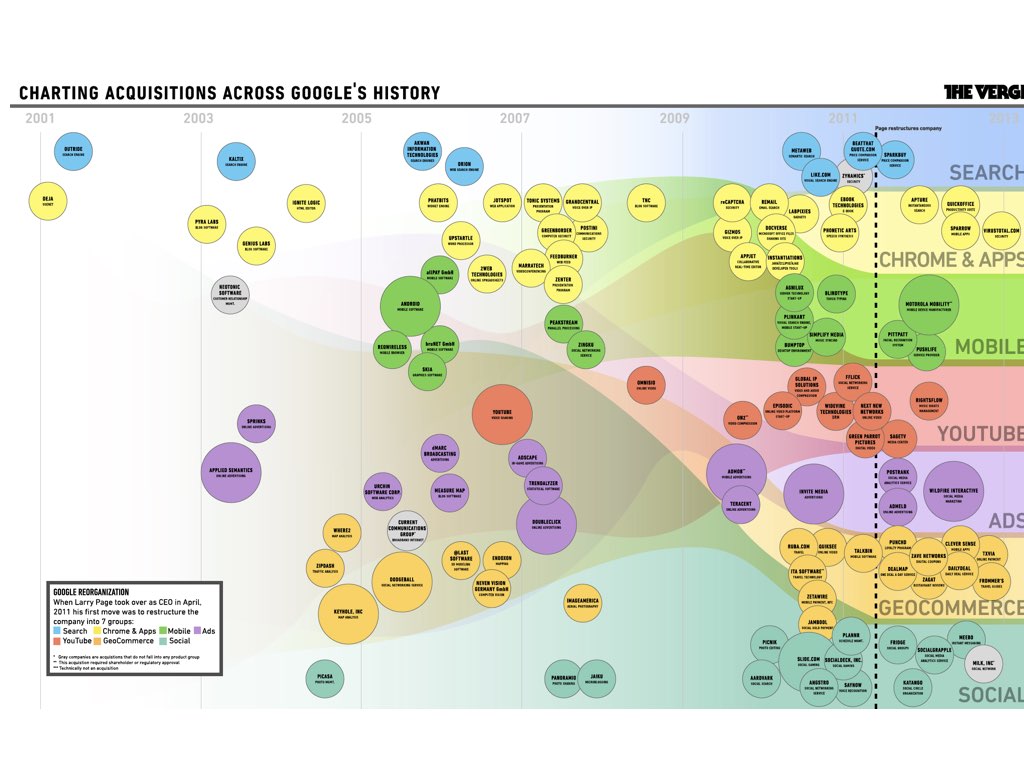
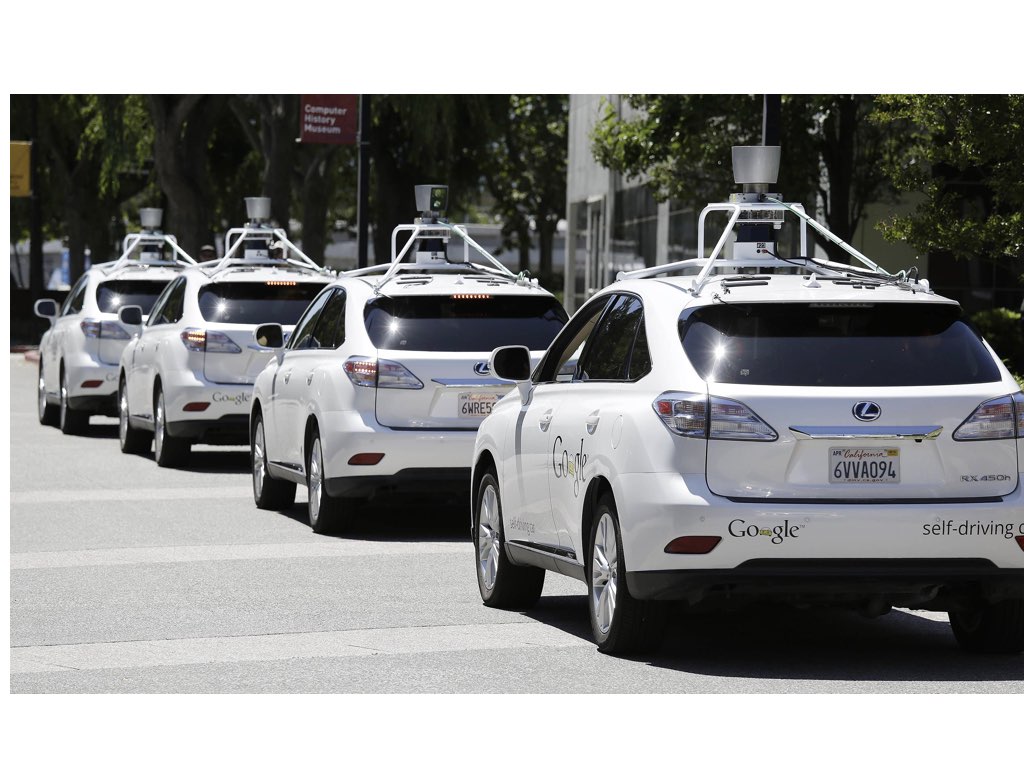
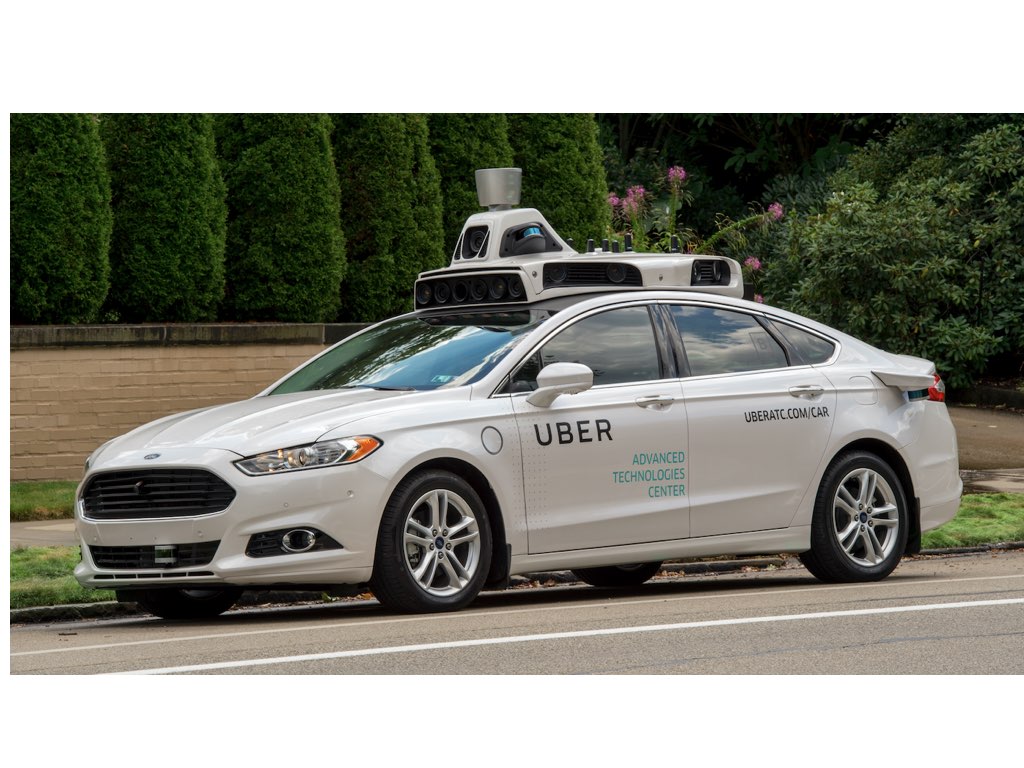
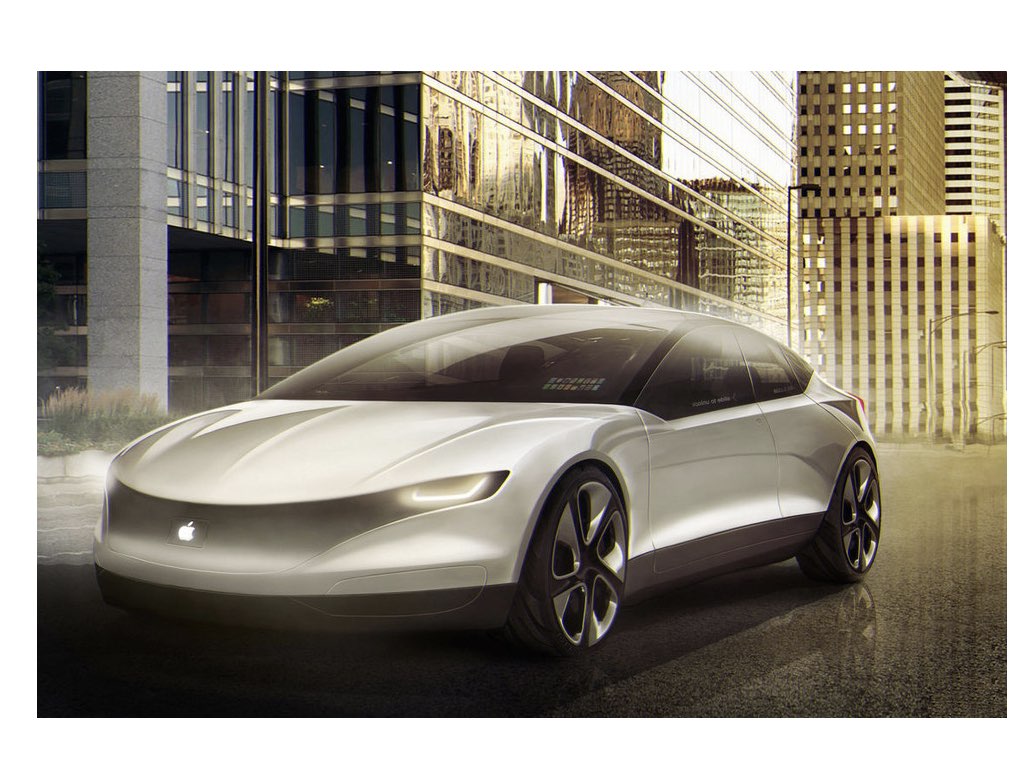
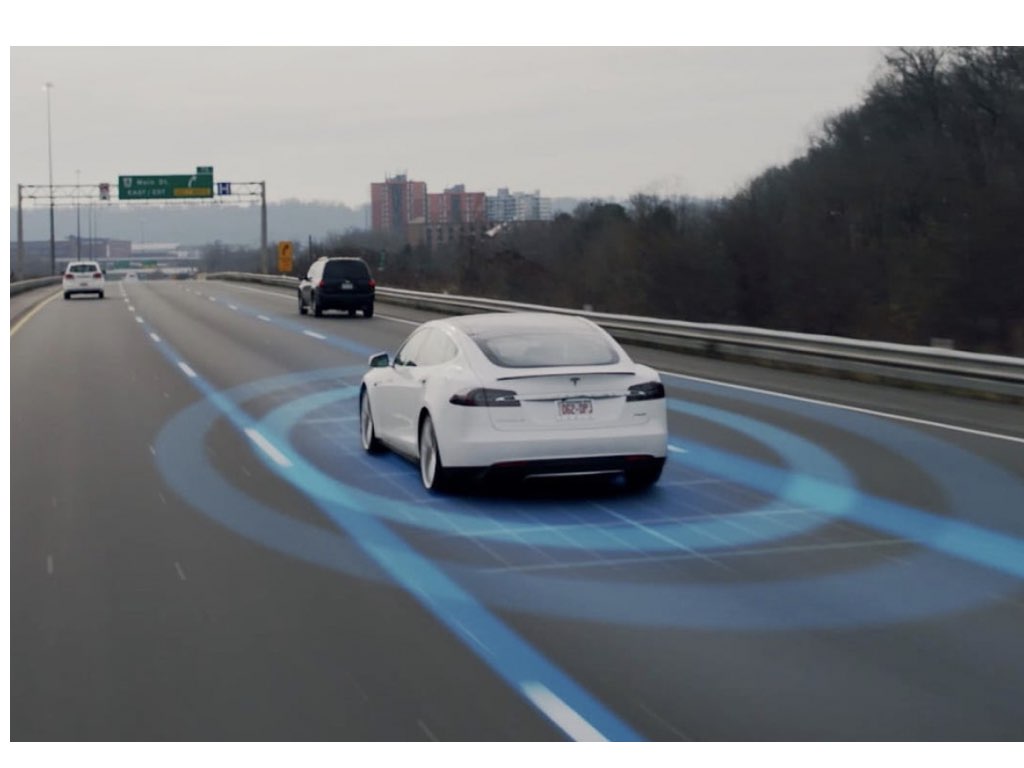
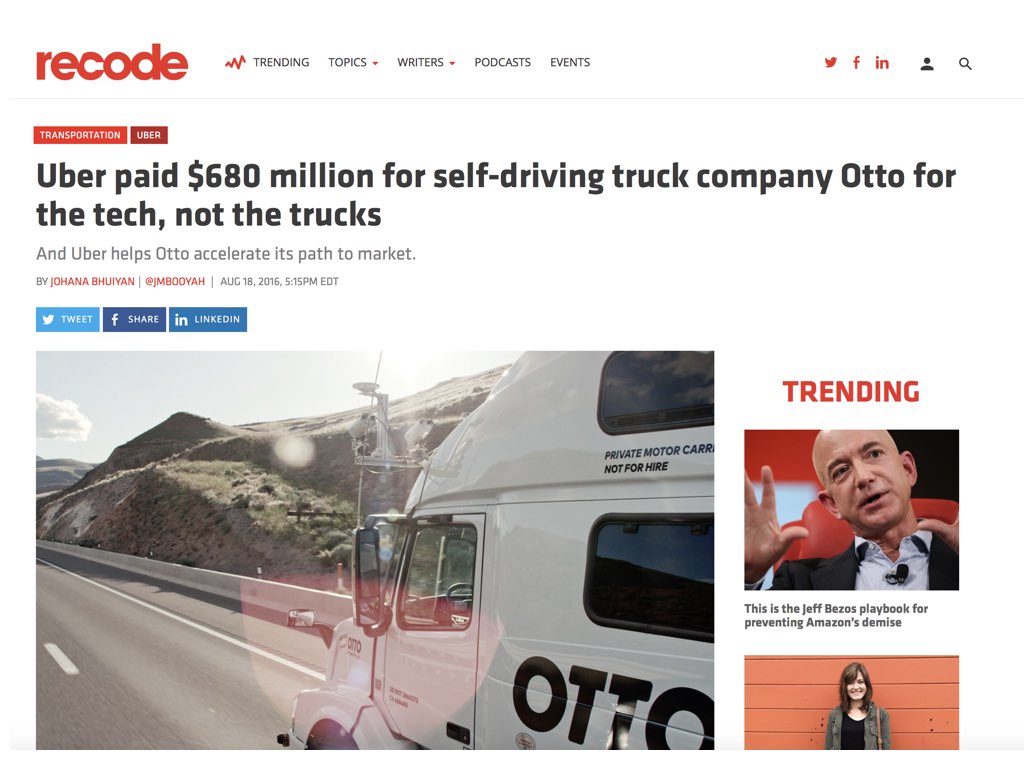
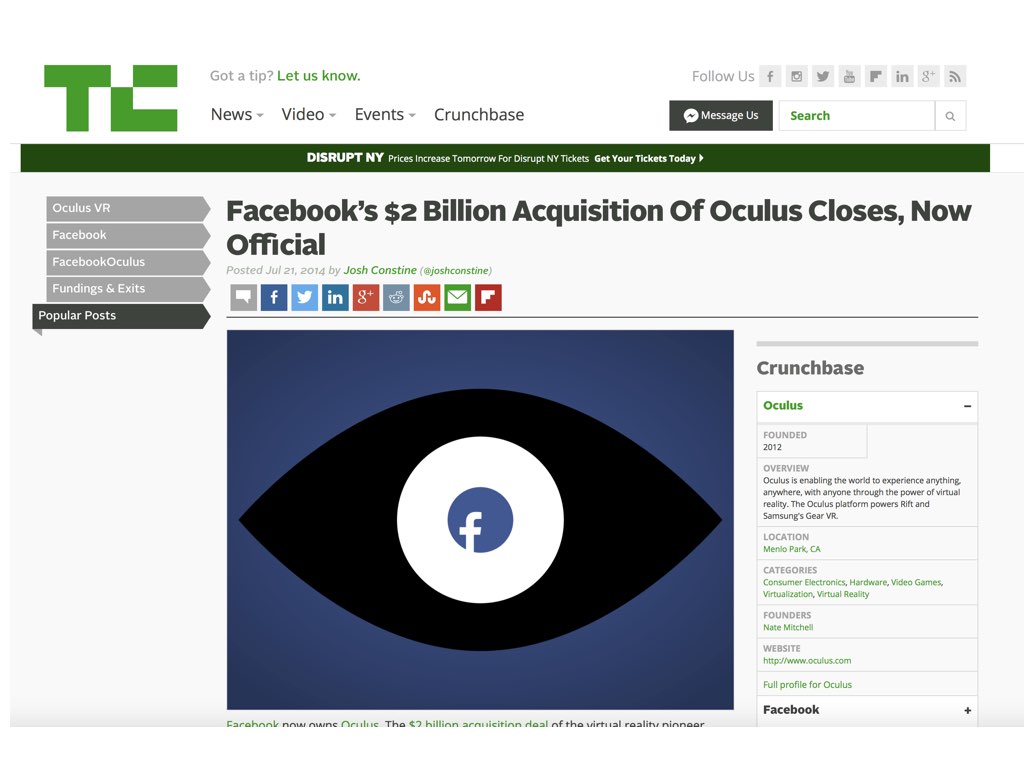

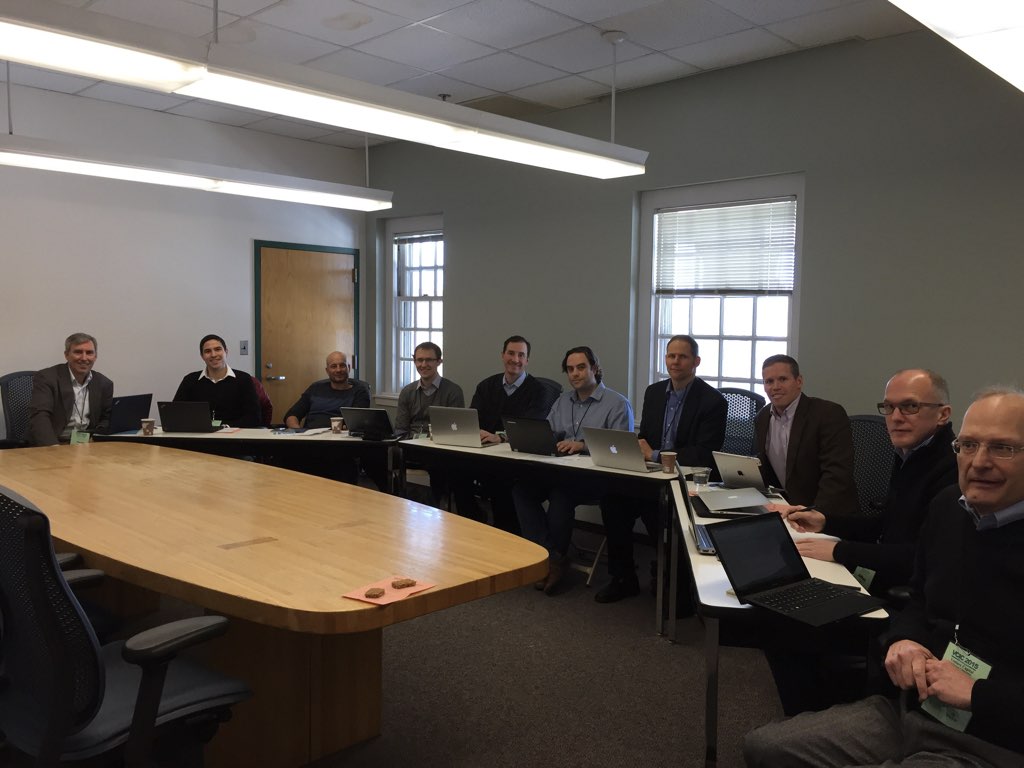

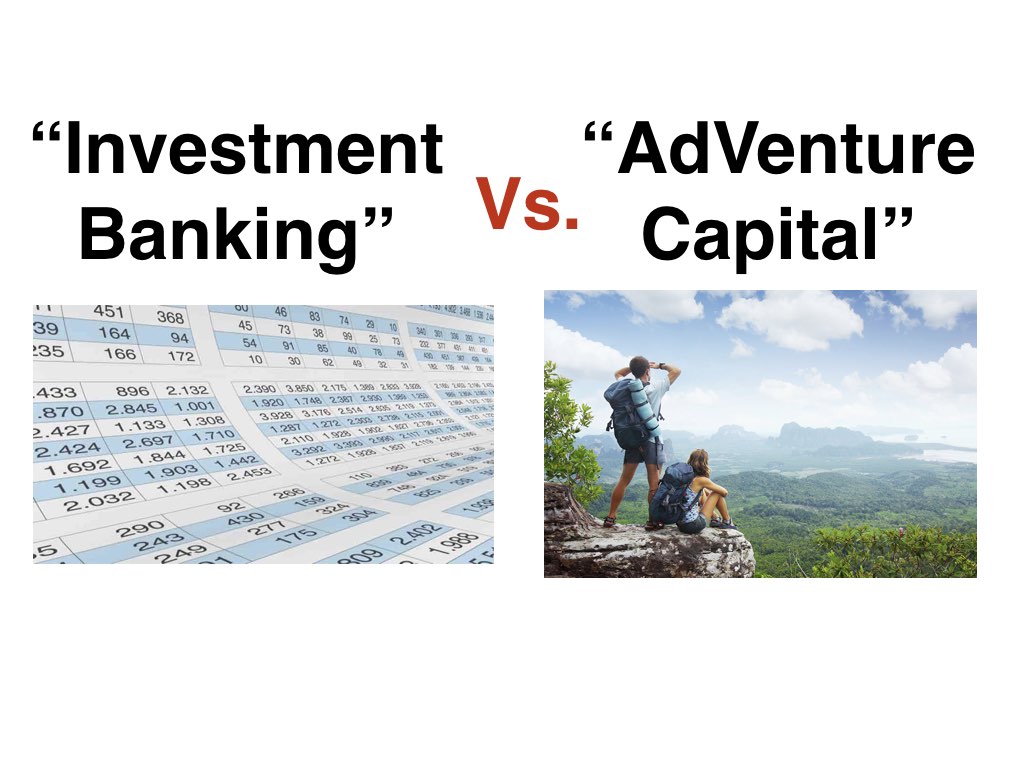


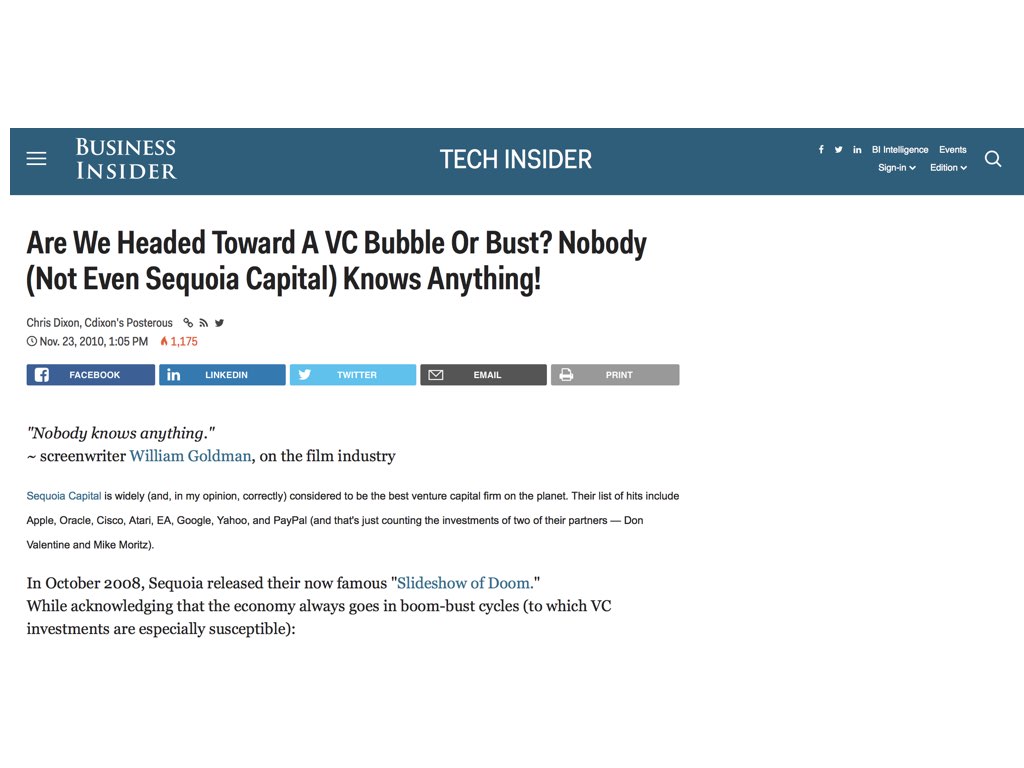








Takeaways?
Good Lord, Of Course Red Lights Will Still Be Here With Autonomous Cars

Cross-posted on Medium
I’ve been told twice in the past week that red lights (everyone’s favorite traffic signal!) are going to disappear with the advent of autonomous cars. The first time was from a VC friend of mine, after which I got into a fairly extended argument about why red lights and traffic are still going to be with us for a very long time (i.e. forever).
[The second time came from TechCrunch], which interviewed Jeffery Owens, the CTO of Delphi, one of the largest auto suppliers in the world. In the video’s intro, Owens says that (slightly edited) “Ultimately, if every car was talking to each other, you wouldn’t need stop signs or stop lights at all. That would be kind of an end state and traffic flow would be incredibly smooth. No traffic jams. You wouldn’t need roundabouts, you wouldn’t need lines.”
I can expect venture capitalists to hype technology, but I found it more than a little disturbing that the CTO of one of the largest auto suppliers would continue to purvey this false concept. Traffic is here to stay, and so are the red lights and other traffic signals that we love to hate. That said, capacity can definitely increase, even while traffic remains. The distinction between the two is critical to understanding the future of transit.
A Pedestrian Problem
Mathematically, the easiest way to prove that this notion of no red lights is false is to just give a counterexample. In this future world of autonomous cars, people are still going to exist — especially in cities — and those people are going to continue to walk on sidewalks. One of the reasons that traffic management is so complicated is that it isn’t just designed for cars — it
➜ Continue reading...
Cross-posted on Medium
If there was ever a model of a true love-hate relationship, it would be programmers and JavaScript. JavaScript is the language of the web, perhaps the single most powerful force for innovation and change in our modern societies. With just a few lines of JavaScript, engineers can move markets, change lives, and build the future. But the language has also traditionally been one of the most annoying programming environments available to the contemporary hacker, filled with traps, pitfalls, and awkward behavior.
You could write that javascript == Good && javascript == Bad, but then we would have an argument about equality operators. Such is the JavaScript life.
Or at least, to my eyes, it used to be. I got JavaScript fatigue before it was fashionable, way back in 2011. I basically ignored the entire ecosystem — including Node — in the interim, while happily programming away in Python 3 and its excellent stats libraries.
This past year, a number of great summaries of the JavaScript ecosystem were published, including the quite critical[How it feels to learn JavaScript in 2016]. In reading these articles, I realized that everything I knew about JavaScript and its platform was just completely out-of-date. ES2015? Arrow functions? Transpilers? Babel? React?
It was like people were talking in a foreign language — and they were, for the JavaScript I had grown up with was dead, and had been replaced with something far better (although still with quirks).
I have never been more excited about JavaScript than today in 2017. And while I understand the fatigue that many engineers feel (I would too if I had churned through front-end libraries like [Japan churns through prime ministers]), it seems to me that JavaScript today has never been in a stronger position to build the
➜ Continue reading...“Artificial Intelligence” & “Big Data” Are Newest Entries to My 2017 Dictionary of Uselessness

Cross-posted on Medium
Sometimes you just can’t take it anymore.
Over the past few years, I have seen an absolutely delirious spike in the number of startups quoting “artificial intelligence” and “big data” in their pitches. This would be okay if these startups actually did something with artificial intelligence or big data, but unsurprisingly for early-stage companies, they often have neither the data nor the technology to fully capitalize on these “trends.”
Much like how the words “innovation” and “Silicon Valley” have become meaningless, AI and big data no longer say anything about a startup, but instead represent a completely vacuous description of the otherwise exciting features of a new business. These terms are no longer distinctive, and my (first) advice to founders in 2017 is to not bother touching them from here on out.
This isn’t a rant against buzzwords, per se, which in specific contexts can be quite useful. Rather, it’s a criticism of a facile thought process of what differentiates a technology-based startup. Saying you use artificial intelligence is like saying you use a networking library to build the company. These days, some level of artificial intelligence is built into every single product built with code.
Likewise with big data: every startup today is tracking their data and using it as part of the feedback loop. Some do it better than others of course, just as some teams push the AI boundaries a bit further than others. But it’s not an interesting point to start a conversation.
We are witnessing an absolutely incredible period of innovation where some of the most frontier work in artificial intelligence, data processing, computer vision, and more are available as open source libraries available with a quick pip install. It’s incredibly exciting what a
My Path in VC
Danny Crichton
Who Am I?


Who Am I?
Short version: Investor at CRV (Charles River Ventures)
Early-stage, consumer-focused
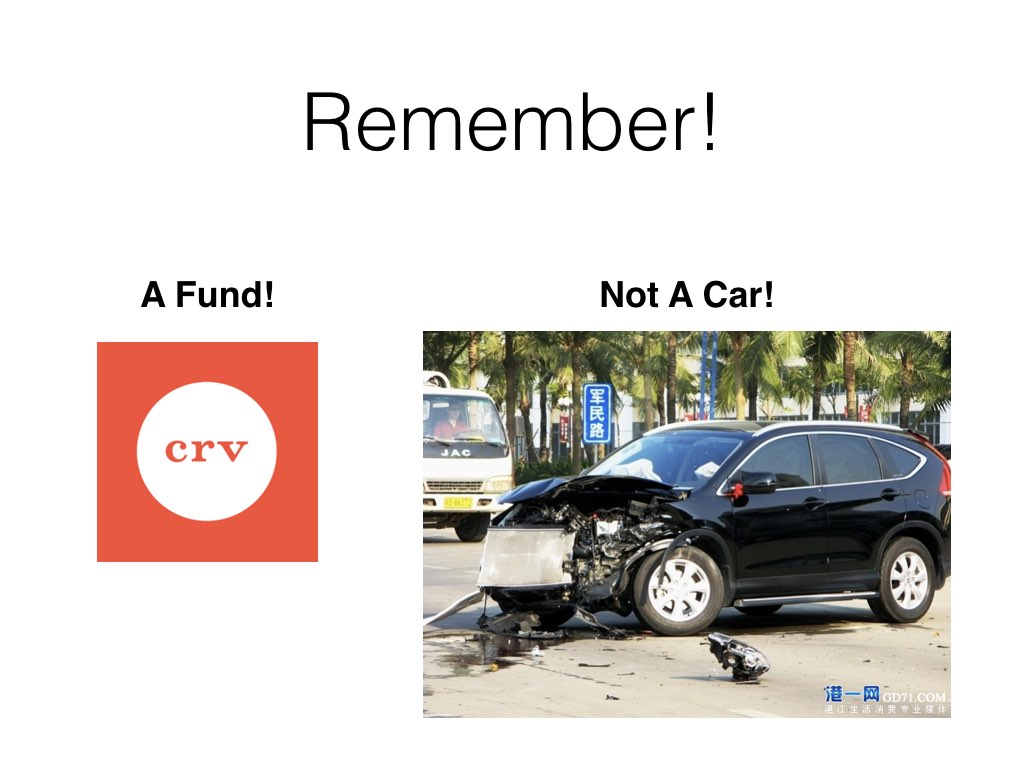
Remember!
How did I get here?


How did I get here?

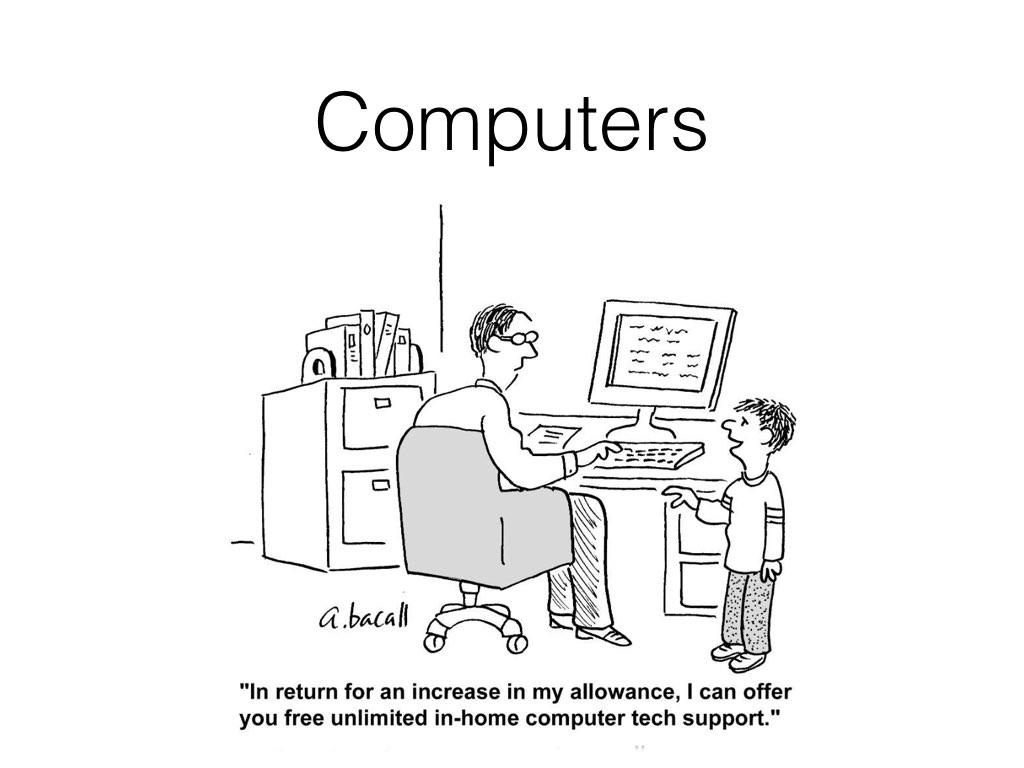
Computers
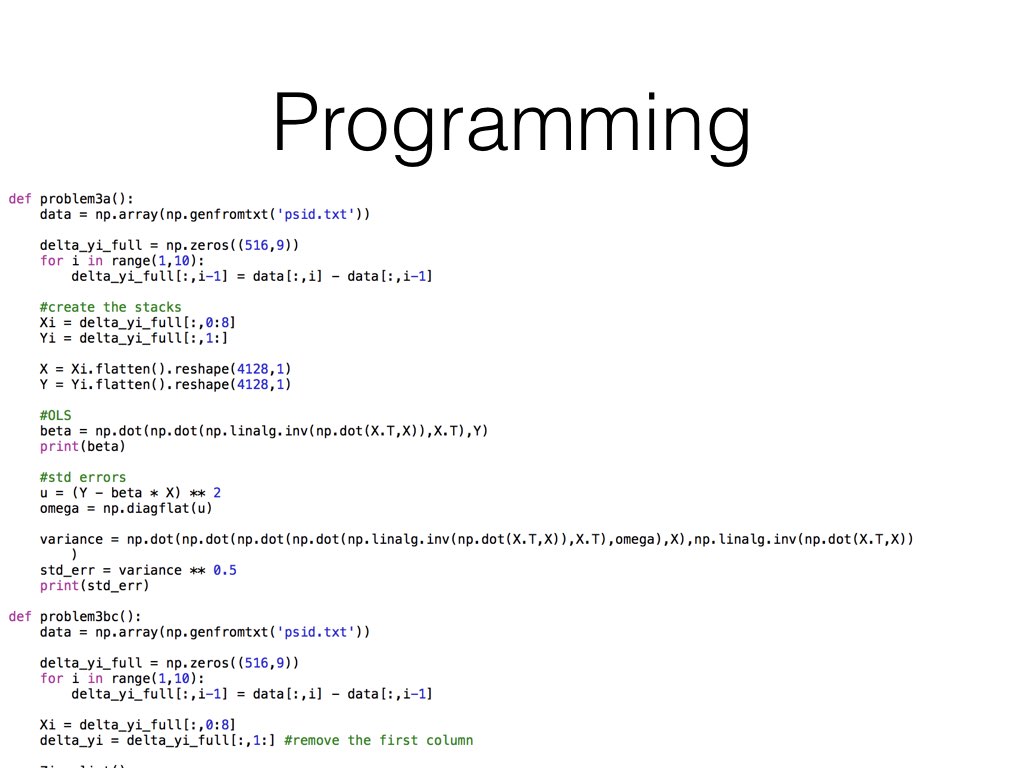
Programming
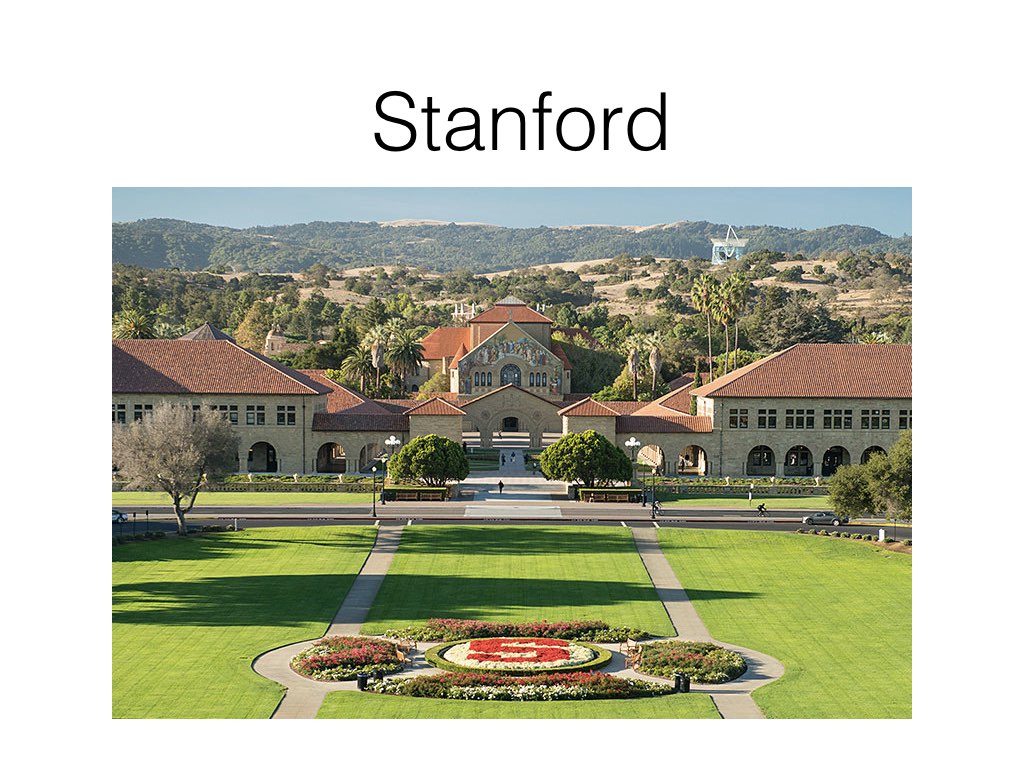
Stanford
Intelligence


Korea

Breaking into Venture

How do you get hired?

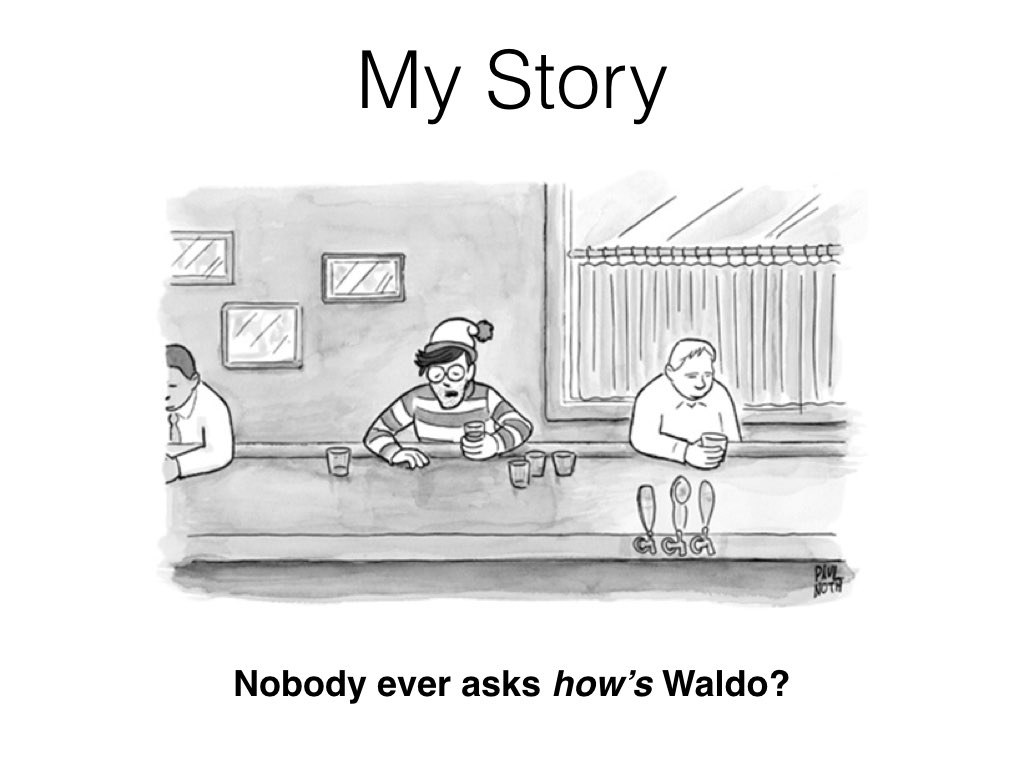
My Story
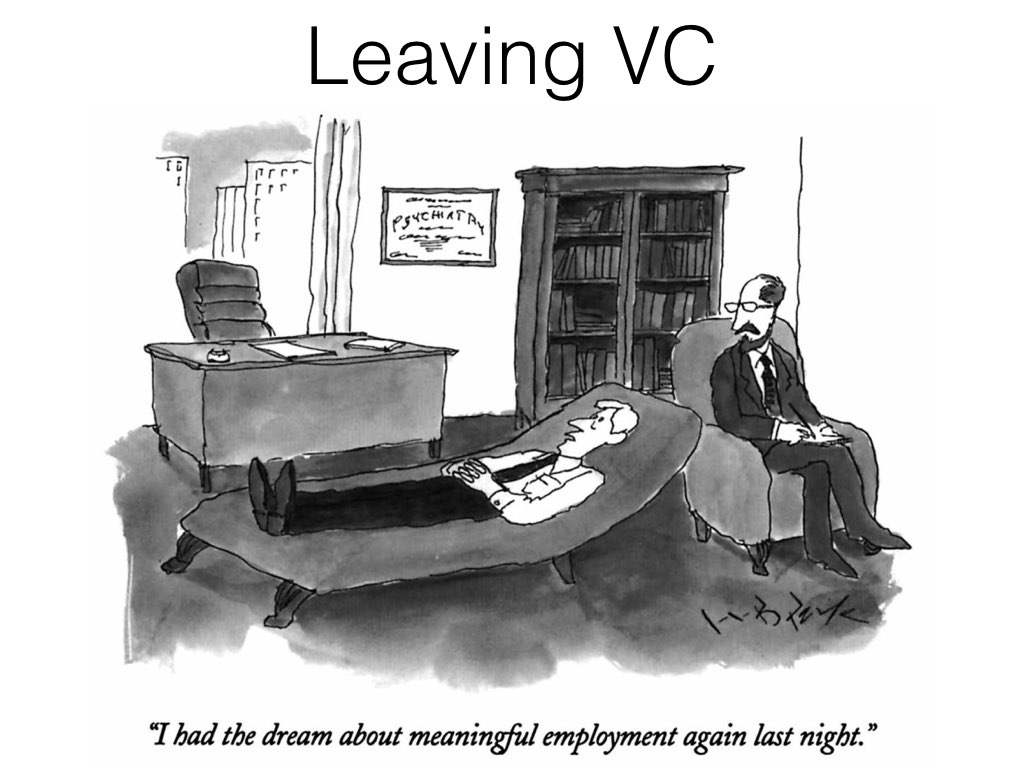
Leaving VC
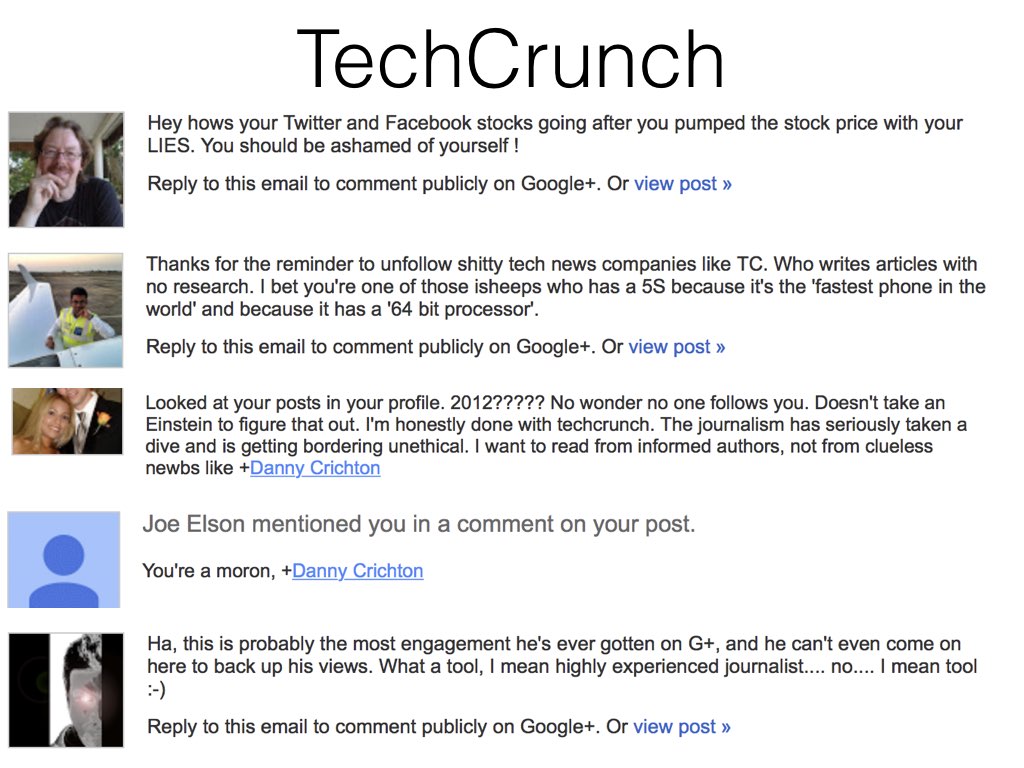
TechCrunch

Grad School

Returning to Venture
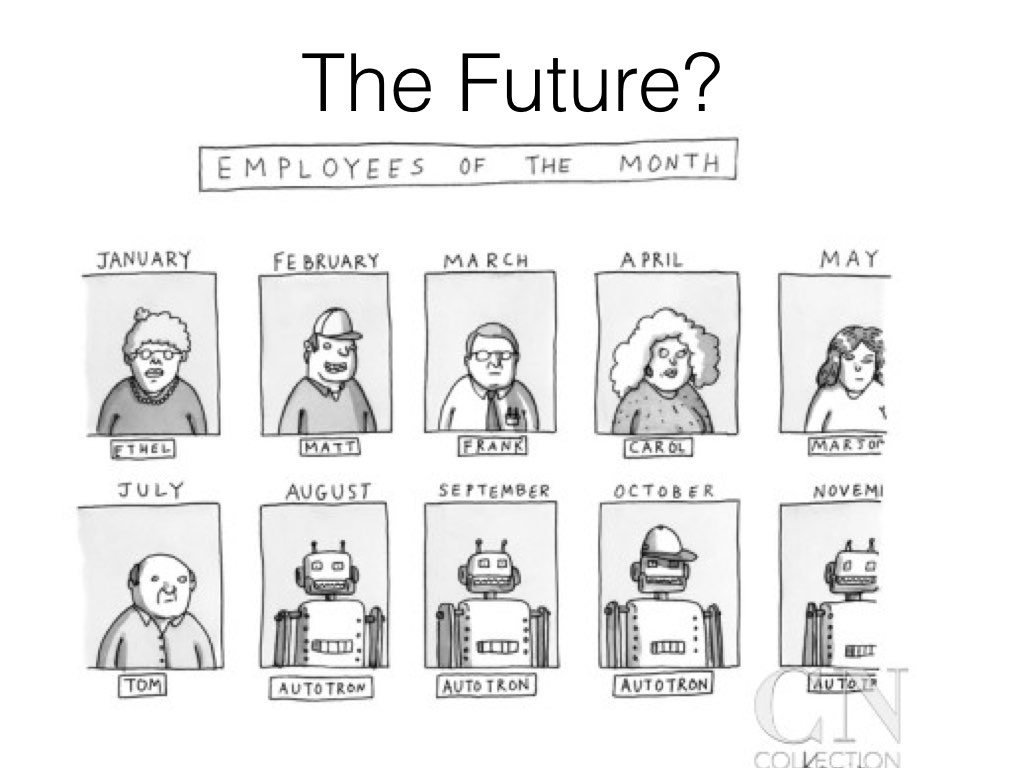
The Future?
Takeaways?
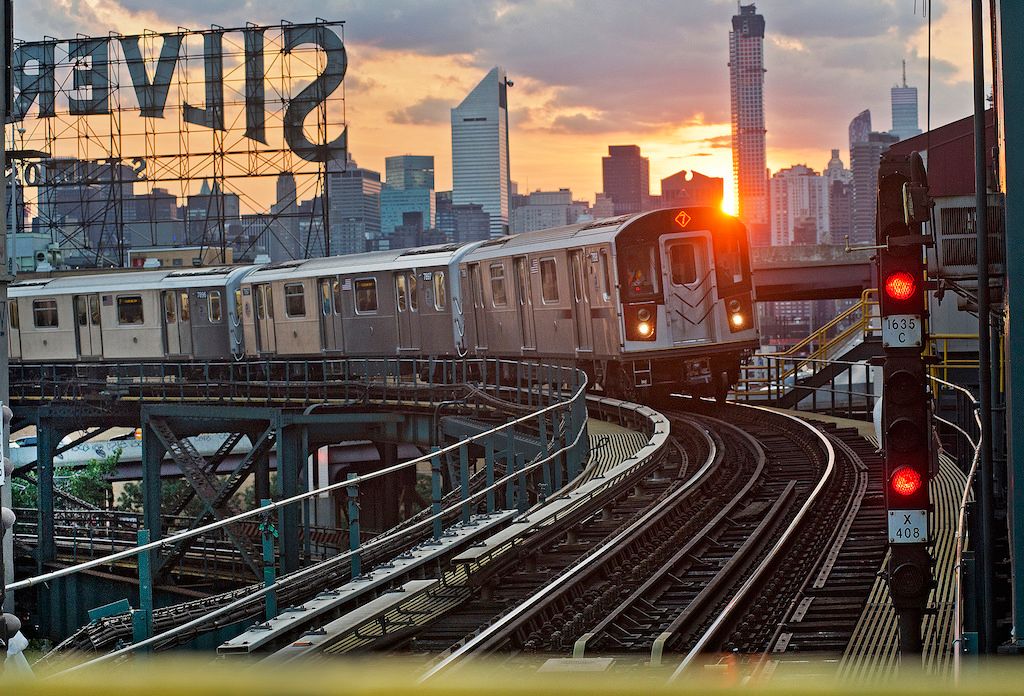
I was debating with a friend of mine earlier this week about the future of mass transit and public infrastructure. Naturally, the conversation moved toward autonomous cars and Uber/Lyft. The basic argument, which you can read in stories like Spencer Woodman's tale from Altamonte Springs, is that Uber and self-driving cars are just going to outright replace public transit.
I think that is completely wrong for several reasons.
First, few large cities can transfer everyone to private vehicles and still maintain any flow of traffic. New York City, for example, has some of the slowest car transit in the nation, at just 8.51 MPH in Manhattan. It's hard to believe that everyone who takes a subway today (1.76 billion rides in 2015) are going to move to cars and consider it a better alternative.
Now, maybe there will be some efficiency improvements for traffic with self-driving cars. Cars won't "block the box" at intersections as often during rush hour, improving flow. In a more futuristic scenario, cars may even be able to weave between each other at intersections, which would mean that cars might never have to stop.
The reality is that traffic signals are going to have to function, since pedestrians are still going to need to cross streets. And as much as the efficiency of self-driving cars seems alluring, it is hard to imagine all human drivers being replaced by computers in the medium term. Without that transition, our traffic efficiency is going to stay roughly the same.
Of course, New York City and other large cities are special beasts, where density can make public transit thrive. What about suburbs like Altamonte Springs that are removing their bus fleets and replacing them with on-demand Uber rides?
➜ Continue reading...
One of the quote-unquote negative characteristics of the New York City tech ecosystem that I talked about a few weeks ago is the lack of VCs who will take the lead role in a fundraise. From my count, there is somewhere between 200-300 active VC firms in New York (yes, there is something of that size in the city today — crazy really), only maybe 6-12 are fully comfortable taking the lead in a fundraise.
Why is this? The answer is actually a mix of resources and weird incentives that are not unique to NYC, but that seem to have hit so many firms simultaneously here that it has become the de facto norm.
To illustrate this, let's take a hypothetical $20 million seed fund which we can call Weasel.vc. They reserve 45% of the fund for follow-on investments, a number that is higher than in a series A fund like CRV, since they have to handle an extra round of dilution. Let's say the fees on the fund are a classic two and twenty, which would mean that about $3.25m of the fund will be spent on management fees (assuming the fees taper outside of the five-year investment window). So we have 20-3.25 = 16.75 * 0.55 = $9.21m or so for primary first investments.
Note: all math is back-of-napkin, of course.
Since this is Weasel.vc's first fund, its number one goal is to raise more capital for a fund two. The easiest way to do that early on in a fund's lifecycle is to show follow-on investments. If series A investors like companies in Weasel.vc's portfolio, then they will put more capital behind them, raising the valuation on those companies
➜ Continue reading...