As always, I read a lot last year. Pocket seems to indicate that the number of articles I saved for later reading was around 1,400, or roughly 3.83 articles per day. Add in additional newspaper consumption plus books, and it was another year in which my information diet goals were completely ignored.
It's hard to sort of explain all of that consumption – or to remember it. Reading is one of those depressing activities that sparks the imagination while we are doing it, but is so fleeting that just moments later we often forget exactly what we just saw.
That said, there were some excellent books and articles that I think stood out from the rest. I want to highlight them and encourage you to read them. Not everything was necessarily published in the calendar year of 2015, but I do believe that all of these works have relevance to what is going on in the world these days.
This book is a classic work in the sociology of knowledge & quantification fields. Like many good books, it is hard to summarize exactly what this book inspired in me. Porter tries to answer a simple question: why is quantification so popular in modern society?
To answer it, he meditates on history and cultural development, pointing out the power of measurement in the economy (something on the order of 15% of GDP is simply the measurement of things - everything from accounting to manufacturing tolerances) as well as its importance to politics (standardized weights and measures was a rallying cry of the French Revolution).
This book is more important than ever, as are the studies that it sparked. The rise of Big Data and the continuing fetishization of
Yes, I am on a bit of a housing rant these days, what with rents increasing rapidly.
But as a venture investor, it pains me to see the prices of housing in relation to nearly every single good and service we offer in the economy. Nearly everything today is faster, better, and cheaper than before. Computers that once took up entire rooms to calculate a differential are now sitting in our pockets, and cost less than $1,000 to boot. Content has gotten to the point where the marginal cost is vanishing toward zero. Even taxis are getting better and cheaper!
Then you look at housing, and suddenly all of this progress -- all of our dreams of the future -- seem to have stopped.
Housing hasn't gotten more affordable over the years; rather, it is more expensive than ever. The quality of that housing isn't even necessarily better, particularly in cities, where the housing stock often hasn't changed in a century. We are literally paying more for the same or worse shelter. There seems to be little improvement in the thinking of how to construct housing since the Levittown post-war boom period.
I recently had to find an apartment in Boston, and my only two criteria were in-unit laundry and some sort of air conditioning. You could argue these are "luxuries," but I would argue that it's 2015 -- both technologies are approaching 100 years old. And yet, the housing supply in Boston is so old, that the intersection of these requests represents just a handful of buildings in the city. That search was in comparison to a friend of mine in Korea, whose $300/month apartment has in-unit laundry. It's all about competition and what consumers are willing to pay.
The Wall Street Journal had an article today talking about the plight of people with six-figures unable to rent in cities like New York, San Francisco, and Cambridge, Massachusetts. Simply put, rents have increased far faster than incomes (in many cases, by more than 2:1), and that means that access to these cities is increasingly limited to an extremely small fraction of the population.
We have heard about lowering the rents, and programs like the one featured in the WSJ article that involve middle-class lottery allocations of rent-stabilized apartments.
Yet, we never really hear about the need for a much more radical approach: to simply do whatever it takes to drive costs of housing down to $1,000 for a one bedroom in rent, and $100,000 for ownership.
To make that happen of course would require that rents decrease in Cambridge by 64%, and in other places by an even higher percentage.
It sounds impossible, but I believe there is a mathematical case to be made that not only is it possible, it is eminently doable (of course, not without plenty of people opposed to any change in our current system).
How do we get there? Here are some ideas:
The largest single cost to housing today is construction. Why is construction so expensive? Many reasons: high labor costs, the fact that U.S. housing is often custom-designed (particularly inside cities), building codes have gotten more complicated, cities often require developers to put up incentives like road and sidewalk improvements as part of the permitting process, etc. etc.
To get costs lower, we need to work harder on standardizing large building construction, simplifying designs and materials, and increasing research spending on improving construction efficiency (drones, automation, etc.)
We need to limit the extent of land use controls and
Steven Pearlstein posted a call to arms in the Washington Post, calling on universities to aggressively cut costs through four strategies: 1) cutting administrative costs, 2) operating year round, 3) teaching more and researching less, and 4) reducing the costs of general education courses through technology.
As a PhD student who dropped out this year, all I can say: yes, one-thousand fold.
I realize that my experience is at two top institutions (Stanford and Harvard) that are in their own unique stratosphere of the academic world. As Daniel Drezner notes in a partial criticism of Pearlstein, there is an incredible diversity of university institutions in the United States, so any advice has to be directed more specifically to be meaningful. So let's focus just on top research universities.
My undergraduate thesis was on the history of universities in the 1950s and 1960s, and specifically the growth of computer science departments and their fight to gain legitimacy against other departments. So I have been looking at these issues for several years now.
The first thing to understand about the modern research university is just how much sheer waste there really is. Across the board. In every department and program. Throughout the administration. Particularly in research. Pearlstein mentions this, but it bears repeating: there is so much junk research being conducted, it's almost unreal. There are so many junk staff members, it's doubly unreal. There is so much administrative overhead, it's triply unreal.
Universities have gotten stuck in quantification hell, where productivity numbers are driven by number (not quality!) of publications and number of staff hired (not efficiency!). If an office is important on campus, say, for political reasons, then that office has to be given more headcount – regardless of the actual need – simply for appearance's sake. The answer is never to
Outrage is everywhere, lurking behind every news development around the world. Now it also includes my red Starbucks cup, and no, not because Starbucks serves a pumpkin spice latte (an absolutely outrageous drink). I didn't even notice the red cup yesterday until I learned there was something to be outraged about (and then was completely outraged once I discovered that I wasn't outraged about this outrageous event and had completely wasted my time).
Of all the emotions that have been heightened by the internet, outrage has to be the one that is most ... outrageous. It is the glue that holds so many stories together – political or not. It drives the press cycle, since first you have to have an event, then the outrage to the event, and then the outrage about the outrage, finally ending with me meta-complaining about the concept of outrage itself.
I am really sick of it. Outraged, really.
Maybe I am not like other people, but I just don't have enough bandwidth to be outraged all day. I find outrage to be tiring, and so I just let things slide. When the Green Line failed this weekend on the T, I didn't become outraged, but rather conducted the appropriate response by complaining bitterly on Twitter:
The problem with outrage is that it is among the least useful emotions. It goads people to anger and frustration, and allows us to avoid the underlying problems with a situation. What was once reserved for the largest scandals has now become so commonplace as to lose all meaning and substance.
This is particularly true with writing. I can't tell you the number of times
Perhaps as a corollary with my post yesterday on the status of journalists in 2015, one of the startups I work with is finding it hard to hire a content marketer / blogger. It's actually a really fascinating labor market segment, because these positions are materializing rapidly as companies discover the power of content, but there seems to be a dearth of people with the sort of creativity and strategic capabilities necessary to create it.
The challenge this startup is finding is that nearly all new college graduates are bad at writing something that people actually want to read. Universities have made writing skills a much more prominent component of their curriculums over the years, but those writing skills are often focused on pure academic research papers rather than the kind of versatile and strategic writing that people need in the modern economy.
(Ironically, those strategic writing skills are precisely the skills needed of grad students and professors applying for grants these days and popularizing their research...)
Basic techniques of storytelling are wholly absent, as is any careful editing to ensure that the writing matches the expectations of an audience. That's not getting into the wider area of editing and topic selection to ensure that writing fits together into a larger narrative about a person, product, or category.
These skills are so valuable and are used by everyone in practically every profession. And yet, they remain largely absent from the toolkits of people with many degrees under their belts. I haven't seen any startup bootcamps specifically emphasize this aspect of marketing, but it would be a good opportunity for someone.
I wish this gap was just true of new graduates, but it doesn't seem to get better with experience either. In fact, in many cases greater experience seems to be narrowing
I am always amazed at how ignorant people are of the media and the people who work in the news industry these days. Despite the importance of a great press for democracy, public safety, and our wellbeing, next to one seems to care about how journalists get paid (or how much!), what their time commitments are, and in short, whether they have the conditions necessary to do their job for the public.
This is particularly important these days with the on-going Theranos saga. Whatever the final resolution of that story is, the WSJ's report on the company forced a secretive health-care startup to engage more with the public and prove that its Edison testing technology works (or perhaps does not). That's a win for transparency and patient welfare.
So how should you think about journalists (especially tech journalists) in 2015? Here are some thoughts as a former freelance writer at TechCrunch:
Journalists have an insane level of noise from every single channel. They receive as few as 100 and as many as 500 emails a day, from total random strangers to their best friends. It's just nuts. When they don't hear back in several hours, some PR professionals resend emails with snarky lines. Don't do this. Journalists want to cover the best stories, but they are inundated. Plan accordingly. Engage multiple people across publications, and potentially at the same publication (although never ever send an email to the entire staff!). Many journalists have no idea what other writers are drafting, so always mention if you have sent a news story to more than one person, or if someone else engaged with you. Always be kind.
Tech journalists today write between 1 and 5 stories per day. Think about that for a moment. On top of dealing with a dizzying amount
Having lived in San Francisco and now Boston, I have lived on two opposite sides of the planning spectrum. In SF, nothing gets built because the planning process takes ridiculously long to get even a small apartment complex built. However, the final product is oftentimes a wonderful and very livable neighborhood, which works to drive up rents and prices as people flock to these well-manicured areas.
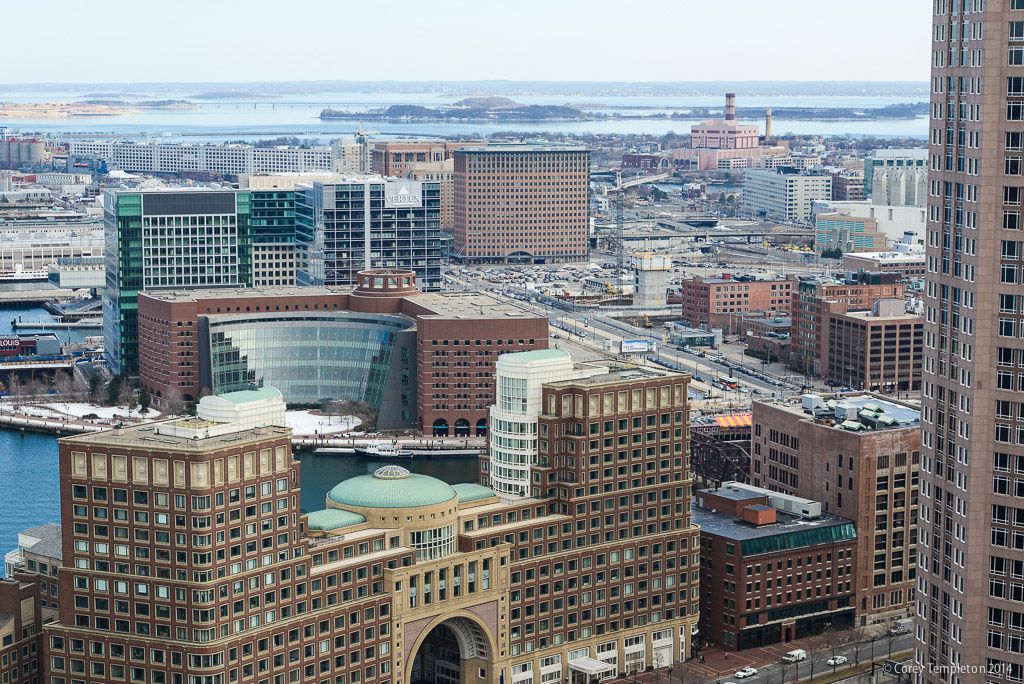
Boston is at the opposite extreme, being one of the most inhospitable places I have ever lived in. The Seaport is devoid of much street life, almost entirely shut down on weekends, lacks decent options for food, lacks a grocery store (!), haircutting, barber shops, or really any human services that would make the place livable. Given the way the Boston property market works, that hasn't stopped prices from soaring over four figures a square foot of course.
As my friends know, I used to complain incessantly at how messed up the SF situation is, but now I realize that there can be far worse problems than a slow and bureaucratic process: no process at all, or at least one that is so ineffective or less-than-visionary that obvious problems to a first-year design student somehow manage to get built.
It's sort of sad that we are left in this rock and hard place situation. There is a way to build a path where we can have a well-tended and thought out community, while not dragging out planning for years and years. We can build better tools to
Hi, I'm Danny. I'm Partner, Research at VC firm Lux Capital, where I publish the Riskgaming newsletter, podcast, and game scenarios. I'm also a Fellow at the Manhattan Institute in New York. I analyze science, technology, finance and the human condition.
Formerly, I was managing editor at TechCrunch and a venture capitalist at Charles River Ventures and General Catalyst.