One of the challenges I feel founders face, yet don’t discuss often enough, is how income inequality is changing product development.
One doesn’t have to read through Thomas Piketty’s behemoth Capital in the Twenty-First Century to understand that our society has become far less equal — just take a good, long look around startup hubs like San Francisco and New York. What used to be a continuum of incomes is now turning into a handful of groupings, and products are increasingly targeting a single bucket rather than the broader consumer market.
The best analogy I have to this is the current configuration of domestic airlines. Today, there are roughly four classes of service on Delta and other legacy carriers: Basic Economy, (Standard) Economy, Premium Economy, and Business/First. What used to be the Economy, Business, First three-class distinction has become a two-class distinction, with one of the classes strongly stratified based on a few dollars difference between consumers.
The trend in startups has been to focus on that elite Business/First demographic, but I think that is a mistake given the history of technology exits over the past few years.
Basic Economy
For those who don’t know, Basic Economy takes away such airline “luxuries” as the ability to select a seat or use overhead bin space. What’s happening is that a large number of Americans want to reduce their costs to the bare minimum, regardless of the quality of the product or experience. Thus, we see the massive rise of dollar stores across the country, which in some cases are outcompeting Walmart.
The Basic Economy demographic is hardly tiny – it’s hard to put a figure on it, but I would put it somewhere at 40-60% of the population.
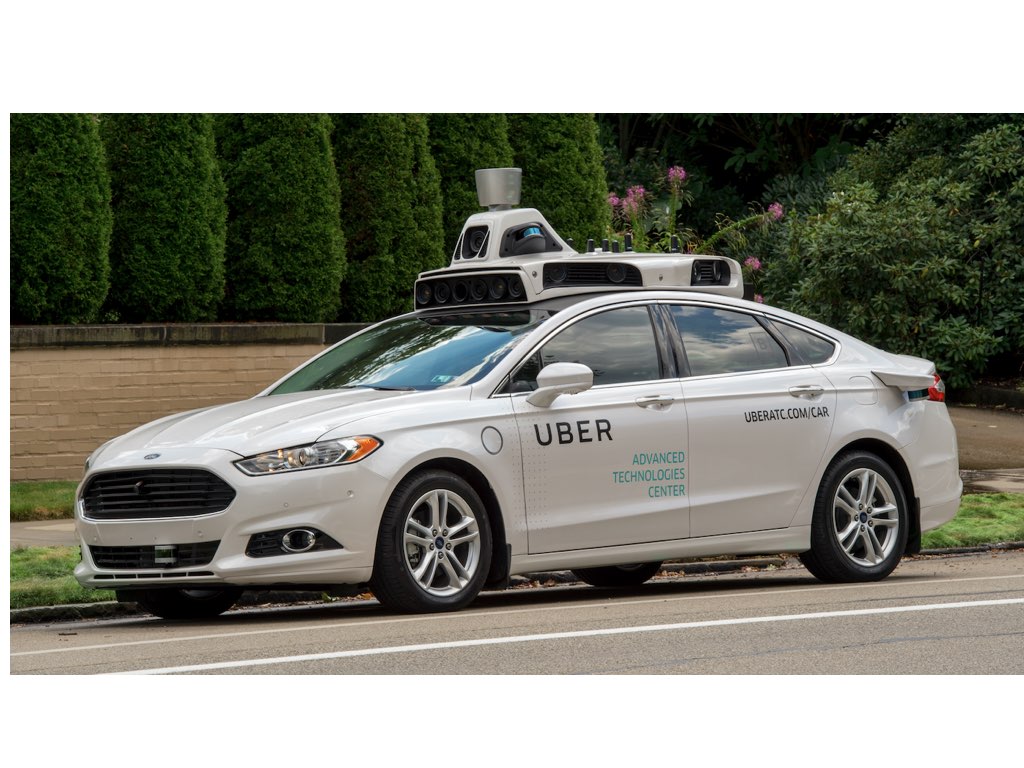
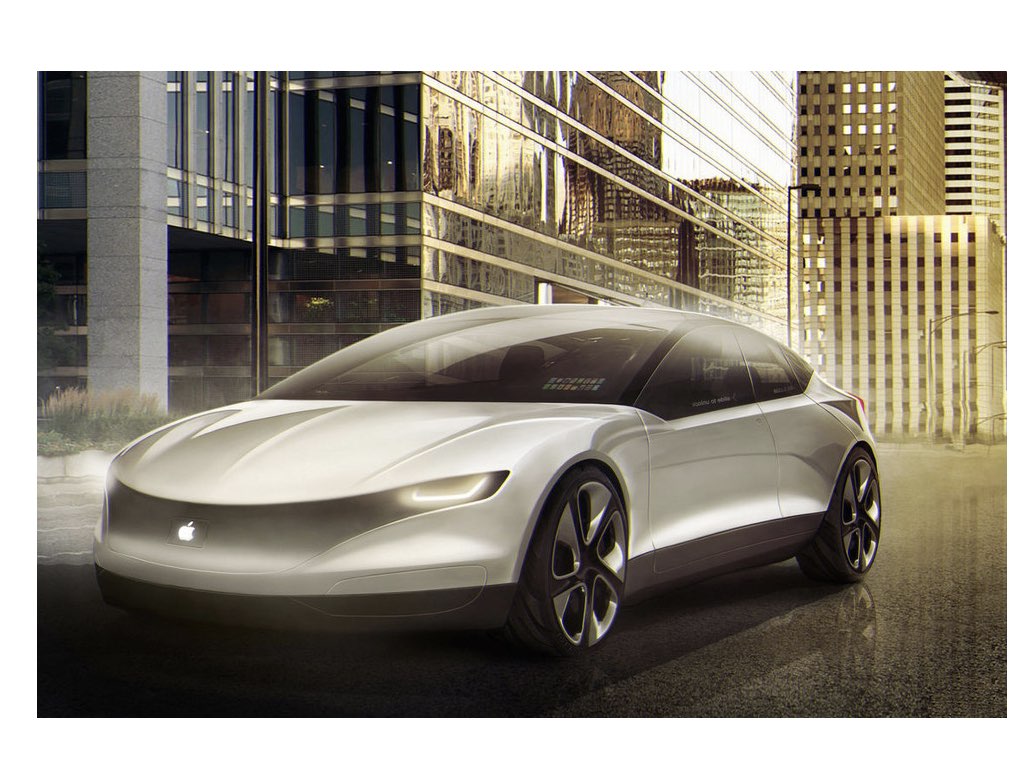
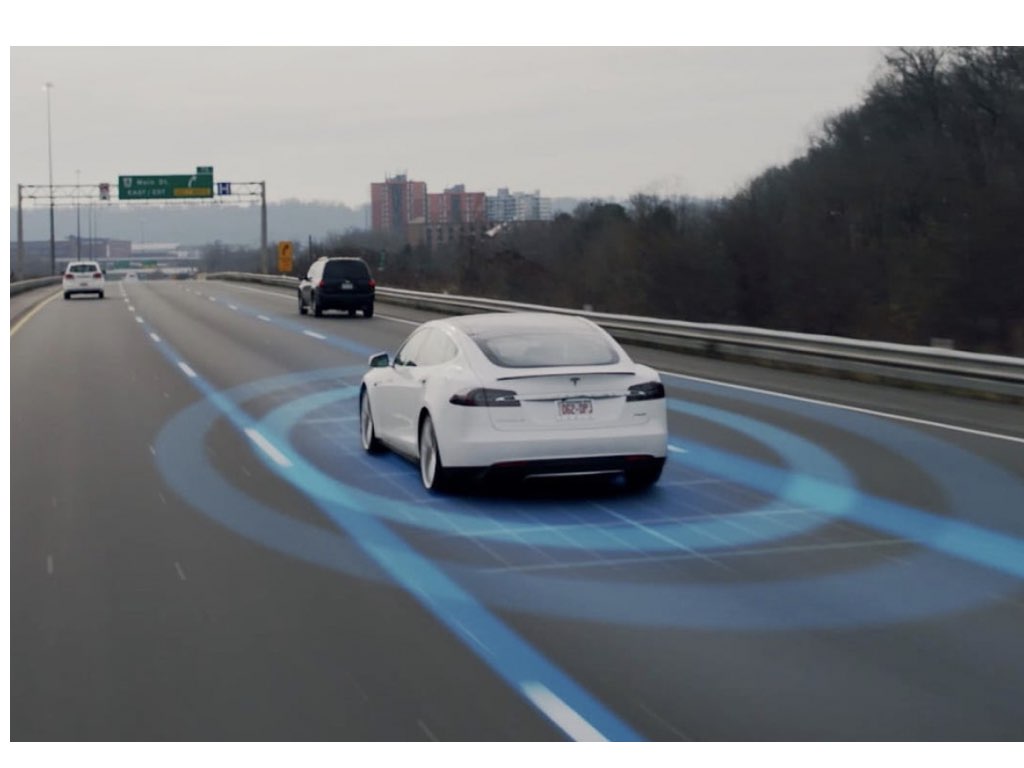
Recently, I had a debate with a group of friends about the future health of suburbs when autonomous cars arrive (let’s set aside when exactly that might be). The general consensus has been that the suburbs are going to grow rapidly, since commutes into the city (or just going out for a night on the town) will be far safer, efficient, and convenient than today’s status quo of driving a car and having to find a place to park.
I disagree with this view quite strongly.
The decision on where to live isn’t made in a vacuum. In fact, quite the opposite - people spend enormous time choosing where to live and the mix of amenities, convenience, and price they are willing to bear. Apartment searches, along with job searches, are among the canonical examples of search costs in the economics literature, and for good reason.
First, a lot of the analysis I have read on this topic assumes that people will choose suburbs with autonomous cars instead of cities, but they somehow miss the fact that cities will get these vehicles as well. Autonomous cars will usher in incredible conveniences for everyone, regardless of where they live, and I don’t think cities or suburbs are frankly going to beat the other on this point.
Instead, the key factor is going to be economics. There is this assumption that a) traffic will be better with autonomous cars, and therefore b) people will live even further away from cities, because the decay function of convenience with regards to distance is going to degrade much more slowly than it does today.
In the whirlwind of the daily coverage of the tech world, it can be difficult to take a step back and see the major narratives of coverage. There are literally thousands of news articles published daily by hundreds of media sites, but one thing has become clear: we are no longer in “press release rehash world” anymore.
Take just a snapshot of the last few months. We have had breathtaking and deeply researched reports from Reed Albergotti in The Information and Katie Benner in The New York Times on female founders and harassing venture capitalists that led to the downfall of Binary Capital and apology tours by Chris Sacca and Dave McClure. We had John Carreyrou in The Wall Street Journaland his complete takedown of Theranos, as well as Eric Newcomer at Bloomberg (with serious help from Susan Fowler and other journalists) and their complete destruction of Uber’s image and management team. You have William Alden at Buzzfeed and his critical coverage of Palantir and Formation8, and beyond that, dozens of other breathtaking reports of malfeasance in the Valley and in the tech community (thank you Nitasha Tiku).
For better but mostly worse, “tech journalism” has been a mostly incestuous undertaking. Journalists interview founders, who are often friends or social acquaintances, and regurgitate a press release with a few facts and photos. Funding rounds, new hires, product launches. All of it is newsworthy, but none of it is news. But it was cheap to produce, and in an advertising-driven model, cheap content
I’ve been told twice in the past week that red lights (everyone’s favorite traffic signal!) are going to disappear with the advent of autonomous cars. The first time was from a VC friend of mine, after which I got into a fairly extended argument about why red lights and traffic are still going to be with us for a very long time (i.e. forever).
[The second time came from TechCrunch], which interviewed Jeffery Owens, the CTO of Delphi, one of the largest auto suppliers in the world. In the video’s intro, Owens says that (slightly edited) “Ultimately, if every car was talking to each other, you wouldn’t need stop signs or stop lights at all. That would be kind of an end state and traffic flow would be incredibly smooth. No traffic jams. You wouldn’t need roundabouts, you wouldn’t need lines.”
I can expect venture capitalists to hype technology, but I found it more than a little disturbing that the CTO of one of the largest auto suppliers would continue to purvey this false concept. Traffic is here to stay, and so are the red lights and other traffic signals that we love to hate. That said, capacity can definitely increase, even while traffic remains. The distinction between the two is critical to understanding the future of transit.
A Pedestrian Problem
Mathematically, the easiest way to prove that this notion of no red lights is false is to just give a counterexample. In this future world of autonomous cars, people are still going to exist — especially in cities — and those people are going to continue to walk on sidewalks. One of the reasons that traffic management is so complicated is that it isn’t just designed for cars — it has
If there was ever a model of a true love-hate relationship, it would be programmers and JavaScript. JavaScript is the language of the web, perhaps the single most powerful force for innovation and change in our modern societies. With just a few lines of JavaScript, engineers can move markets, change lives, and build the future. But the language has also traditionally been one of the most annoying programming environments available to the contemporary hacker, filled with traps, pitfalls, and awkward behavior. You could write that javascript == Good && javascript == Bad, but then we would have an argument about equality operators. Such is the JavaScript life.
Or at least, to my eyes, it used to be. I got JavaScript fatigue before it was fashionable, way back in 2011. I basically ignored the entire ecosystem — including Node — in the interim, while happily programming away in Python 3 and its excellent stats libraries.
This past year, a number of great summaries of the JavaScript ecosystem were published, including the quite critical[How it feels to learn JavaScript in 2016]. In reading these articles, I realized that everything I knew about JavaScript and its platform was just completely out-of-date. ES2015? Arrow functions? Transpilers? Babel? React?
It was like people were talking in a foreign language — and they were, for the JavaScript I had grown up with was dead, and had been replaced with something far better (although still with quirks).
I have never been more excited about JavaScript than today in 2017. And while I understand the fatigue that many engineers feel (I would too if I had churned through front-end libraries like [Japan churns through prime ministers]), it seems to me that JavaScript today has never been in a stronger position to build the best products of the future.
Over the past few years, I have seen an absolutely delirious spike in the number of startups quoting “artificial intelligence” and “big data” in their pitches. This would be okay if these startups actually did something with artificial intelligence or big data, but unsurprisingly for early-stage companies, they often have neither the data nor the technology to fully capitalize on these “trends.”
Much like how the words “innovation” and “Silicon Valley” have become meaningless, AI and big data no longer say anything about a startup, but instead represent a completely vacuous description of the otherwise exciting features of a new business. These terms are no longer distinctive, and my (first) advice to founders in 2017 is to not bother touching them from here on out.
This isn’t a rant against buzzwords, per se, which in specific contexts can be quite useful. Rather, it’s a criticism of a facile thought process of what differentiates a technology-based startup. Saying you use artificial intelligence is like saying you use a networking library to build the company. These days, some level of artificial intelligence is built into every single product built with code.
Likewise with big data: every startup today is tracking their data and using it as part of the feedback loop. Some do it better than others of course, just as some teams push the AI boundaries a bit further than others. But it’s not an interesting point to start a conversation.
We are witnessing an absolutely incredible period of innovation where some of the most frontier work in artificial intelligence, data processing, computer vision, and more are available as open source libraries available with a quick pip install. It’s incredibly exciting what a little bit of
Hi, I'm Danny. I'm Partner, Research at VC firm Lux Capital, where I publish the Riskgaming newsletter, podcast, and game scenarios. I'm also a Fellow at the Manhattan Institute in New York. I analyze science, technology, finance and the human condition.
Formerly, I was managing editor at TechCrunch and a venture capitalist at Charles River Ventures and General Catalyst.