At one point, Sejong City - the new Multifunctional Administrative City of Korea - was going to be the capital of the country.
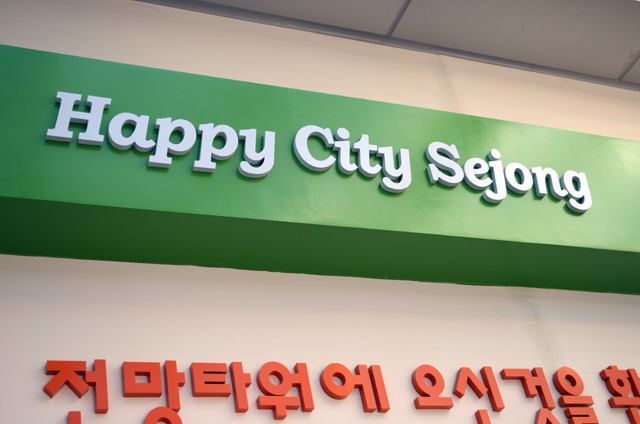
Not just any kind of city - a HAPPY CITY dammit.
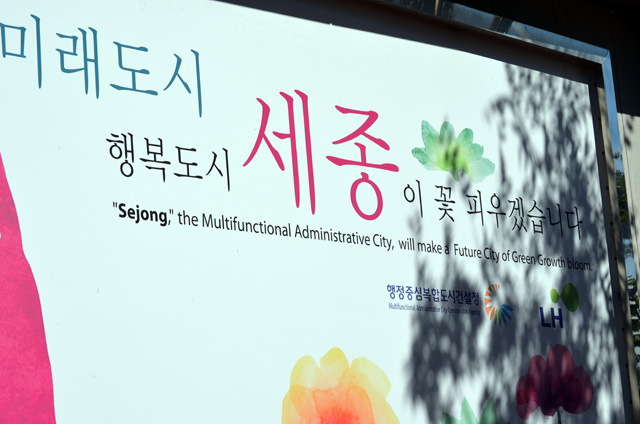
Sejong "will make a future city of Green Growth bloom"
That is not going to happen now, even though dozens of agencies and government ministries are moving to the home a little less than a 100 miles from Seoul. Those moving include the Office of the Prime Minister, although it appears the PM himself is too smart to leave the political nerve center of Seoul for the quiet surroundings of Sejong City.
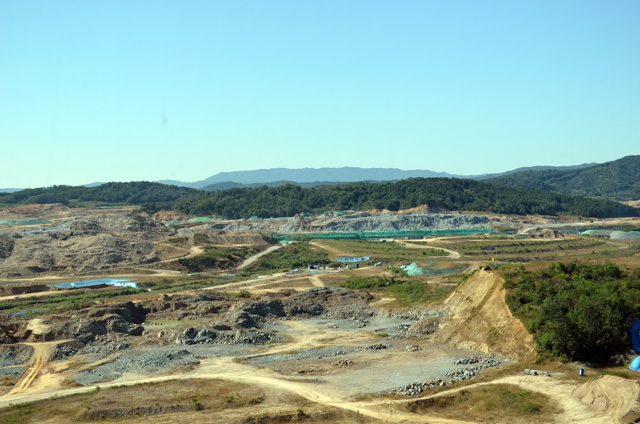
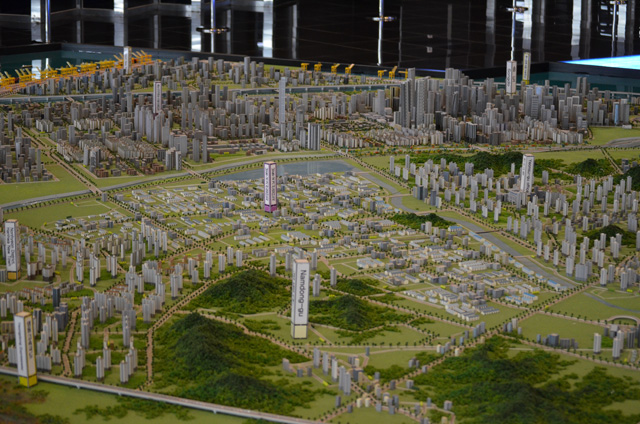
So, what does the new Multifunctional Administrative City of the 10th largest economy look like? Here:
And you thought Songdo was a barren wasteland?
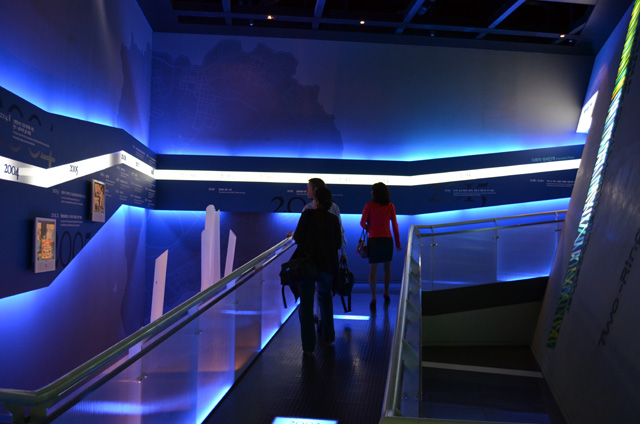
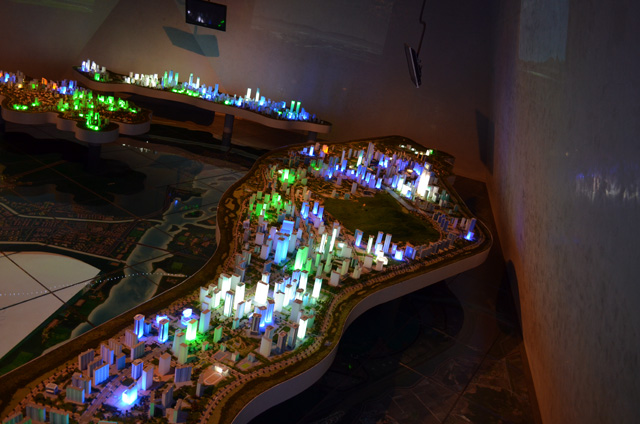
We started with a tour of the museum, which includes your typical High-Tech Walkway™ and High-Tech Model of the City™. These were very well done though, so I have to give the planners credit.
This hallway was really quite "enlightening." Sorry - couldn't help it
The city blooms with light!
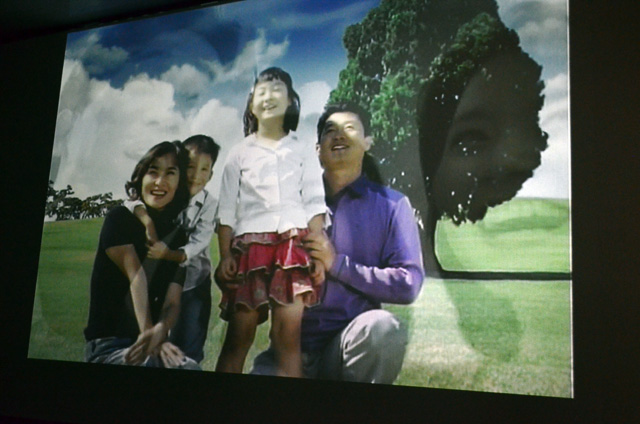
After we got a tour at the museum for the city (they always have these super high-tech museums for these new cities), we got to watch the movie trailer for the city. With pulsing bass reminiscent of the Lord of the Rings soundtrack, the narrator told us how the "new Multifunctional Administrative City™ is going to revolutionize East Asia."
This family lives in Sejong City - which means they are HAPPY.
Snark aside, at least South Korea has goals and a vision for the future. In America, we get a former pizza man and his 9-9-9 special.
The death of Steve Jobs this week has certainly generated a lot of coverage and analysis. While the obituaries and retrospectives are typical surrounding the death of any notable public figure, it was perhaps surprising to see how much analysis was published on the man and his ideals. Some analysts thought Jobs' approach to Apple should be ported to America's politicians, who lack "vision" and imagination to solve our largest problems. Others posited that Jobs offered a new approach to management for the 21st century. These analyses are all fair, but they have all (as far as I can tell) failed to analyze one important question.
Why are there so few Steve Jobs in America?
Sure, there are disrupters and innovators, particularly in the technology space. I am not going to dispute that there are others today who can take the mantle of America's leading entrepreneurial visionary. But, I think many of us realize in Jobs' passing that we have lost one of the few people out there who saw things differently. Why is this the case?
First, I would like to point to the dangers of measurement. One of the quotes from Jobs that has been bandied about by the press a lot is this: "It's not the consumers' job to know what they want." It is truly a mesmerizing quote, and it reminds me of a similar quote from Henry Ford, "If I'd asked my customers what they wanted, they'd have said a faster horse."
Both of these businessmen understood that not every change in technology can be measured by market research, sales figures and the like. When you are on the technological frontier, there are few roadsigns to tell you where to go - instead, business leaders
Last week, I displayed photos from my trip to Songdo, the new Free Economic Zone city built on the outskirts of Seoul near the Incheon International Airport. As I noted before, the city is something of a ghost town, an amalgamation of glass-and-steel skyscrapers but very little in the way of the human factor.
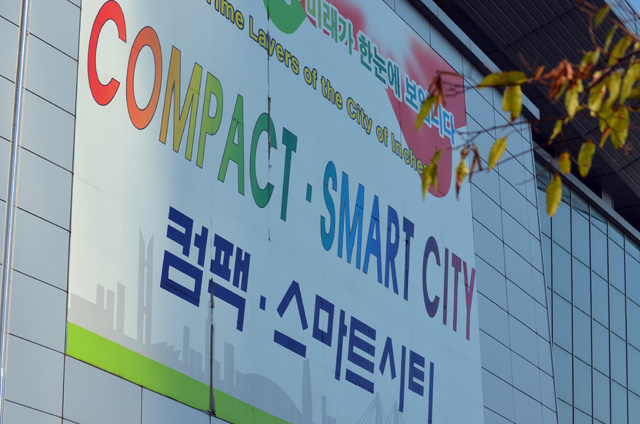
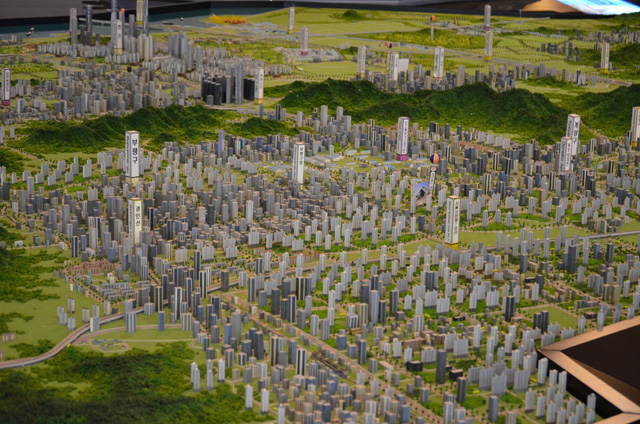
Here is a model of the future of the city presented at the Compact Smart City museum located in the middle of the development.
Map of the city of Songdo - cool lighting events make the map seem more interactive
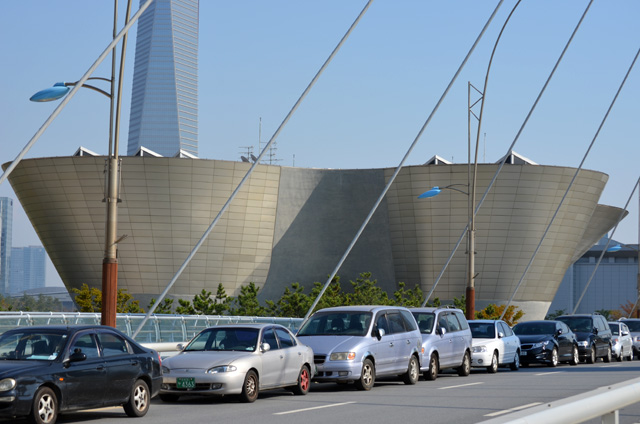
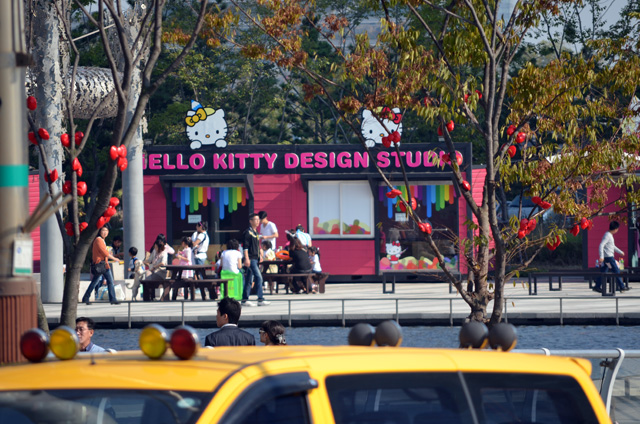
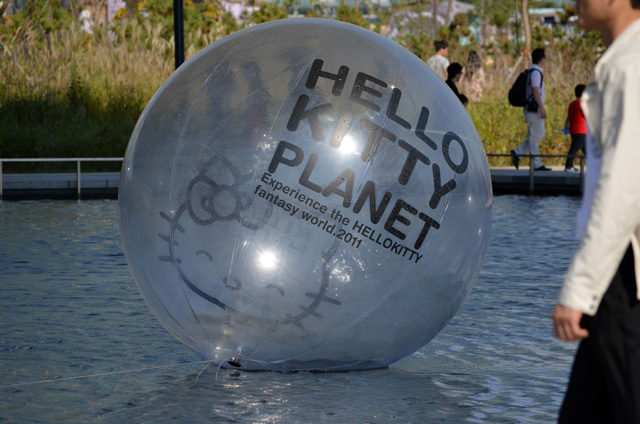
However, it was not the museum of the future city that was as strange as the institutions (if you can call them that?) that have taken up residence in the new city. The first is the Hello Kitty Studio and Play Land (or some marketing name like that). To get a sense of this place, you have to keep in mind that the entire city is a ghost town, except for this spot. I was able to walk up three-lane roads without passing cars, except right here at the Hello Kitty World, where there was actually traffic police directing cars to parking spots.
The Strange Building in the distance - what could it be?OMG!There are so many people in this ghost townIt's Hello Kitty Planet. Really. The entire planet is floating in water.
The strangest thing in Songdo was the artwork. I am not really an expert on public art in Korea, but this display of the entirety of the biblical story of Jesus (complete with a life-size Noah's Arc) is something that is just unreal. I don't know whether this existed before the city was built, or whether it was sponsored, but either way, it was truly
I was thinking yesterday about finding polling data about people's faith in the basic tenets of democracy and human rights - questions like whether people felt that governments were responsive to their needs, do they think that special interests dominate political decision-making, etc. In short, I wanted to get a sense, especially in Europe and in North America, about the health of the democratic process.
While it didn't provide numbers, this New York Times story basically follows that question. The detractors of democracy are starting to become more numerous and more vociferous in their complaints. The article is worth a full read (I'll quote a few bits below):
Increasingly, citizens of all ages, but particularly the young, are rejecting conventional structures like parties and trade unions in favor of a less hierarchical, more participatory system modeled in many ways on the culture of the Web.
...
In the wake of the Soviet Union's collapse in 1991, a consensus emerged that liberal economics combined with democratic institutions represented the only path forward. That consensus, championed by scholars like Francis Fukuyama in his book "The End of History and the Last Man," has been shaken if not broken by a seemingly endless succession of crises - the Asian financial collapse of 1997, the Internet bubble that burst in 2000, the subprime crisis of 2007-8 and the continuing European and American debt crisis - and the seeming inability of policy makers to deal with them or cushion their people from the shocks.
...
Responding to shifts in voter needs is supposed to be democracy's strength. These emerging movements, like many in the past, could end up being absorbed by traditional political parties, just as the Republican Party in the United States is seeking to benefit from the anti-establishment
A few years back, I read an interesting and at times provocative book called The World Without Us. In it, the author describes what would happen if humans suddenly vanished from the world, how the world would slowly encroach and transform the world back to its natural state.
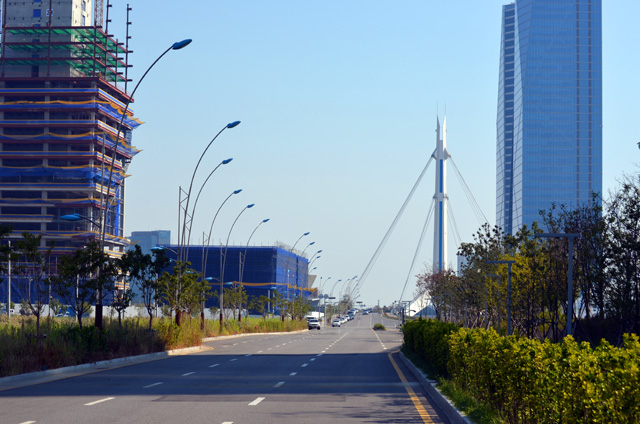
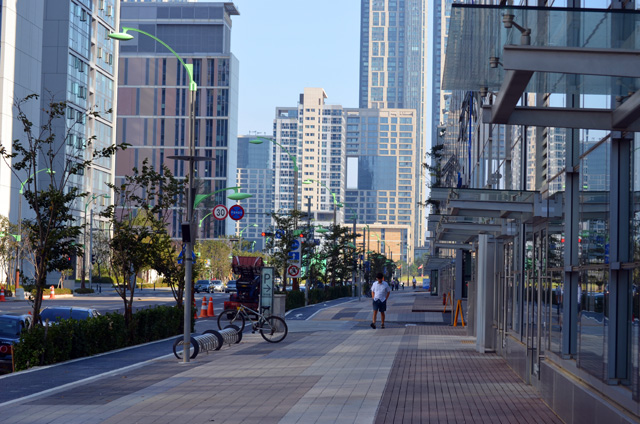
That feeling was very much evident in my trip to Songdo Business Area, a part of the Incheon Free Economic Zone outside Seoul. Billed as the future innovation hub of South Korea, the city seemed if anything a ghost town despite the gleaming glass and concrete towers that abounded. To be fair, I traveled on a weekend to what is essentially an office village, but there is still something eery about walking up a 6-lane road and barely seeing any cars in any direction.
While the city really is a paragon of progressive ideas in urban design and development, I am concerned about the almost utopian vision of its creators. Cities develop organically from the demands of their inhabitants, and cities like Songdo have a tough time adapting to those demands due to their insistence on uniformity and precision. The city is also almost 50 subway stops from downtown Seoul, making it difficult to connect the suburb to the urban core.
This week's photos show the development of the city; next week I will show the two most bizarre landmarks the area has to offer.
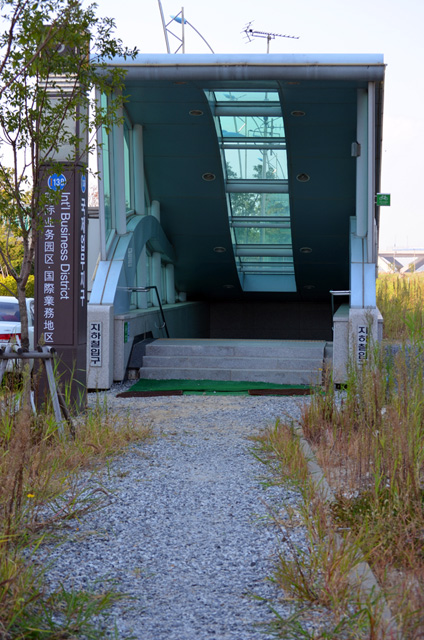
The subway station for the Free Economic Zone doesn't have a sidewalk yetSince there was no sidewalk, we walked the road insteadThe city planner's have been quite up-front with their goals for the cityA model of the new city in the multimillion dollar museum devoted to explaining the goals for IncheonThe streets are still relatively empty➜ Continue reading...
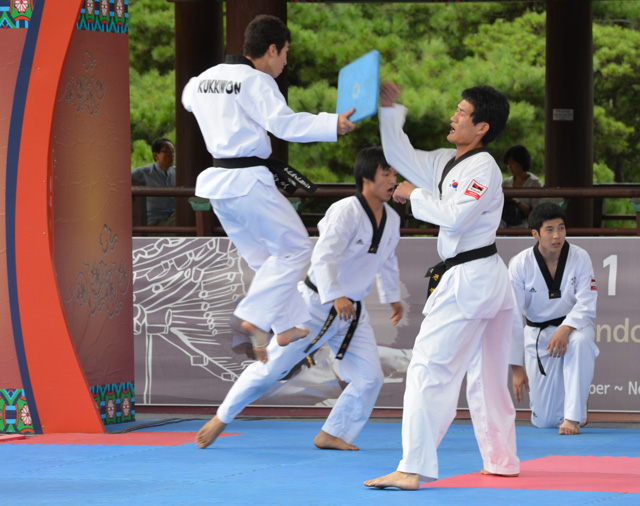
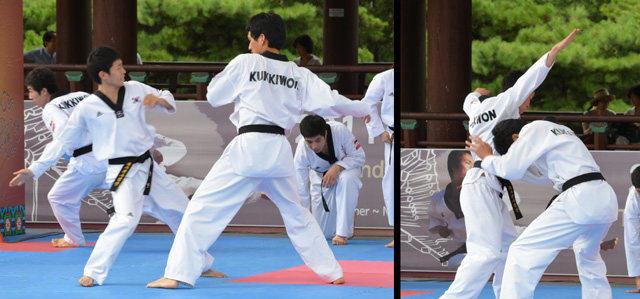
Students practice and perform Taekwondo maneuvers in downtown Seoul. You can read more about Korean martial arts on that highly peer reviewed source, Wikipedia.
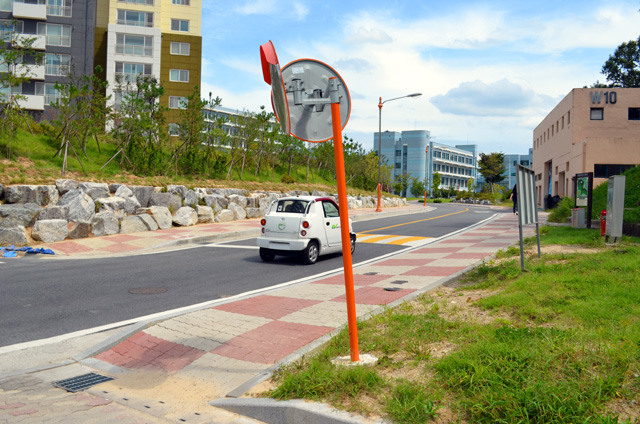
Despite all appearances, no, the blue thing is not a Roomba. I checked.
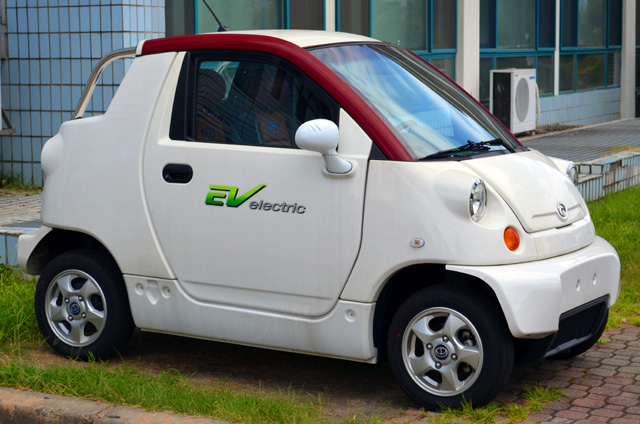
Korea is a crowded place, an urban environment often more geared to pedestrians than motorists (although you would never know that trying to cross an intersection). Engineers at KAIST are searching for the next major revolution in personal transportation, and one example of this is an ultra-compact electric car that seems perfect for the hipster road warrior. I caught the car in action a few days ago, and ran after it to its home on campus.
Yesterday, I discussed my lack of sympathy for students who majored in the humanities without any particular direction - and who then end up waiting tables as described in a recent New York Times article. In that post, I also commented that the liberal arts are an important component of university education. This blog post will attempt to answer how to major in the humanities while avoiding the unsavory service jobs that some graduates have faced upon graduation.
I'll discuss three plans: 1) Humanities Plus, 2) Practical Humanities, and 3) Pure Humanities.
Plan #1: Humanities Plus
This plan complements a major in a humanities discipline with a skill-based discipline like statistics, computer science, economics, engineering, business, etc. (one could arguably add a critical language like Chinese or Arabic as well if at a high proficiency). This particular approach allows for a tremendous amount of choice, and can also provide considerable depth in the humanities field. A minor in a skills-based discipline at Stanford is 32 units, and if these are spread over 12 quarters, one could take as few as 3 units a quarter to attain the minor at graduation.
While some are surprised to hear this, many careers only require basic knowledge of a few skills - the rest are provided on the job through training and are customized for the particular your particular job function. For instance, technical writing does not require a tremendous amount of knowledge of engineering, but strong communications abilities are crucial for success. Stated without further comment, consulting and finance work in much the same way too. A minor can thus open important new career fields that were not previously available.
In some ways, this is the plan that I chose in my undergraduate education. While I majored in Mathematical and Computational Sciences,
Hi, I'm Danny. I'm Partner, Research at VC firm Lux Capital, where I publish the Securities newsletter and Riskgaming. I'm also a Fellow at the Manhattan Institute in New York.
Formerly, I was managing editor at TechCrunch and a venture capitalist at Charles River Ventures and General Catalyst.