I was debating with a friend of mine earlier this week about the future of mass transit and public infrastructure. Naturally, the conversation moved toward autonomous cars and Uber/Lyft. The basic argument, which you can read in stories like Spencer Woodman's tale from Altamonte Springs, is that Uber and self-driving cars are just going to outright replace public transit.
I think that is completely wrong for several reasons.
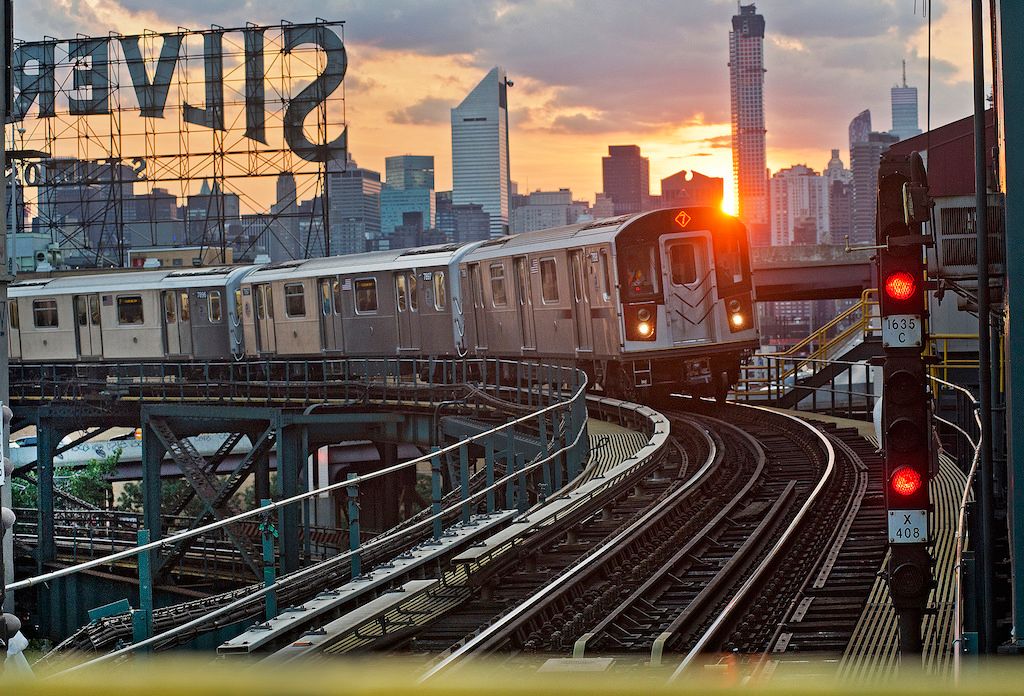
First, few large cities can transfer everyone to private vehicles and still maintain any flow of traffic. New York City, for example, has some of the slowest car transit in the nation, at just 8.51 MPH in Manhattan. It's hard to believe that everyone who takes a subway today (1.76 billion rides in 2015) are going to move to cars and consider it a better alternative.
Now, maybe there will be some efficiency improvements for traffic with self-driving cars. Cars won't "block the box" at intersections as often during rush hour, improving flow. In a more futuristic scenario, cars may even be able to weave between each other at intersections, which would mean that cars might never have to stop.
The reality is that traffic signals are going to have to function, since pedestrians are still going to need to cross streets. And as much as the efficiency of self-driving cars seems alluring, it is hard to imagine all human drivers being replaced by computers in the medium term. Without that transition, our traffic efficiency is going to stay roughly the same.
Of course, New York City and other large cities are special beasts, where density can make public transit thrive. What about suburbs like Altamonte Springs that are removing their bus fleets and replacing them with on-demand Uber rides?
One of the quote-unquote negative characteristics of the New York City tech ecosystem that I talked about a few weeks ago is the lack of VCs who will take the lead role in a fundraise. From my count, there is somewhere between 200-300 active VC firms in New York (yes, there is something of that size in the city today — crazy really), only maybe 6-12 are fully comfortable taking the lead in a fundraise.
Why is this? The answer is actually a mix of resources and weird incentives that are not unique to NYC, but that seem to have hit so many firms simultaneously here that it has become the de facto norm.
To illustrate this, let's take a hypothetical $20 million seed fund which we can call Weasel.vc. They reserve 45% of the fund for follow-on investments, a number that is higher than in a series A fund like CRV, since they have to handle an extra round of dilution. Let's say the fees on the fund are a classic two and twenty, which would mean that about $3.25m of the fund will be spent on management fees (assuming the fees taper outside of the five-year investment window). So we have 20-3.25 = 16.75 * 0.55 = $9.21m or so for primary first investments.
Note: all math is back-of-napkin, of course.
Since this is Weasel.vc's first fund, its number one goal is to raise more capital for a fund two. The easiest way to do that early on in a fund's lifecycle is to show follow-on investments. If series A investors like companies in Weasel.vc's portfolio, then they will put more capital behind them, raising the valuation on those companies and giving Weasel.vc some early signs of strong returns.
When I chose to move to NYC from Boston three months ago, it was with serious trepidation. I had spent six years living, working, and learning in Silicon Valley, and despite the growing evidence of New York's success as a tech hub, SV still remains the king of innovation by any statistic. To be frank, I'm ambitious like many of the people in tech I work with, and I want to run the kingdom, not some outlying New Amsterdam duchy.
Since summer is of course the best time in both NYC and venture capital to analyze an ecosystem in action, I figured I would give some early indications of what I have observed.
These observations are of course drafts — three months is quite limited to fully form an opinion on an industry as diverse and large as tech in NYC, and my opinions are held, but lightly. Views are subject to change!
Good: Cooperation – The tech ecosystem here is surprisingly cooperative compared to Boston and particularly Silicon Valley. Investors share deals much more freely, and it just feels as if everyone is trying to connect others in the ecosystem to make New York a stronger contender. Plus, there are a remarkable number of casual events to meet other people. While there may be an enormous number of stereotypes of New Yorkers, at least when it comes to tech, they are almost all false. In short, the asshole density in NYC is just lower than in SV. It's refreshing.
Ugly: Lack of Leading VCs - That cooperation comes from the unique moment that NYC finds itself in. I've been quite surprised by the number of VC funds in the ecosystem who don't lead rounds, particularly at the seed stage. While partially a function of fund size, it also is a function
Glut is a political word. It means that there is too much of a resource, and implies that the price of the good will eventually be priced below the suppliers cost. A glut in the oil market means prices are "artificially" low — even though such prices are clearly good for nearly every consumer in the country.
Maybe that language makes sense in the oil markets where oil companies, particularly those who frack in the Dakotas, are legitimately underwater and financially unsustainable.
But what does a glut of housing mean? Rents aren't coming down — there is actually more than enough demand to fill these units at existing rental prices. From the article: "Developers and consultants are not predicting that rents will plunge, but they do expect them to stagnate and perhaps ease in the short term." (emphasis mine)
So it's not really a glut, is it?
Also from the article:
“The market is saturated,” said Sofia Estevez, executive vice president at the developer TF Cornerstone, which will begin offering apartments in a 25-story, 714-unit rental building at 33 Bond Street next spring. “I think it’ll take a couple years to stabilize.”
Isn't rent stagnation the definition of "stabilize." In fact, doesn't stability make it far easier to model the capitalization rate for an apartment building and therefore makes it easier to plan for development?
Also, I will complain that "free rent" in the form of free months of rent is not really
Reuters wrote a piece this week on the rising "risk" of a housing glut in South Korea. Korea is one of the few places worldwide where housing prices have only seen moderate growth over the last decade.
This is a good thing.
Yet, reading Reuters, you would be surprised to learn just how terrible it is that housing prices haven't jumped like they do in Manhattan.
And unlike markets such as Hong Kong, Singapore and Sydney, South Korea has low immigration and few foreign buyers to stimulate sales and prices. (emphasis mine).
But why do prices need to be stimulated? To avoid a bubble. How can there be a bubble if prices are going lower? Because people are taking out large mortgages for these apartments, and so there is a mortgage bubble.
(God, there is always a bubble).
Housing inflation is easily one of the worst trends for young people in the world. We should be celebrating the fact that housing prices are going down — in fact, the government should be actively trying to lower the price of housing in desirable areas, rather than propping it up. Shelter should be getting cheaper over time, not more expensive.
I live in a city (and specifically, an island of that city) in which an apartment that sells for less than $1 million is considered news. That's sickening. If we want entrepreneurs to keep building and artists to keep dreaming, it starts with the cost of entry. Lower housing prices, stat.
Last month, I wrote about the desperate waves of venture capital, the concept that VCs are investing far too early into new trends in a race for returns. With the mobile, cloud, and social transformations slowing way down, VCs constantly have to search for other nascent movements — artificial intelligent, machine learning, virtual reality — in the hopes of touching greatness.
So yesterday's article about Docker caught my eye. Called "A Docker Fork: Talk of a Split Is Now on the Table", the story gives a brief overview of the acrimonious debate in the Docker community over its support for enterprise, its speed of backwards incompatible changes, and the ecosystem's roadmap for the future.
Talks of forks are hardly new in open source projects, and Docker is unexceptional in that way. What is exceptional is the vast amount of money that Docker has raised — $180.8m to be exact according to Crunchbase, including a rapid series of three rounds in 2014 and 2015.
Containers are clearly a foundational technology in the cloud, and have the potential to rewrite much of the way we organize enterprise IT. But that is precisely why this movement has been so dangerous for VCs: while an obvious transformation, IT transitions are slow, far slower than the rapid innovation and growth we expect in a startup.
So we wait for the container trend to mature, all the while hundreds of millions of dollars in venture capital (and billions in the whole space!) hangs in the balance.
It would have been better for Docker to get to deal with these problems under less pressure, allowing the product to grow with its user base. Unfortunately, the competitive pressure of VCs means that dollars flowed to containers really rapidly, significantly ahead of where the market actually sits.
I have read a couple of great articles this summer that I think are worth spending time with:
“A Honeypot For Assholes”: Inside Twitter’s 10-Year Failure To Stop Harassment. Trolling on Twitter and other social networks continues to endanger these communities. Why? Charlie Warzel does a great job of peeling back the challenges facing Twitter as it tries to tame its unruly users. The challenge ultimately is where to draw the line between free speech and censorship. Clearly, we have a long way to go.
Intellectuals are Freaks. Michael Lind, founder of New America Foundation, wrote a cogent and persuasive essay that intellectuals are, well, freaks. Namely, they come from highly homogenous backgrounds, live highly homogenous lives, and congregate in just a few places around the world. If you want to understand the gulf between academia and "the real world," here it is.
The super-recognisers of Scotland Yard Xan Rice's article is about a special detective unit of Scotland Yard that uses humans with super sensitive memories for faces to capture criminals. It's a great read on its own, but also an incredible story of how man still has power over machine (although the two combined are quite formidable!).
Make Algorithms Accountable Julia Angwin writes in the New York Times the basic outline of why we need to have more legal accountability for algorithms. I happen to agree wholeheartedly here, although there doesn't appear to be much of a movement yet.
The Books
Two books that have absorbed quite a bit of time this summer are Robert Caro's The
Hi, I'm Danny. I'm Partner, Research at VC firm Lux Capital, where I publish the Riskgaming newsletter, podcast, and game scenarios. I'm also a Fellow at the Manhattan Institute in New York. I analyze science, technology, finance and the human condition.
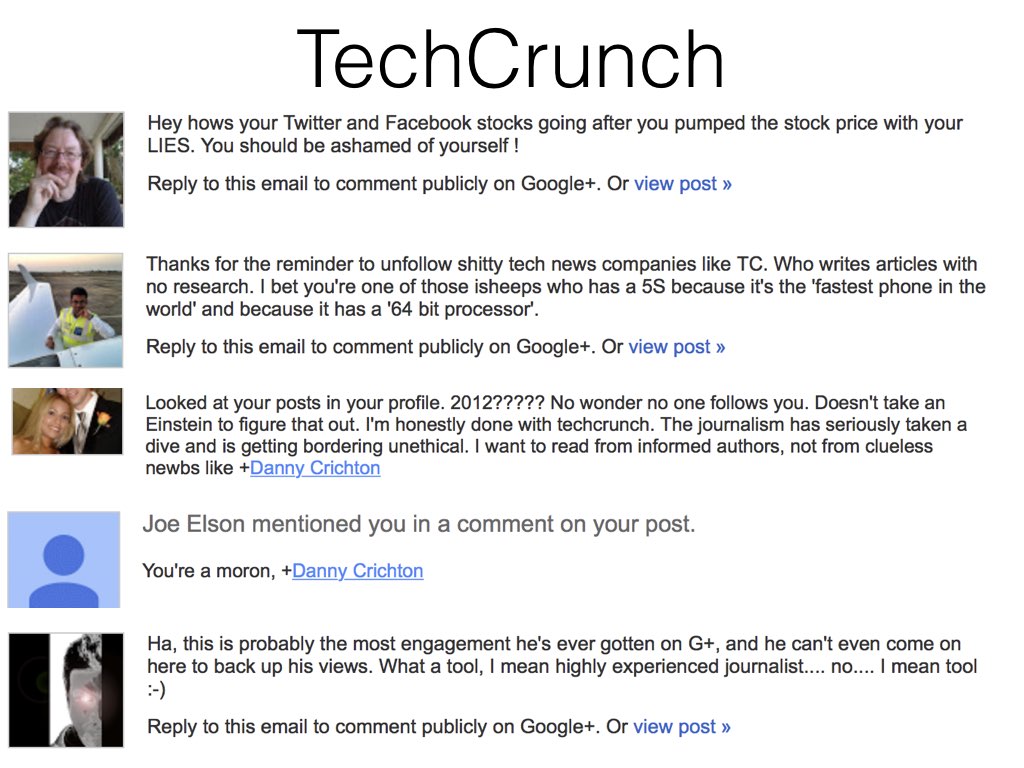
Formerly, I was managing editor at TechCrunch and a venture capitalist at Charles River Ventures and General Catalyst.