Best Books, Articles, Films and Theater I Read and Saw (2025 Edition)
2025 was a dizzying year. I can’t make heads or tails of it, the coin (almost certainly a Trump-faced 250th commemorative) just keeps spinning around on its edge like the inchoate end of Inception. What even happened? I consider my job as a writer to be a pretty simple one: to suck in the chaos of the world and offer each of my readers some sanity in return. Instead, the only sanity on offer is a zen-like acceptance of the chaos of the world, and a Serenity Prayer-esque koan that we should accept the world’s invariant chaos.
With that said, I feel like it was a fun year for imbibing chaos. Events around the world are the most substantial they have been in years. Old orthodoxies are being walked to the flames, even as new ideologies struggle to take root. AI is upending whole professions and industries, and the combination feels like a crucial turning point in history.
This year, I read 41 books, viewed 26 movies, watched 32 live Broadway and West End performances and read thousands of articles and essays. I do keep reasonable track of all of this, and so this is my selection of the best that I read and saw this year. I unfortunately didn’t finish a video game this year (open-world games take so long), and I only watched a single television show (White Lotus, Season 3).
For the best of what I wrote this year, you can turn to the complementary article.
Best Books I Read
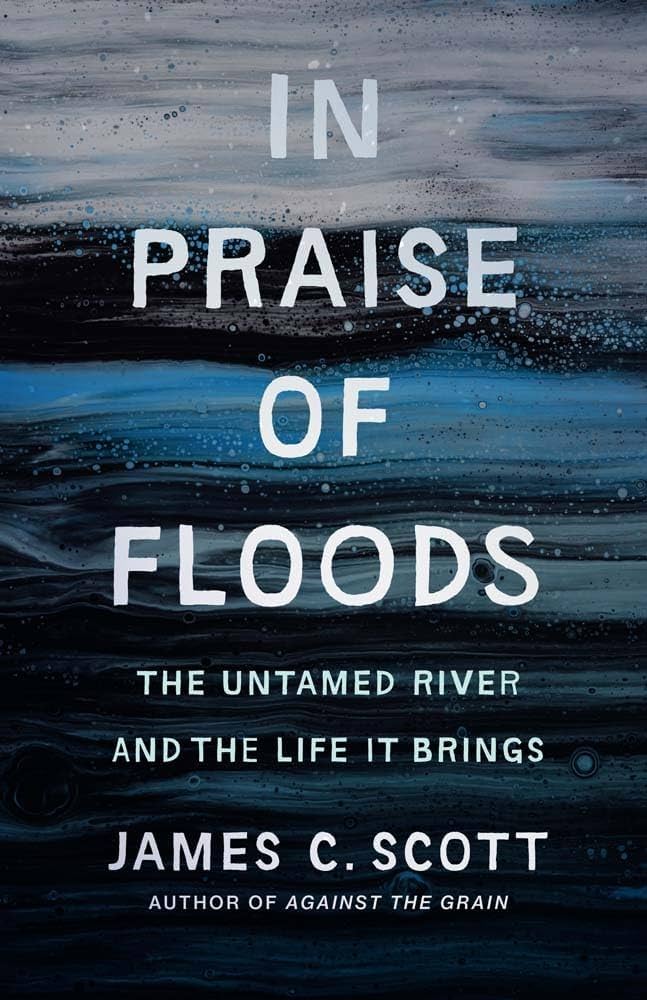
First Place: In Praise of Floods by James C. Scott
James C. Scott is an absolute legend in the social sciences for his magisterial and lucid works, including Silicon Valley’s favorite Seeing Like A State. This book, published posthumously, was centered around a decade of Scott’s work in Myanmar, Southeast Asia and globally on rivers, their meaning, and what they say about the need of civilization for control. It’s a lapidary volume clocking in at 248 pages, and I was just mesmerized at the erudition suffused across the work.
Scott likens a river to lungs: they need to breathe to provide sustenance to whole ecosystems. Rivers flood and offer nutrition to riparian spaces, but what happens when the needs of societies conflict with the natural order of Earth? Even more beautifully, there is a latent metaphor of the river almost as a rebel, constantly meandering and shapeshifting year-to-year in contrivance to every map and survey a government might like to compile. Major rivers can move hundreds of miles in just a few years, yet property law can barely keep up. Who will win this battle of wills?
It’s a fitting final work, and it gets at a core question of the legalist-rationalist model of civilization versus organized forms of life more attuned to the natural ebbs and flows of the rivers, tides and the Earth itself.
Second Place: We Do Not Part by Han Kang
This novel by the Nobel Prize-winner is mostly set on South Korea’s Jeju Island, where a horrific massacre took place in the late 1940s during the chaotic and polarizing dawn of the Cold War. That’s in the past, but for the characters in the present, they are starting to reconcile the tragedies and events in their own lives with the traumas that are embedded in the very soil.
I offered Han Kang’s Human Acts last year as my top pick. This latest novel is more laconic and less propulsive, instead connected deeply to the winter on Jeju and the darkness and shadows that envelops this otherwise paradise of an island. Jeju’s traumas happened to be major fodder this year in Korean culture – the hit Netflix show When Life Gives You Tangerines (폭싹 속았수다) refers to this history as well.
I am not a trauma lit guy, but this novel gets at a beautiful theme of connection between past, present and future that I found profound.
Third Place: Naufrage by Vincent Delacroix
This novel, written in French and translated in English as Small Boat, centers on the real-life tragedy of a migrant dinghy in the English Channel that sank, killing all aboard. The French coast guard observed the ship and heard its repeated distress signals, but never responded. Delacroix has novelized the aftermath in the form of an initial inquisition into the cause of the accident focused on one leader in particular.
It would have been ridiculously easy to preen to this book’s inevitably liberal audience, but Delacroix shakes away their humanitarian fantasies effortlessly. What happens when there is a humanitarian crisis every night? Can we maintain the same level of vigilance for every single one? What happens when we are just tired and pissed off at work?
Yet it’s the inevitable philosophical transition from the individual to society that is most gripping. This local leader is being interrogated, but not the state — why? These dinghies that come day after day: aren’t they the fault of the French government and not the low-level workers expected to somehow magically resolve an impossible situation?
It’s a short novel, but redolent with deep yet realistic themes. Delacroix shows a broad empathy toward the challenge of solving unwanted and often impossible challenges with aplomb.
Fourth Place: The Road by Cormac McCarthy
This is a classic of its oeuvre, and also one that is so propulsively taut that it just speeds right along to the very end. I don’t know how someone doesn’t read this in one sitting. McCarthy situates the novel in a post-apocalypse America that has lost civilization while following a father and son, paired up to survive in this unrelenting, Hobbesian world. There are terrors and mirth, moments of dread and tragedy. It’s never sentimental, but always moving forward to an inevitable finish.
I read McCarthy’s Blood Meridian last year, and I have to give him extra credit: this novel reads so differently that I don’t think it’s easy to identify it coming from the same author. It requires an unusual skill to create worlds and stories so unique, with texture and tones that are equally novel. It’s just an extraordinary tale.
Fifth Place: Blindness by José Saramago
Saramago also won a Nobel Prize, and this is one of his best-known works. It’s not as taut as The Road, but it also develops with a rapid pace that keeps our eyes glued to the page in this TikTok-age. In the story, a sudden disease breaks out that blinds people. That’s it. We see the initial panicked reaction of the government and public, and then the internment of the suddenly blind and their inevitable neglect.
But then Saramago pivots from this obvious setup to far more humane themes on how these suffering people suddenly start to cooperate (and fight). Different people come to their newfound disability with different perspectives, and these are described over the course of a story that sees hope and tragedy entwined together.
What makes the novel so rewarding, of course, is that while the story can be read as-is, there are obviously infinite interpretations on what “blindness” might really mean. The blindness pandemic that takes place in the novel could be a metaphor about politics, ignorance or the sudden rise of darkness in an otherwise enlightened society. It’s the open meanings that make this novel so rewarding.
Honorable Mentions
- Wolf Hall by Hilary Mantel — it’s an incredible read. Quite long, I must say. But it has one of my new favorite quotes: “‘I once had every hope,’ he says. ‘The world corrupts me, I think. Or perhaps it's just the weather. It pulls me down and makes me think like you, that one should shrink inside, down and down to a little point of light, preserving one's solitary soul like a flame under a glass.’”
- The Journalist and the Murderer by Janet Malcolm — this is a classic of the journalist training oeuvre, and I can see why. While its first paragraph is one of the most famous in all of J-school, I do think the deeper question of fidelity to the truth versus fidelity to the source of truth will always be one of the most interesting in news reporting.
- Nuclear War: A Scenario by Annie Jacobsen — an absolutely propulsive and carefully researched look at how nuclear war could spring itself upon the world from mistakes made by technology and people alike. This is an extraordinarily complex topic presented with gusto.
Best Articles I Read

First Place: "The Goon Squad: Loneliness, porn’s next frontier, and the dream of endless masturbation” by Daniel Kolitz (Harper’s)
This is by far the most distinctive profile I read all year. It’s not just the subject, which people can twitter about on Twitter but few seem to take seriously as a cultural movement. Kolitz dives right in as our naive narrator, trying to fit in with the gooners of the internet as they seek out ever more porn to masturbate for hours on end. It’s delightfully funny and awkward, but also one of the most profound tales of how life is changing in the 21st century with the internet, technology and massive quantities of video streaming. Just a great example of magazine journalism at its finest.
Second Place: “One of the Greatest Polar-Bear Hunters Confronts a Vanishing World” by Ben Taub (The New Yorker)
Ben Taub is a consistently excellent field reporter, and here we find him in Greenland among the several thousand people who still live on the island’s east side, often in conditions of extreme penury. They uphold a variety of indigenous traditions, which are under assault not just from the geopolitics du jour, but also from climate change. The ice is melting, and the polar bear meat is so laden with PFAS pollution that these people are among the sickest in the world. It’s a balanced tale of loss and change, and how traditions are reshaped by events far beyond any one individual’s control.
Third Place: “Ecological Warfare: A swamp-rat slaughter on the bayou” by Nathaniel Rich (Harper’s)
Another field report, this time from Louisiana’s bayous. Rich embedded himself among swamp-rat shooters, who compete to collect the largest bounty as part of Louisiana’s long tradition of hunting. Along the way, we get a sense of a totally different set of mores and traditions, and a culture that feels increasingly out-of-place in modern America. It’s a gorgeous and empathetic tale of man versus the environment.
Fourth Place: “The Biggest Loser” by Luke Winkie (Slate)
This was just a fun romp of a profile. Winkie profiles Vegas Matt, an Internet personality whose claim to fame is losing the most money at casinos and live-streaming all of his can’t-look-away failures for the world at large. He’s a sensation, and it’s a sensational pile of money he loses. The beauty of Winkie’s frame is that he can then explore America’s neuroses around winning and losing, and why we find radical sympathy in someone who just can’t seem to get a break.
Fifth Place: “The Great Feminization” by Helen Andrews (Compact)
Finally, I greatly enjoyed this political argument from Andrews on the shapeshifting culture of office workplaces. The gender wars are not really my cup of tea, but she does an admirable job discussing the challenges of constructing an ideal yet homogenous American office culture and asking why there should be one culture to rule them all in the first place. “Women can sue their bosses for running a workplace that feels like a fraternity house, but men can’t sue when their workplace feels like a Montessori kindergarten,” she writes. It’s thought-provoking and mind-expanding, and that’s tough to find in our ever-present culture wars.
The Best Films I Saw

First Place: I’m Still Here (Ainda Estou Aqui)
All of my top films this year are international — take from that what you will. I’m Still Here is a family and political drama that focuses on a liberal legislator that is taken prisoner by Brazil’s right-wing military junta during the Cold War. What makes the film transcendant is how it places the lives of the protagonist’s wife and kids into the center of the story. They have no knowledge of what has happened. No one will give them any answers. Should they still be hoping for the best? Should they be prepared for the worst? Is it better to ask for answers or not get them? It’s an extraordinary work, one that keeps the mystery going almost to the final scene.
Second Place: Argentina, 1985
This parallels I’m Still Here. In this case, we have a courtroom battle to indict and convict the Argentinian military junta that mass murdered thousands of civilians at the peak of its power. It’s a classic David versus Goliath story, but here, we witness the challenges David confronts in his own life by a society that absolutely detests his work. Individual lawyers working on the case — almost all young — face their parents and families, who want to see them stopped at all cost. It’s an incredible film that reminds us that politics doesn’t end in the public square, but extends to churches, families, social networks, and ourselves as individuals.
Third Place: 3670 (삼육칠공)
Switching over to Asia, I got to see this one in Seoul when I was there earlier this year. This movie observes a North Korean defector who also happens to be gay, and the challenges of adapting to both South Korean culture but also to homosexuality and the unique intersection of the two. For the micro-genre of gay South Korean films, this one is by far the most profound on the challenging enclosures one must build to fluidly present different identities to different people on command. What happens when these separate groups interact? How do we find meaning when our very identity shifts throughout the day? It’s a powerful film, and tragic, but also one that shows a slice of life that never gets enough airtime.
Fourth Place: It Was Just An Accident
This Persian film swept all of the awards this year, and it deserves them. Filmed clandestinely in Tehran and its environs over a period of time, it’s the story of a group of former anti-government agitators and layabouts who conduct a kidnapping only to realize that the whole situation might be something of a farce. It’s a comedy, but also strikes at the heart of the absurdities of the Iranian regime that millions of Persians must confront and manage every single day. The cinematography was also particular rewarding — you’ve got to watch the street backgrounds for the subtle hints of rebellion toward the regime.
Honorable Mentions
- Mulholland Drive — David Lynch passed away this year, and this got on my view list. It’s a wonderful fractal of a movie, with a gorgeous set of shots and weirdness and ambiguity that will keep you going through multiple rewatches.
- One Battle After Another — The best American film of the year. It’s also quite propulsive, but has a much deeper resonance than many of its action flick ilk. It’s long though, and at some point, you do wonder where this all leads to.
The Best Theater I Watched
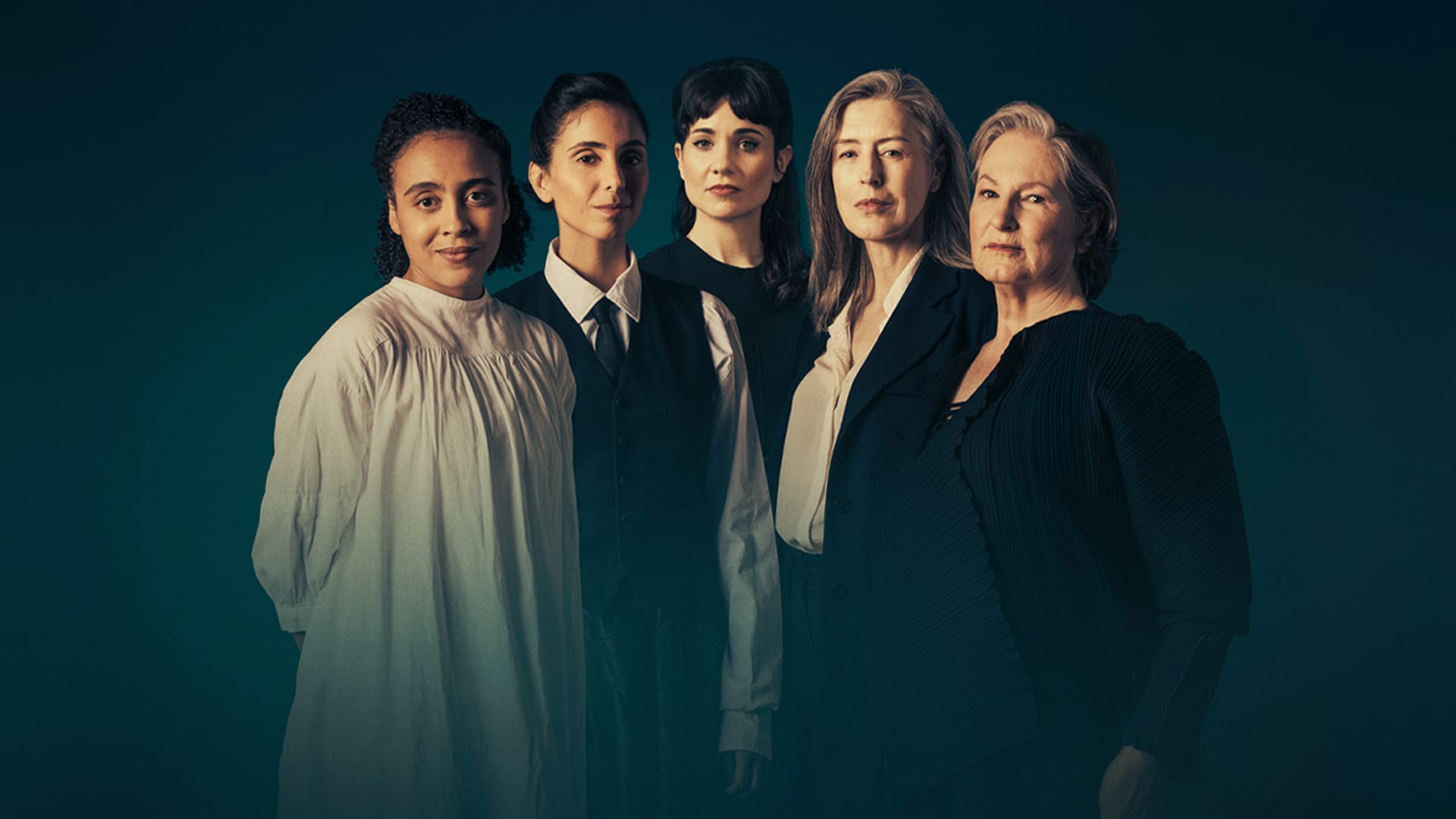
First Place: The Years
Annie Ernaux won a Nobel Prize, and this play is really a biopic of her life over decades. Five actresses play her in different ages across the play, from early childhood into maturity. What makes this play so powerful is that we see the incredible societal and personal barriers that she has overcome in one of the most pathos-driven shows I have ever seen. The Years has become notorious for the number of people it sends to the hospital (in my viewing, we had three separate instances of people fainting and needing an ambulance), and perhaps that’s the best endorsement: the wall between acting and visceral reactions has disappeared entirely.
Second Place: The Picture of Dorian Gray
I will admit, I was tired and partially dozed off for part of this play. That’s unfortunate, but this was by far one of the most compelling productions I have seen in my life. Sarah Snook plays more than two dozen characters (often simultaneously) from E.M. Forster’s The Picture of Dorian Gray, using only video cameras, screens and a fast-paced acting style to keep them all apart. It’s such an original adaptation, and truly expresses the power of multimedia in the future of theater.
Third Place: Inter Alia
This is another courtroom drama, this time about an aggressive litigator who also mothers a son. What happens when that son is accused of a heinous sex crime? Do we believe the son’s depiction of what happened, or should a litigator stick to their knowledge of perpetrators and victims? What’s powerful here is the question of advocacy and who advocates for whom. Should a mother who is also an attorney advocate for societal justice or for their own progeny? The play’s power is not just legal, but the deeper traumas of realizing that justice in theory is very different from justice in practice.
Fourth Place: Giant
Israel and Palestine is one of the great issues of our time; it also happens to be among the most polarizing in modern American and global politics, excepting abortion. Giant centers on Roald Dahl, and his real letter to the press in the 1980s that triggered widespread backlash and accusations of antisemitism. What’s incredible about the play, which is coming to Broadway in 2026, is that it was entirely written before Hamas’s attacks on Israel on October 7, 2023. The arguments resonate even more, but the underlying question of the conflict remains forever unresolved.
Fifth Place: Purpose
This is a taut political thriller about a family at the heart of the civil rights movement who guards a scandalous secret. Protecting that information gets increasingly more difficult throughout the play, and the drama increases as we realize we might actually see the disintegration of one of the great American freedom fighters. What’s powerful here is its lens on what political activism does to the loved ones of the principal character. It’s tough, and a reminder behind every poster and movement lies a family that just wants to eat dinner in peace.
Honorable Mentions
- Maybe Happy Ending — It won the Tony award for best new musical. It’s a wonderful romp, with great songs, a heartrending story set in Seoul, and a wonderful set of man-machine themes that will resonate with most audiences.
- Eureka Day — One of the funniest shows that I have seen in years. The sendup of progressive Berkeley-style politics is hilarious. No play does a better job of showing the tragedy of good intentions and utopian politics.
- Kyoto — A delightful play about the Kyoto climate protocol that was negotiated in the mid-2000s. It shows the drama and humanity behind these deeply impersonal and technical global summits, and just how much work it takes to secure even a modicum of progress.